Notice: تابع WP_Block_Type_Registry::register به طورنادرست فراخوانی شد. نامهای نوع بلوک نباید حروف بزرگ داشته باشند. لطفاً برای اطلاعات بیشتر، اشکال زدایی در وردپرس را مشاهده کنید. (این پیام در نگارش 5.0.0 افزوده شده است.) in /home/ethicsho/public_html/wp-includes/functions.php on line 5313
Warning: Use of undefined constant TDC_PATH_LEGACY - assumed 'TDC_PATH_LEGACY' (this will throw an Error in a future version of PHP) in /home/ethicsho/public_html/wp-content/plugins/td-composer/td-composer.php on line 109
Warning: Use of undefined constant TDSP_THEME_PATH - assumed 'TDSP_THEME_PATH' (this will throw an Error in a future version of PHP) in /home/ethicsho/public_html/wp-content/plugins/td-composer/td-composer.php on line 113 بایگانیهای 9780198247319 - خانه اخلاق پژوهان جوان Notice: Trying to access array offset on value of type bool in /home/ethicsho/public_html/wp-content/plugins/wp-ulike/inc/general-functions.php on line 807
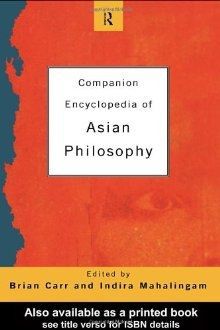
TheCompanion Encyclopedia of Asian Philosophyis a unique one-volume reference work which will make a broad range of richly varied philosophical, ethical and theological traditions accessible to a wide audience. TheEncyclopediais divided into 6 sections, each of which covers a specific tradition within Asian philosophy includingZoroastrianorPersian,Indian,Buddhist,Chinese,JapaneseandIslamic. Within each section the chapters cover such important areas as origins of the tradition, approaches to logic and language, positions on morals and society as well as histories of the lives of influential thinkers. In addition, the final chapter of each section provides unique coverage of current trends in each. The individual essays as well as the structure of this volume allow the reader to compare and contrast the philosophies of these cultures as well as understand the ways in which the cultures have shapedand been shaped by philosophical understanding. It is possible, for example, to relate the ways in which Buddhist philosophy has developed in India, Tibet, China, South-East Asia and Japan.
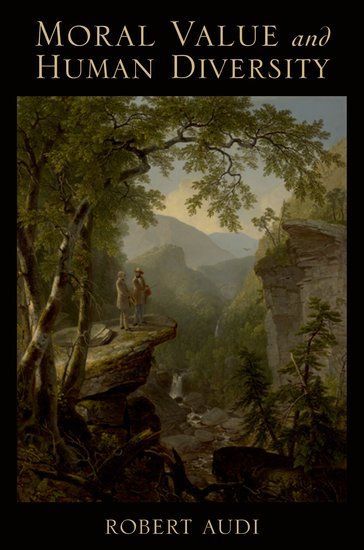
This short and accessible book is designed for those learning about the search for ethical rules that can apply despite cultural differences. Robert Audi looks at several such attempts: Aristotle, Kant; Mill; and the movement known as “common-sense” ethics associated with W.D. Ross. He shows how each attempt grew out of its own time and place, yet has some universal qualities that can be used for an ethical framework. This is a short, accessible treatment of a major topic in ethics by a senior and highly-respected figure.
In this book, William O’Neill, S.J., offers an interpretation of the nature and scope of practical reasoning in light of postmodern philosophical criticism. He charts a via media between the abstract formalism of neo-Kantian morality and relativist interpretations of neo-Aristotelian ethics. The three parts of the book treat the eclipse of the classical Aristotelian conception of practical reason; the Kantian heritage in the modern moral theories of John Rawls and R.M. Hare; and the hermeneutical retrieval of a moral interpretation of the world. Drawing upon the philosophical hermeneutics of Hans-Georg Gadamer, modern analytical philosophy, and the discourse ethics of Jurgen Habermas, O’Neill offers a critical reconstruction of practical reason which upholds the primacy of moral community while recognizing the ethical import of historical and cultural difference. The final chapter applies the preceding hermeneutical critique to the question of the distinctiveness of Christian ethics in the writings of Karl Barth, Hans Urs von Balthasar, Josef Fuchs, and Bruno Schuller. This original contribution will be of special interest to students and teachers of moral philosophy and theology.
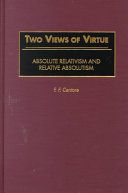
Centore’s work is an inquiry into the weaknesses and strengths of the two basic positions in ethics: the man-centered model and the God-centered model for deciding between right and wrong behavior. The philosophical paradigm for the man-centered approach is absolute relativism, while the paradigm for the God-centered approach is relative absolutism. Centore argues that the man-centered model in actual practice proves not to be realistic as an ethical guide, while the God-centered model, if properly understood, is the most useful approach. This work penetrates difficult ethical issues by examining human experience and reasoning in conjunction with actual choices of action. Although the God-centered approach is shown to be the most practical, Centore argues for a natural moral law that avoids any specific theology. Each chapter discusses the historical and theoretical background of the approaches and two possible compromises. The work is enlivened with examples of possible contexts in which moral decisions must take place. Various ethical dilemmas are presented with an examination of the potential consequences of applying either the atheistic or the theistic ethical approach. Centore’s argument is complex, but he explains the elements clearly and his conclusion is strengthened by real-life cases and an extensive Bibliography.
ما از اخلاق چه انتظاری داریم؟ این سوال شاید تاحدودی برای عموم مردم و یا متخصصان این رشته قابل پاسخ باشد؛ اینکه خوب بودن را به ما بیاموزد و در تنظیم روابط فردی م...

جشن کتاب تهران به ایستگاه سی و یکم رسیده است. حال و احوال نشر کتاب خوب نیست و باید فرهنگدوستان را به خرید و هدیه دادن کتاب ترغیب نمود. خانه اخلاقپژوهان جوان ب...

بنیاد کتابهای اخلاق اسلامی عمدتا پالایش جان از آلودگیها و آراستن آن به زیباییها است. اندیشه محوری این قبیل کتابها آن است که انسان فعلی آنی نیست که باید باشد...

-
0 Comments