Notice: تابع WP_Block_Type_Registry::register به طورنادرست فراخوانی شد. نامهای نوع بلوک نباید حروف بزرگ داشته باشند. لطفاً برای اطلاعات بیشتر، اشکال زدایی در وردپرس را مشاهده کنید. (این پیام در نگارش 5.0.0 افزوده شده است.) in /home/ethicsho/public_html/wp-includes/functions.php on line 5313
Warning: Use of undefined constant TDC_PATH_LEGACY - assumed 'TDC_PATH_LEGACY' (this will throw an Error in a future version of PHP) in /home/ethicsho/public_html/wp-content/plugins/td-composer/td-composer.php on line 109
Warning: Use of undefined constant TDSP_THEME_PATH - assumed 'TDSP_THEME_PATH' (this will throw an Error in a future version of PHP) in /home/ethicsho/public_html/wp-content/plugins/td-composer/td-composer.php on line 113 بایگانیهای 9780195376616 - خانه اخلاق پژوهان جوان Notice: Trying to access array offset on value of type bool in /home/ethicsho/public_html/wp-content/plugins/wp-ulike/inc/general-functions.php on line 807
Is medical ethics in times of armed conflict identical to medical ethics in times of peace, as the World Medical Association declares? In Bioethics and Armed Conflict, the first comprehensive study of medical ethics in conventional, unconventional, and low-intensity war, Michael Gross examines the dilemmas that arise when bioethical principles clash with military necessity—when physicians try to save lives during an endeavor dedicated to taking them—and describes both the conflicts and congruencies of military and medical ethics.Gross describes how the principles of contemporary just war, unlike those of medical ethics, often go beyond the welfare of the individual to consider the collective interests of combatants and noncombatants and the general interests of the state. Military necessity plays havoc with such patients’ rights as the right to life, the right to medical care, informed consent, confidentiality, and the right to die. The principles of triage in battle conditions dictate not need-based treatment but the distribution of resources that will return the greatest number of soldiers to active duty. And unconventional warfare, including current “wars” on terrorism, challenges the traditional concept of medical neutrality as physicians who have sworn to “do no harm” are called upon to lend their expertise to “interrogational” torture or to the development of biological or chemical weapons. Difficult dilemmas inevitably arise during armed conflict, and medicine, Gross concludes, is not above the fray. Medical ethics in time of war cannot be identical to medical ethics in peacetime.
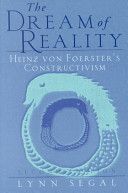
What if there were no objective facts, no objective truth, no objectivity at all, only our belief in them? What if our consciousness itself is an unconscious invention, constructed out of logic and language? In this thought-provoking volume, Lynn Segal describes how the ideas of Heinz von Foerster compel us to explore the question, “Do we discover the world or do we invent it?” and suggests that we must first know how we think before we can claim knowledge of the world. The resulting philosophy, Constructivism, examines the limits of what we can know and argues that understanding these limits can lead us to be more responsible for our personal and collective behavior. After tracing the historical transition from religious belief to a belief in science, Segal examines objectivity from semantic, philosophical, and neurological perspectives. Segal shows that we can never achieve objectivity and that the scientific method ensures only a consensus among observers. Next, he details how language and logic unwittingly predetermine the very conclusions we derive when we try to know the world. Finally, he describes a computational model of cognition that does not depend on first positing the world to account for cognition and consciousness. While Constructivism may seem relevant only to those in the cognitive sciences, it is, in fact, highly relevant to everyone. Paradoxically, grasping the limits of our own under-standing can free us to live more creative and meaningful personal and professional lives.
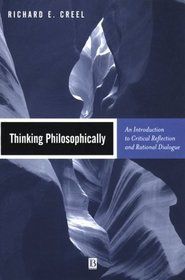
“Thinking Philosophically” begins by helping the reader acquire a lively sense of what philosophy is, how it began, why it persists, and how it is related to other fields of study, especially science. Readers are given three methods for thinking about and discussing philosophical problems: The Socratic Method, Running out the Permutations, Rational Dialogue. The remainder of the book explores topics and positions in the three most basic areas of philosophy: Theory of Knowledge, Theory of Value, and Metaphysics. Numerous positions are explained, defended, and then critiqued. Each critique leads to a new position which is given the same threefold treatment. This dialectical process allows the reader to move beyond solitary reflection to fruitful philosophical dialogue with others.
ما از اخلاق چه انتظاری داریم؟ این سوال شاید تاحدودی برای عموم مردم و یا متخصصان این رشته قابل پاسخ باشد؛ اینکه خوب بودن را به ما بیاموزد و در تنظیم روابط فردی م...

جشن کتاب تهران به ایستگاه سی و یکم رسیده است. حال و احوال نشر کتاب خوب نیست و باید فرهنگدوستان را به خرید و هدیه دادن کتاب ترغیب نمود. خانه اخلاقپژوهان جوان ب...

بنیاد کتابهای اخلاق اسلامی عمدتا پالایش جان از آلودگیها و آراستن آن به زیباییها است. اندیشه محوری این قبیل کتابها آن است که انسان فعلی آنی نیست که باید باشد...

-
0 Comments