Notice: تابع WP_Block_Type_Registry::register به طورنادرست فراخوانی شد. نامهای نوع بلوک نباید حروف بزرگ داشته باشند. لطفاً برای اطلاعات بیشتر، اشکال زدایی در وردپرس را مشاهده کنید. (این پیام در نگارش 5.0.0 افزوده شده است.) in /home/ethicsho/public_html/wp-includes/functions.php on line 5313
Warning: Use of undefined constant TDC_PATH_LEGACY - assumed 'TDC_PATH_LEGACY' (this will throw an Error in a future version of PHP) in /home/ethicsho/public_html/wp-content/plugins/td-composer/td-composer.php on line 109
Warning: Use of undefined constant TDSP_THEME_PATH - assumed 'TDSP_THEME_PATH' (this will throw an Error in a future version of PHP) in /home/ethicsho/public_html/wp-content/plugins/td-composer/td-composer.php on line 113 بایگانیهای 9780195370294 - خانه اخلاق پژوهان جوان Notice: Trying to access array offset on value of type bool in /home/ethicsho/public_html/wp-content/plugins/wp-ulike/inc/general-functions.php on line 807
Experience and Value: Essays on John Dewey and Pragmatic Naturalism brings together twelve philosophical essays spanning the career of noted Dewey scholar, S. Morris Eames. The volume includes both critiques and interpretations of important issues in John Dewey’s value theory as well as the application of Eames’s pragmatic naturalism in addressing contemporary problems in social theory, education, and religion. The collection begins with a discussion of the underlying principles of Dewey’s pragmatic naturalism, including the concepts of nature, experience, and philosophic method. Essays “Experience and Philosophical Method in John Dewey” and “Primary Experience in the Philosophy of John Dewey” develop what Eames believed to be a central theme in Dewey’s thought and provide a theoretical framework for subsequent discussion. The volume continues with specific applications of this framework in the areas of value theory, moral theory, social philosophy, and the philosophy of religion. Eames’s analysis of value exposes the connection between the immediately felt values of experience and the more sophisticated judgments of value that are the product of reflection. From this basis in moral theory, Eames considers the derivation of judgments of obligation from judgments of fact. This discussion provides a grounding for a consideration of contemporary social issues directed by naturalistic and scientific principles. In the third section, with regard to educational theory, Eames considers possible resolutions of the current dichotomy between the factual worldview of science and the humanistic worldview of the liberal arts. The comprehensive article, “Dewey’s Views of Truth, Beauty, and Goodness,” connects the essays of the first and second sections and explores the placement of Dewey’s value theory with respect to morals and aesthetics. With “Creativity and Democracy,” in the fourth section, Eames also considers the concept of democracy from the standpoint of current and historical issues faced by society. This article hints at a major project of Eames’s intellectual life—the theory of democracy. The volume concludes with a discussion of the difficulty of maintaining the values of religious experience in a scientifically and technologically sophisticated world, the very topic that first brought Eames to philosophy—the meaning of religion and the religious life. Suggested solutions are offered in “The Lost Individual and Religious Unity.” Experience and Value: Essays on John Dewey and Pragmatic Naturalism illuminates Eames’ life of inquiry, a life that included moral, social, aesthetic, and religious dimensions of value—all suffused with the influence of John Dewey.
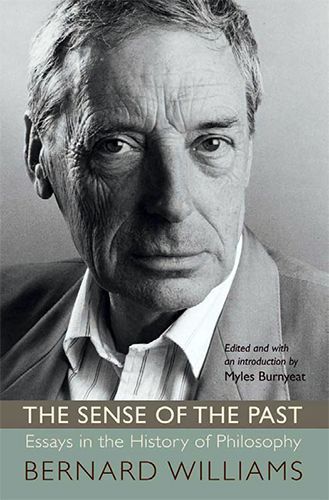
Before his death in 2003, Bernard Williams planned to publish a collection of historical essays, focusing primarily on the ancient world. This posthumous volume brings together a much wider selection, written over some forty years. His legacy lives on in this masterful work, the first collection ever published of Williams’s essays on the history of philosophy. The subjects range from the sixth century B.C. to the twentieth A.D., from Homer to Wittgenstein by way of Socrates, Plato, Aristotle, Descartes, Hume, Sidgwick, Collingwood, and Nietzsche. Often one would be hard put to say which part is history, which philosophy. Both are involved throughout, because this is the history of philosophy written philosophically. Historical exposition goes hand in hand with philosophical scrutiny. Insights into the past counteract blind acceptance of present assumptions. In his touching and illuminating introduction, Myles Burnyeat writes of these essays: “They show a depth of commitment to the history of philosophy seldom to be found nowadays in a thinker so prominent on the contemporary philosophical scene.” The result celebrates the interest and importance to philosophy today of its near and distant past.The Sense of the Past is one of three collections of essays by Bernard Williams published by Princeton University Press since his death. In the Beginning Was the Deed: Realism and Moralism in Political Argument, selected, edited, and with an introduction by Geoffrey Hawthorn, and Philosophy as a Humanistic Discipline, selected, edited, and with an introduction by A. W. Moore, make up the trio.
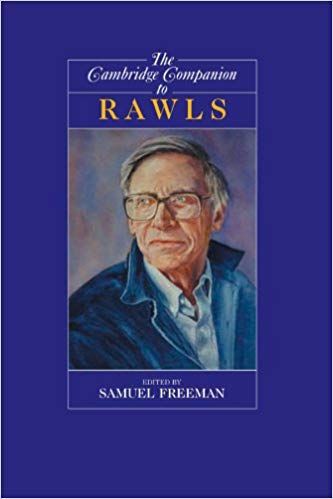
Each volume of this series of companions to major philosophers contains specially commissioned essays by an international team of scholars and will serve as a reference work for students and nonspecialists. John Rawls is the most significant and influential philosopher and moral philosopher of the twentieth century. His work has profoundly shaped contemporary discussions of social, political and economic justice in philosophy, law, political science, economics and other social disciplines. In this exciting collection of new essays, many of the world’s leading political and moral theorists discuss the full range of Rawls’s contribution to the concepts of political and economic justice, democracy, liberalism, constitutionalism, and international justice. There are also assessments of Rawls’s controversial relationships with feminism, utilitarianism and communitarianism. New readers will find this the most accessible guide to Rawls currently available. Advanced students and specialists will find a conspectus of recent developments in the interpretation of Rawls.
ما از اخلاق چه انتظاری داریم؟ این سوال شاید تاحدودی برای عموم مردم و یا متخصصان این رشته قابل پاسخ باشد؛ اینکه خوب بودن را به ما بیاموزد و در تنظیم روابط فردی م...

جشن کتاب تهران به ایستگاه سی و یکم رسیده است. حال و احوال نشر کتاب خوب نیست و باید فرهنگدوستان را به خرید و هدیه دادن کتاب ترغیب نمود. خانه اخلاقپژوهان جوان ب...

بنیاد کتابهای اخلاق اسلامی عمدتا پالایش جان از آلودگیها و آراستن آن به زیباییها است. اندیشه محوری این قبیل کتابها آن است که انسان فعلی آنی نیست که باید باشد...

-
0 Comments