Notice: تابع WP_Block_Type_Registry::register به طورنادرست فراخوانی شد. نامهای نوع بلوک نباید حروف بزرگ داشته باشند. لطفاً برای اطلاعات بیشتر، اشکال زدایی در وردپرس را مشاهده کنید. (این پیام در نگارش 5.0.0 افزوده شده است.) in /home/ethicsho/public_html/wp-includes/functions.php on line 5313
Warning: Use of undefined constant TDC_PATH_LEGACY - assumed 'TDC_PATH_LEGACY' (this will throw an Error in a future version of PHP) in /home/ethicsho/public_html/wp-content/plugins/td-composer/td-composer.php on line 109
Warning: Use of undefined constant TDSP_THEME_PATH - assumed 'TDSP_THEME_PATH' (this will throw an Error in a future version of PHP) in /home/ethicsho/public_html/wp-content/plugins/td-composer/td-composer.php on line 113 بایگانیهای 9780195179552 - خانه اخلاق پژوهان جوان Notice: Trying to access array offset on value of type bool in /home/ethicsho/public_html/wp-content/plugins/wp-ulike/inc/general-functions.php on line 807
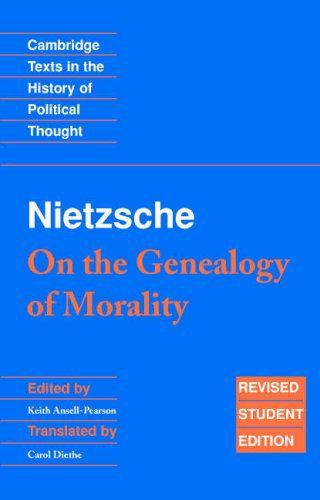
Friedrich Nietzsche is one of the most influential thinkers of the past 150 years and On the Genealogy of Morality (1887) is his most important work on ethics and politics. A polemical contribution to moral and political theory, it offers a critique of moral values and traces the historical evolution of concepts such as guilt, conscience, responsibility, law and justice. This is a revised and updated edition of one of the most successful volumes to appear in Cambridge Texts in the History of Political Thought. Keith Ansell-Pearson has modified his introduction to Nietzsche’s classic text, and Carol Diethe has incorporated a number of changes to the translation itself, reflecting the considerable advances in our understanding of Nietzsche in the twelve years since this edition first appeared. In this new guise the Cambridge Texts edition of Nietzsche’s Genealogy should continue to enjoy widespread adoption, at both undergraduate and graduate level.
Justice and Judgement is a comprehensive introduction to theories of judgement in contemporary political and moral philosophy. The book offers a critical examination of judgement in the recent works of Rawls, Habermas, Ackerman, Michelman and Dworkin, including an historical overview of the judgement model in contemporary political philosophy; the function of the constitution; and deliberative democracy. The book concludes with a discussion of universalism and contemporary liberalism and the judgement view of justice.
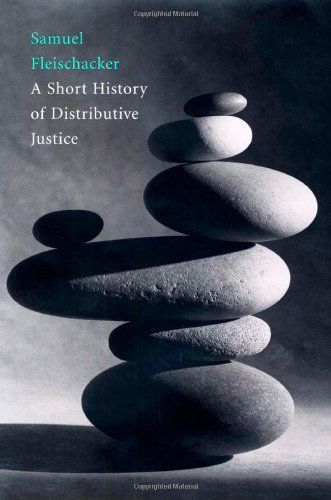
Distributive justice in its modern sense calls on the state to guarantee that everyone is supplied with a certain level of material means. Samuel Fleischacker argues that guaranteeing aid to the poor is a modern idea, developed only in the last two centuries. Earlier notions of justice, including Aristotle’s, were concerned with the distribution of political office, not of property. It was only in the eighteenth century, in the work of philosophers such as Adam Smith and Immanuel Kant, that justice began to be applied to the problem of poverty. To attribute a longer pedigree to distributive justice is to fail to distinguish between justice and charity. Fleischacker explains how confusing these principles has created misconceptions about the historical development of the welfare state. Socialists, for instance, often claim that modern economics obliterated ancient ideals of equality and social justice. Free-market promoters agree but applaud the apparent triumph of skepticism and social-scientific rigor. Both interpretations overlook the gradual changes in thinking that yielded our current assumption that justice calls for everyone, if possible, to be lifted out of poverty. By examining major writings in ancient, medieval, and modern political philosophy, Fleischacker shows how we arrived at the contemporary meaning of distributive justice.
ما از اخلاق چه انتظاری داریم؟ این سوال شاید تاحدودی برای عموم مردم و یا متخصصان این رشته قابل پاسخ باشد؛ اینکه خوب بودن را به ما بیاموزد و در تنظیم روابط فردی م...

جشن کتاب تهران به ایستگاه سی و یکم رسیده است. حال و احوال نشر کتاب خوب نیست و باید فرهنگدوستان را به خرید و هدیه دادن کتاب ترغیب نمود. خانه اخلاقپژوهان جوان ب...

بنیاد کتابهای اخلاق اسلامی عمدتا پالایش جان از آلودگیها و آراستن آن به زیباییها است. اندیشه محوری این قبیل کتابها آن است که انسان فعلی آنی نیست که باید باشد...

-
0 Comments