Notice: تابع WP_Block_Type_Registry::register به طورنادرست فراخوانی شد. نامهای نوع بلوک نباید حروف بزرگ داشته باشند. لطفاً برای اطلاعات بیشتر، اشکال زدایی در وردپرس را مشاهده کنید. (این پیام در نگارش 5.0.0 افزوده شده است.) in /home/ethicsho/public_html/wp-includes/functions.php on line 5313
Warning: Use of undefined constant TDC_PATH_LEGACY - assumed 'TDC_PATH_LEGACY' (this will throw an Error in a future version of PHP) in /home/ethicsho/public_html/wp-content/plugins/td-composer/td-composer.php on line 109
Warning: Use of undefined constant TDSP_THEME_PATH - assumed 'TDSP_THEME_PATH' (this will throw an Error in a future version of PHP) in /home/ethicsho/public_html/wp-content/plugins/td-composer/td-composer.php on line 113 بایگانیهای 9780195046571 - خانه اخلاق پژوهان جوان Notice: Trying to access array offset on value of type bool in /home/ethicsho/public_html/wp-content/plugins/wp-ulike/inc/general-functions.php on line 807
Sam Harris’s first book,The End of Faith,ignited a worldwide debate about the validity of religion. In the aftermath, Harris discovered that most peoplefrom religious fundamentalists to nonbelieving scientistsagree on one point: science has nothing to say on the subject of human values. Indeed, our failure to address questions of meaning and morality through science has now become the most common justification for religious faith. It is also the primary reason why so many secularists and religious moderates feel obligated to “respect” the hardened superstitions of their more devout neighbors.In this explosive new book, Sam Harris tears down the wall between scientific facts and human values, arguing that most people are simply mistaken about the relationship between morality and the rest of human knowledge. Harris urges us to think about morality in terms of human and animal well-being, viewing the experiences of conscious creatures as peaks and valleys on a “moral landscape.” Because there are definite facts to be known about where we fall on this landscape, Harris foresees a time when science will no longer limit itself to merely describing what people do in the name of “morality”; in principle, science should be able to tell us what weoughtto do to live the best lives possible. Bringing a fresh perspective to age-old questions of right and wrong and good and evil, Harris demonstrates that we already know enough about the human brain and its relationship to events in the world to say that there are right and wrong answers to the most pressing questions of human life. Because such answers exist, moral relativism is simply falseand comes at increasing cost to humanity. And the intrusions of religion into the sphere of human values can be finally repelled: for just as there is no such thing as Christian physics or Muslim algebra, there can be no Christian or Muslim morality.Using his expertise in philosophy and neuroscience, along with his experience on the front lines of our “culture wars,” Harris delivers a game-changing book about the future of science and about the real basis of human cooperation.
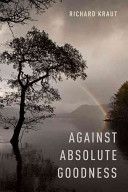
Are there things we should value because they are, quite simply, good? If so, such things might be said to have “absolute goodness.” They would be good simpliciter or full stop – not good for someone, not good of a kind, but nonetheless good (period). They might also be called “impersonal values.” The reason why we ought to value such things, if there are any, would merely be the fact that they are, quite simply, good things. In the twentieth century, G. E. Moore was the great champion of absolute goodness, but he is not the only philosopher who posits the existence and importance of this property. Against these friends of absolute goodness, Richard Kraut here builds on the argument he made in What is Good and Why, demonstrating that goodness is not a reason-giving property – in fact, there may be no such thing. It is, he holds, an insidious category of practical thought, because it can be and has been used to justify what is harmful and condemn what is beneficial. Impersonal value draws us away from what is good for persons. His strategy for opposing absolute goodness is to search for domains of practical reasoning in which it might be thought to be needed, and this leads him to an examination of a wide variety of moral phenomena: pleasure, knowledge, beauty, love, cruelty, suicide, future generations, bio-diversity, killing in self-defense, and the extinction of our species. Even persons, he proposes, should not be said to have absolute value. The special importance of human life rests instead on the great advantages that such lives normally offer. “When one reads this, one sees the possibility of real philosophical progress. If Kraut is right, I’d be wrong to say that this book is good, period. Or even great, period. But I will say that, as a work of philosophy, and for those who read it, it is excellent indeed.” –Russ Shafer-Landau, University of Wisconsin-Madison
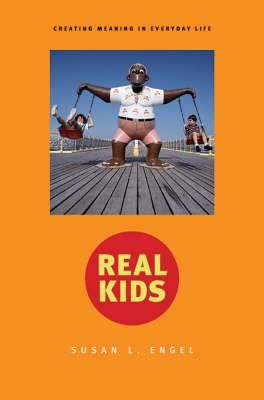
Decades of work in psychology labs have vastly enhanced our knowledge about how children perceive, think, and reason. But it has also encouraged a distorted view of children, argues psychologist Susan Engel in this provocative and passionate book–a view that has affected every parent who has tried to debate with a six-year-old. By focusing on the thinking processes prized by adults, too many expert opinions have rendered children as little adults. What has been lost is what is truly unique and mysterious–the childlike quality of a child’s mind. Engel draws on keen observations and descriptive research to take us into the nearly forgotten, untidy, phantasmagorical world of children’s inner lives. She reminds us that children fuse thought and emotion, play and reality; they swing wildly between different ways of interpreting and acting in the world. But just as a gawky child may grow into a beauty, illogical and sometimes maddening childishness can foreshadow great adult ability. Engel argues that the “scientist in a crib” view encourages parents and teachers to expect more logical reasoning and emotional self-control from children than they possess. She provides a concise and valuable overview of what modern developmental psychologists have learned about children’s developing powers of perception and capacity for reasoning, but also suggests new ways of studying children that better capture the truth about their young minds.
ما از اخلاق چه انتظاری داریم؟ این سوال شاید تاحدودی برای عموم مردم و یا متخصصان این رشته قابل پاسخ باشد؛ اینکه خوب بودن را به ما بیاموزد و در تنظیم روابط فردی م...

جشن کتاب تهران به ایستگاه سی و یکم رسیده است. حال و احوال نشر کتاب خوب نیست و باید فرهنگدوستان را به خرید و هدیه دادن کتاب ترغیب نمود. خانه اخلاقپژوهان جوان ب...

بنیاد کتابهای اخلاق اسلامی عمدتا پالایش جان از آلودگیها و آراستن آن به زیباییها است. اندیشه محوری این قبیل کتابها آن است که انسان فعلی آنی نیست که باید باشد...

-
0 Comments