Notice: تابع WP_Block_Type_Registry::register به طورنادرست فراخوانی شد. نامهای نوع بلوک نباید حروف بزرگ داشته باشند. لطفاً برای اطلاعات بیشتر، اشکال زدایی در وردپرس را مشاهده کنید. (این پیام در نگارش 5.0.0 افزوده شده است.) in /home/ethicsho/public_html/wp-includes/functions.php on line 5313
Warning: Use of undefined constant TDC_PATH_LEGACY - assumed 'TDC_PATH_LEGACY' (this will throw an Error in a future version of PHP) in /home/ethicsho/public_html/wp-content/plugins/td-composer/td-composer.php on line 109
Warning: Use of undefined constant TDSP_THEME_PATH - assumed 'TDSP_THEME_PATH' (this will throw an Error in a future version of PHP) in /home/ethicsho/public_html/wp-content/plugins/td-composer/td-composer.php on line 113 بایگانیهای 978-94-010-7723-1 - خانه اخلاق پژوهان جوان Notice: Trying to access array offset on value of type bool in /home/ethicsho/public_html/wp-content/plugins/wp-ulike/inc/general-functions.php on line 807
How do the hard facts of political responsibility shape and constrain the demands of ethical life? That question lies at the heart of the problem of ‘dirty hands’ in public life. Those who exercise political power often feel they must act in ways that would otherwise be considered immoral: indeed, paradoxically, they sometimes feel that it would be immoral of them not to perform or condone such acts as killing or lying. John Parrish offers a wide-ranging account of how this important philosophical problem emerged and developed, tracing it – and its proposed solutions – from ancient Greece through the Enlightenment. His central argument is that many of our most familiar concepts and institutions – from Augustine’s interiorised ethics, to Hobbes’s sovereign state, to Adam Smith’s ‘invisible hand’, understanding of the modern commercial economy – were designed partly as responses to the ethical problem of dirty hands in public life.
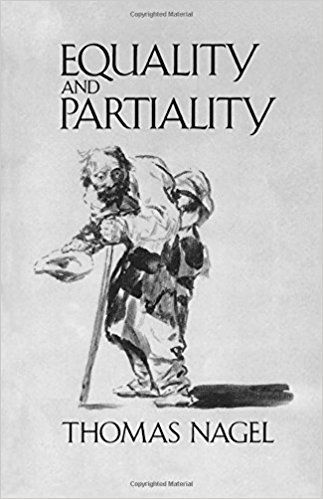
Derived from Thomas Nagel’s Locke Lectures, Equality and Partiality proposes a nonutopian account of political legitimacy, based on the need to accommodate both personal and impersonal motives in any credible moral theory, and therefore in any political theory with a moral foundation. Within each individual, Nagel believes, there is a division between two standpoints, the personal and the impersonal. Without the impersonal standpoint, there would be no morality, only the clash, compromise, and occasional convergence of individual perspectives. It is because a human being does not occupy only his own point of view that each of us is susceptible to the claims of others through private and public morality. Political systems, to be legitimate, must achieve an integration of these two standpoints within the individual. These ideas are applied to specific problems such as social and economic inequality, toleration, international justice, and the public support of culture. Nagel points to the problem of balancing equality and partiality as the most important issue with which political theorists are now faced.
How ought we to live? What really exists? How do we know? This book introduces important themes in ethics, knowledge, and the self, via readings from Plato, Hume, Descartes, Hegel, Darwin, and Buddhist writers. It emphasizes throughout the point of doing philosophy, explains how different areas of philosophy are related, and explores the contexts in which philosophy was and is done.
Informal Logic is an introductory guidebook to the basic principles of constructing sound arguments and criticizing bad ones. Non-technical in approach, it is based on 186 examples, which Douglas Walton, a leading authority in the field of informal logic, discusses and evaluates in clear, illustrative detail. Walton explains how errors, fallacies, and other key failures of argument occur. He shows how correct uses of argument are based on sound strategies for reasoned persuasion and critical responses. Among the many subjects covered are: forms of valid argument, defeasible arguments, relevance, appeals to emotion, personal attack, straw man argument, jumping to a conclusion, uses and abuses of expert opinion, problems in drawing conclusions from polls and statistics, loaded terms, equivocation, arguments from analogy, and techniques of posing, replying to, and criticizing questions. This new edition takes into account many new developments in the field of argumentation study that have occurred since 1989, many created by the author. Drawing on these developments, Walton includes and analyzes 36 new topical examples and also brings in recent work on argumentation schemes. Ideally suited for use in courses in informal logic and introduction to philosophy, this book will also be valuable to students of pragmatics, rhetoric, and speech communication.
ما از اخلاق چه انتظاری داریم؟ این سوال شاید تاحدودی برای عموم مردم و یا متخصصان این رشته قابل پاسخ باشد؛ اینکه خوب بودن را به ما بیاموزد و در تنظیم روابط فردی م...

جشن کتاب تهران به ایستگاه سی و یکم رسیده است. حال و احوال نشر کتاب خوب نیست و باید فرهنگدوستان را به خرید و هدیه دادن کتاب ترغیب نمود. خانه اخلاقپژوهان جوان ب...

بنیاد کتابهای اخلاق اسلامی عمدتا پالایش جان از آلودگیها و آراستن آن به زیباییها است. اندیشه محوری این قبیل کتابها آن است که انسان فعلی آنی نیست که باید باشد...

-
0 Comments