Notice: تابع WP_Block_Type_Registry::register به طورنادرست فراخوانی شد. نامهای نوع بلوک نباید حروف بزرگ داشته باشند. لطفاً برای اطلاعات بیشتر، اشکال زدایی در وردپرس را مشاهده کنید. (این پیام در نگارش 5.0.0 افزوده شده است.) in /home/ethicsho/public_html/wp-includes/functions.php on line 5313
Warning: Use of undefined constant TDC_PATH_LEGACY - assumed 'TDC_PATH_LEGACY' (this will throw an Error in a future version of PHP) in /home/ethicsho/public_html/wp-content/plugins/td-composer/td-composer.php on line 109
Warning: Use of undefined constant TDSP_THEME_PATH - assumed 'TDSP_THEME_PATH' (this will throw an Error in a future version of PHP) in /home/ethicsho/public_html/wp-content/plugins/td-composer/td-composer.php on line 113 بایگانیهای 978-90-420-2226-3 - خانه اخلاق پژوهان جوان Notice: Trying to access array offset on value of type bool in /home/ethicsho/public_html/wp-content/plugins/wp-ulike/inc/general-functions.php on line 807
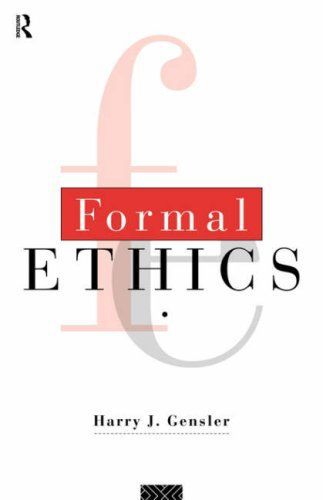
Formal Ethics focuses on the golden rule (“Treat others as you want to be treated”) and other formal ethical principles (like “Be logically consistent in your beliefs,” “Follow your conscience,” and “Make similar evaluations about similar cases”). The book formulates such principles clearly, defends them from various perspectives on the foundations of ethics, and shows how to use them to reason about practical problems (like racism and moral education). While addressed to specialists in moral philosophy and logic, the book’s simple language and practical relevance make it suitable for graduate and advanced undergraduate students. There is an associated Web site featuring computer exercises at: http://www.routledge.com/routledge/philosophy/fe_main.html
What are ethical judgments about? And what is their relation to practice? How can ethical judgment aspire to objectivity? The past two decades have witnessed a resurgence of interest in metaethics, placing questions such as these about the nature and status of ethical judgment at the very center of contemporary moral philosophy. Moral Discourse and Practice: Some Philosophical Approaches is a unique anthology which collects important recent work, much of which is not easily available elsewhere, on core metaethical issues. Naturalist moral realism, once devastated by the charge of “naturalistic fallacy,” has been reinvigorated, as have versions of moral realism that insist on the discontinuity between ethics and science. Irrealist, expressivist programs have also developed with great subtlety, encouraging the thought that a noncognivist account may actually be able to explain ethical judgments’ aspirations to objectivity. Neo-Kantian constructivist theories have flourished as well, offering hope that morality can be grounded in a plausible conception of reasonable conduct. Together, the positions advanced in the essays collected here address these recent developments, constituting a rich array of approaches to contemporary moral philosophy’s most fundamental debates. An extensive introduction by Darwall, Gibbard, and Railton is also included, making this volume the most comprehensive and up-to-date work of its kind. Moral Discourse is ideally suited for use in courses in contemporary ethics, ethical theory, and metaethics.
Do we desire things because they are good, or are they good because we desire them? Objectivists answer that we desire things because they are good; subjectivists answer that things are good because we desire them. Further, does it make sense to account for moral disagreement by claiming, as the moral relativist does, that something might be good for one person but not for another? Some essays in this book consider whether objective moral truths can be grounded in an understanding of the nature of human beings as rational and social animals. Some discuss the ethical theories of historical figures-Aristotle, Aquinas, or Kant-or offer critical assessments of the work of recent and contemporary theorists-such as Moore, Putnam, Ayn Rand, Philippa Foot, and Rosalind Hursthouse. Other essays ask whether moral principles and values can be constructed through a process of practical reasoning or deliberation. Still others consider what the phenomenology of our moral experiences can reveal about moral objectivity.
ما از اخلاق چه انتظاری داریم؟ این سوال شاید تاحدودی برای عموم مردم و یا متخصصان این رشته قابل پاسخ باشد؛ اینکه خوب بودن را به ما بیاموزد و در تنظیم روابط فردی م...

جشن کتاب تهران به ایستگاه سی و یکم رسیده است. حال و احوال نشر کتاب خوب نیست و باید فرهنگدوستان را به خرید و هدیه دادن کتاب ترغیب نمود. خانه اخلاقپژوهان جوان ب...

بنیاد کتابهای اخلاق اسلامی عمدتا پالایش جان از آلودگیها و آراستن آن به زیباییها است. اندیشه محوری این قبیل کتابها آن است که انسان فعلی آنی نیست که باید باشد...

-
0 Comments