Notice: تابع WP_Block_Type_Registry::register به طورنادرست فراخوانی شد. نامهای نوع بلوک نباید حروف بزرگ داشته باشند. لطفاً برای اطلاعات بیشتر، اشکال زدایی در وردپرس را مشاهده کنید. (این پیام در نگارش 5.0.0 افزوده شده است.) in /home/ethicsho/public_html/wp-includes/functions.php on line 5313
Warning: Use of undefined constant TDC_PATH_LEGACY - assumed 'TDC_PATH_LEGACY' (this will throw an Error in a future version of PHP) in /home/ethicsho/public_html/wp-content/plugins/td-composer/td-composer.php on line 109
Warning: Use of undefined constant TDSP_THEME_PATH - assumed 'TDSP_THEME_PATH' (this will throw an Error in a future version of PHP) in /home/ethicsho/public_html/wp-content/plugins/td-composer/td-composer.php on line 113 بایگانیهای 978-1503342903 - خانه اخلاق پژوهان جوان Notice: Trying to access array offset on value of type bool in /home/ethicsho/public_html/wp-content/plugins/wp-ulike/inc/general-functions.php on line 807
When Thomas Jefferson placed “the pursuit of happiness” along with life and liberty in The Declaration of Independence he was most likely referring to Aristotle’s concept of happiness, or eudaimonia. Eudaimonia is not about good feelings but rather the fulfillment of human potentials. Fulfillment is made possible by virtue; the moderation of desire and emotion by reason. The Psychology of Happiness is the first book to bring together psychological, philosophical, and physiological theory and research in support of Aristotle’s view. It examines the similarity between Aristotle’s concept of virtue and modern cognitive theories of emotion. It discusses the discovery of human potentials, the development of virtue and its neurological basis, the mistaken idea that fulfillment is selfish, and several other issues related to the pursuit of a good human life.
Well-known ethical, medical, legal, and philosophical thinkers debate the conflicting moral and legal demands for maintaining the privacy of health care records in an age of easy computer access to those records and growing pressure by insurance companies, public health agencies, and employers for personal health care data. Interdisciplinary and enlightening, Privacy and Health Care presents the latest moral and legal thinking for and against greater protection of the privacy of health care information, and advances this important issue to a new level of clarity and decision.
There is a need in both public and professional sectors for a deeper, and more complete understanding of forgiveness, as we are – in the author’s own words – on the threshold of an age of forgiveness and reconciliation. And yet despite continued interest and development in the field, researchers, clinicians, practitioners, and academics have long been without a comprehensive resource on which to base their work. The Handbook of Forgiveness summarizes the state of the science in the research, practice, and teaching of forgiveness. Chapters approach forgiveness and reconciliation from a variety of perspectives, drawing on related work in fields such as biology, personality, social psychology, clinical psychology, developmental psychology, philosophy, neuroscience, and international/political implications. The Handbook provides comprehensive treatments of the topic, integrating theoretical considerations, methodological discussions, and practical interventions strategies in order to appeal to researchers, clinicians, and practitioners. This volume is the most up-to-date and authoritative resource on the understanding of the science of forgiveness. The Handbook of Forgiveness has been chosen as a Book of Distinction by Templeton Press.
What is ethics? Where does it come from? Can we really hope to find any rational way of deciding how we ought to live? If we can, what would it be like, and how are we going to know when we have found it? To capture the essentials of what we know about the origins and nature of ethics, Peter Singer has drawn on anthropology, evolution, game theory, and works of fiction, in addition to the classic moral philosophy of such thinkers as Nietzsche, Kant, and Confucius. By choosing some of the finest pieces of writing, old and new, in and about ethics, he conveys the intellectual excitement of the search for answers to basic questions about how we ought to live. From the debates of Socrates and the profound writing of Rousseau to Jane Goodall’s reflections on the ethics of chimpanzee kinship and Luther’s commentary on the Sixth Commandment (thou shalt not kill), this engaging reader offers a complete and thorough introduction to the fascinating world of ethical debate.
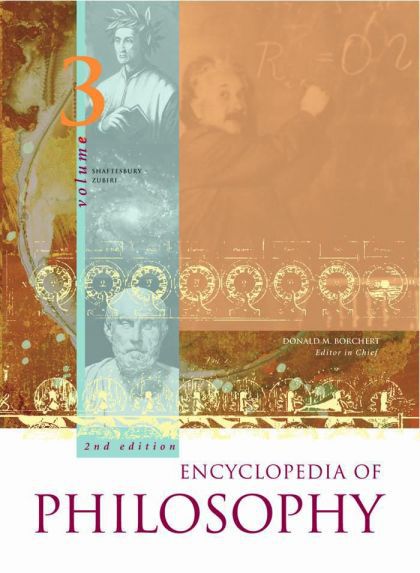
Containing material from hundreds of highly distinguished contributors representing the world’s top universities and institutions, the second edition has a truly global perspective. It contains more than 2,100 entries — including more than 450 new articles. Among the many topics covered are African, Islamic, Jewish, Russian, Chinese, and Buddhist philosophies; bioethics and biomedical ethics; art and aesthetics; epistemology; metaphysics; peace and war; social and political philosophy; the Holocaust; feminist thought; and much more. Additionally, the second edition also features 1,000 biographical entries on major figures in philosophical thought throughout history.
ما از اخلاق چه انتظاری داریم؟ این سوال شاید تاحدودی برای عموم مردم و یا متخصصان این رشته قابل پاسخ باشد؛ اینکه خوب بودن را به ما بیاموزد و در تنظیم روابط فردی م...

جشن کتاب تهران به ایستگاه سی و یکم رسیده است. حال و احوال نشر کتاب خوب نیست و باید فرهنگدوستان را به خرید و هدیه دادن کتاب ترغیب نمود. خانه اخلاقپژوهان جوان ب...

بنیاد کتابهای اخلاق اسلامی عمدتا پالایش جان از آلودگیها و آراستن آن به زیباییها است. اندیشه محوری این قبیل کتابها آن است که انسان فعلی آنی نیست که باید باشد...

-
0 Comments