Notice: تابع WP_Block_Type_Registry::register به طورنادرست فراخوانی شد. نامهای نوع بلوک نباید حروف بزرگ داشته باشند. لطفاً برای اطلاعات بیشتر، اشکال زدایی در وردپرس را مشاهده کنید. (این پیام در نگارش 5.0.0 افزوده شده است.) in /home/ethicsho/public_html/wp-includes/functions.php on line 5313
Warning: Use of undefined constant TDC_PATH_LEGACY - assumed 'TDC_PATH_LEGACY' (this will throw an Error in a future version of PHP) in /home/ethicsho/public_html/wp-content/plugins/td-composer/td-composer.php on line 109
Warning: Use of undefined constant TDSP_THEME_PATH - assumed 'TDSP_THEME_PATH' (this will throw an Error in a future version of PHP) in /home/ethicsho/public_html/wp-content/plugins/td-composer/td-composer.php on line 113 بایگانیهای 978-1-4051-7782-5 - خانه اخلاق پژوهان جوان Notice: Trying to access array offset on value of type bool in /home/ethicsho/public_html/wp-content/plugins/wp-ulike/inc/general-functions.php on line 807
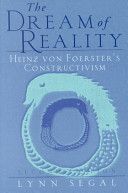
What if there were no objective facts, no objective truth, no objectivity at all, only our belief in them? What if our consciousness itself is an unconscious invention, constructed out of logic and language? In this thought-provoking volume, Lynn Segal describes how the ideas of Heinz von Foerster compel us to explore the question, “Do we discover the world or do we invent it?” and suggests that we must first know how we think before we can claim knowledge of the world. The resulting philosophy, Constructivism, examines the limits of what we can know and argues that understanding these limits can lead us to be more responsible for our personal and collective behavior. After tracing the historical transition from religious belief to a belief in science, Segal examines objectivity from semantic, philosophical, and neurological perspectives. Segal shows that we can never achieve objectivity and that the scientific method ensures only a consensus among observers. Next, he details how language and logic unwittingly predetermine the very conclusions we derive when we try to know the world. Finally, he describes a computational model of cognition that does not depend on first positing the world to account for cognition and consciousness. While Constructivism may seem relevant only to those in the cognitive sciences, it is, in fact, highly relevant to everyone. Paradoxically, grasping the limits of our own under-standing can free us to live more creative and meaningful personal and professional lives.
According to an ancient and still popular view — sometimes known as ‘eudaimonism’ — a person’s well-being, or quality of life, is ultimately determined by his or her level of happiness. According to this view, the happier a person is, the better off he is. The doctrine is controversial in part because the nature of happiness is controversial. In What Is This Thing Called Happiness? Fred Feldman presents a study of the nature and value of happiness. Part One contains critical discussions of the main philosophical and psychological theories of happiness. Feldman presents arguments designed to show that each of these theories is problematic. Part Two contains his presentation and defense of his own theory of happiness, which is a form of attitudinal hedonism. On this view, a person’s level of happiness may be identified with the extent to which he or she takes pleasure in things. Feldman shows that if we understand happiness as he proposes, it becomes reasonable to suppose that a person’s well-being is determined by his or her level of happiness. This view has important implications not only for moral philosophy, but also for the emerging field of hedonic psychology. Part Three contains discussions of some interactions between the proposed theory of happiness and empirical research into happiness.
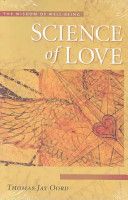
Science of Love: The Wisdom of Well-Being examines the varied dimensions of love, and illuminates the new field of scholarship, the love-science symbiosis, for both scholars and general readers. It looks at religious, ethical, and philosophical issues, such as virtue, creation ex nihilo, progress, divine action, agape, values, religious practices, pacifism, sexuality, friendship, freedom, and marriage. It examines how these issues affect the ways in which people understand God, each other, and the world in which we live. Exploring these connections inspires creative hypotheses for how we might better comprehend both the sacred and the scientific.
ما از اخلاق چه انتظاری داریم؟ این سوال شاید تاحدودی برای عموم مردم و یا متخصصان این رشته قابل پاسخ باشد؛ اینکه خوب بودن را به ما بیاموزد و در تنظیم روابط فردی م...

جشن کتاب تهران به ایستگاه سی و یکم رسیده است. حال و احوال نشر کتاب خوب نیست و باید فرهنگدوستان را به خرید و هدیه دادن کتاب ترغیب نمود. خانه اخلاقپژوهان جوان ب...

بنیاد کتابهای اخلاق اسلامی عمدتا پالایش جان از آلودگیها و آراستن آن به زیباییها است. اندیشه محوری این قبیل کتابها آن است که انسان فعلی آنی نیست که باید باشد...

-
0 Comments