Notice: تابع WP_Block_Type_Registry::register به طورنادرست فراخوانی شد. نامهای نوع بلوک نباید حروف بزرگ داشته باشند. لطفاً برای اطلاعات بیشتر، اشکال زدایی در وردپرس را مشاهده کنید. (این پیام در نگارش 5.0.0 افزوده شده است.) in /home/ethicsho/public_html/wp-includes/functions.php on line 5313
Warning: Use of undefined constant TDC_PATH_LEGACY - assumed 'TDC_PATH_LEGACY' (this will throw an Error in a future version of PHP) in /home/ethicsho/public_html/wp-content/plugins/td-composer/td-composer.php on line 109
Warning: Use of undefined constant TDSP_THEME_PATH - assumed 'TDSP_THEME_PATH' (this will throw an Error in a future version of PHP) in /home/ethicsho/public_html/wp-content/plugins/td-composer/td-composer.php on line 113 بایگانیهای 978-1-315-66629-7 - خانه اخلاق پژوهان جوان Notice: Trying to access array offset on value of type bool in /home/ethicsho/public_html/wp-content/plugins/wp-ulike/inc/general-functions.php on line 807
What Nietzsche Really Saidgives us a lucid overview — both informative and entertaining — of perhaps the most widely read and least understood philosopher in history. Friedrich Nietzsche’s aggressive independence, flamboyance, sarcasm, and celebration of strength have struck responsive chords in contemporary culture. More people than ever are reading and discussing his writings. But Nietzsche’s ideas are often overshadowed by the myths and rumors that surround his sex life, his politics, and his sanity. In this lively and comprehensive analysis, Nietzsche scholars Robert C. Solomon and Kathleen M. Higgins get to the heart of Nietzsche’s philosophy, from his ideas on “the will to power” to his attack on religion and morality and his infamousUbermensch(superman). What Nietzsche Really Saidoffers both guidelines and insights for reading and understanding this controversial thinker. Written with sophistication and wit, this book provides an excellent summary of the life and work of one of history’s most provocative philosophers. From the Hardcover edition.
A superb work on the nature of human action, it features influential discussions of numerous topics. These include the freedom to act; weakness of the will; the logical form of talk about actions, intentions, and causality; the logic of practical reasoning; Hume’s theory of the indirect passions; and the nature and limits of decision theory.
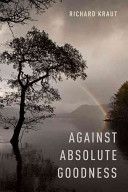
Are there things we should value because they are, quite simply, good? If so, such things might be said to have “absolute goodness.” They would be good simpliciter or full stop – not good for someone, not good of a kind, but nonetheless good (period). They might also be called “impersonal values.” The reason why we ought to value such things, if there are any, would merely be the fact that they are, quite simply, good things. In the twentieth century, G. E. Moore was the great champion of absolute goodness, but he is not the only philosopher who posits the existence and importance of this property. Against these friends of absolute goodness, Richard Kraut here builds on the argument he made in What is Good and Why, demonstrating that goodness is not a reason-giving property – in fact, there may be no such thing. It is, he holds, an insidious category of practical thought, because it can be and has been used to justify what is harmful and condemn what is beneficial. Impersonal value draws us away from what is good for persons. His strategy for opposing absolute goodness is to search for domains of practical reasoning in which it might be thought to be needed, and this leads him to an examination of a wide variety of moral phenomena: pleasure, knowledge, beauty, love, cruelty, suicide, future generations, bio-diversity, killing in self-defense, and the extinction of our species. Even persons, he proposes, should not be said to have absolute value. The special importance of human life rests instead on the great advantages that such lives normally offer. “When one reads this, one sees the possibility of real philosophical progress. If Kraut is right, I’d be wrong to say that this book is good, period. Or even great, period. But I will say that, as a work of philosophy, and for those who read it, it is excellent indeed.” –Russ Shafer-Landau, University of Wisconsin-Madison
ما از اخلاق چه انتظاری داریم؟ این سوال شاید تاحدودی برای عموم مردم و یا متخصصان این رشته قابل پاسخ باشد؛ اینکه خوب بودن را به ما بیاموزد و در تنظیم روابط فردی م...

جشن کتاب تهران به ایستگاه سی و یکم رسیده است. حال و احوال نشر کتاب خوب نیست و باید فرهنگدوستان را به خرید و هدیه دادن کتاب ترغیب نمود. خانه اخلاقپژوهان جوان ب...

بنیاد کتابهای اخلاق اسلامی عمدتا پالایش جان از آلودگیها و آراستن آن به زیباییها است. اندیشه محوری این قبیل کتابها آن است که انسان فعلی آنی نیست که باید باشد...

-
0 Comments