Notice: تابع WP_Block_Type_Registry::register به طورنادرست فراخوانی شد. نامهای نوع بلوک نباید حروف بزرگ داشته باشند. لطفاً برای اطلاعات بیشتر، اشکال زدایی در وردپرس را مشاهده کنید. (این پیام در نگارش 5.0.0 افزوده شده است.) in /home/ethicsho/public_html/wp-includes/functions.php on line 5313
Warning: Use of undefined constant TDC_PATH_LEGACY - assumed 'TDC_PATH_LEGACY' (this will throw an Error in a future version of PHP) in /home/ethicsho/public_html/wp-content/plugins/td-composer/td-composer.php on line 109
Warning: Use of undefined constant TDSP_THEME_PATH - assumed 'TDSP_THEME_PATH' (this will throw an Error in a future version of PHP) in /home/ethicsho/public_html/wp-content/plugins/td-composer/td-composer.php on line 113 بایگانیهای 978-0687090877 - خانه اخلاق پژوهان جوان Notice: Trying to access array offset on value of type bool in /home/ethicsho/public_html/wp-content/plugins/wp-ulike/inc/general-functions.php on line 807
Once regarded as a conservative critic of culture, then enlisted by the court theoreticians of Nazism, Nietzsche has come to be revered by postmodern thinkers as one of their founding fathers, a prophet of human liberation who revealed the perspectival character of all knowledge and broke radically with traditional forms of morality and philosophy. In Nietzsche: The Ethics of an Immoralist, Peter Berkowitz challenges this new orthodoxy, asserting that it produces a one-dimensional picture of Nietzsche’s philosophical explorations and passes by much of what is provocative and problematic in his thought. Berkowitz argues that Nietzsche’s thought is rooted in extreme and conflicting opinions about metaphysics and human nature. Discovering a deep unity in Nietzsche’s work by exploring the structure and argumentative movement of a wide range of his books, Berkowitz shows that Nietzsche is a moral and political philosopher in the Socratic sense whose governing question is, “What is the best life?” Nietzsche, Berkowitz argues, puts forward a severe and aristocratic ethics, an ethics of creativity, that demands that the few human beings who are capable acquire a fundamental understanding of and attain total mastery over the world. Following the path of Nietzsche’s thought, Berkowitz shows that this mastery, which represents a suprapolitical form of rule and entails a radical denigration of political life, is, from Nietzsche’s own perspective, neither desirable nor attainable. Out of the colorful and richly textured fabric of Nietzsche’s books, Peter Berkowitz weaves an interpretation of Nietzsche’s achievement that is at once respectful and skeptical, an interpretation that brings out the love of truth, the courage, and the yearning for the good that mark Nietzsche’s magisterial effort to live an examined life by giving an account of the best life.
Canadian Intellectual Property Law and Strategy provides a comprehensive overview of the Canadian law relating to trademarks, copyright and industrial designs, along with strategic, practice-oriented commentary regarding how such laws can best be used for business advantage. The first part of the book is devoted to trademarks. The material in this section, in addition to providing an overview of Canadian trademark law, will deal with how a foreign trademark owner can use the system most advantageously. The initial focus will be on acquisition of rights-for example, an application can be filed in Canada based on foreign registration and use and a registration can be obtained without having to show any use of the trade mark in Canada-while latter sections will emphasize the best strategies to maintain and protect trademark rights in Canada. The second part of the book is devoted to copyright, with less emphasis on the specific industries-e.g., movie production-that typically rely on the copyright system than a broad, business-oriented treatment that reflects the potentially far-reaching impact of the law. (For example, copyright can subsist in a design trade mark if sufficiently original.) The approach will thus be of a general commercial nature, emphasizing how legislation can be used to protect rights in Canada, with specific attention paid to understanding which rights are available and the steps that should be taken to protect those rights, whether by means of the appropriate assignments and registrations, or on enforcement actions in the Canadian courts. The third part of the book focuses on industrial designs, and will explain what needs to be done and when by manufacturers to protect their products. The emphasis will initially be on understanding the system and the potential benefits available by obtaining registrations, with the rest of the section focusing on the steps required to protect and assert those rights against infringers.
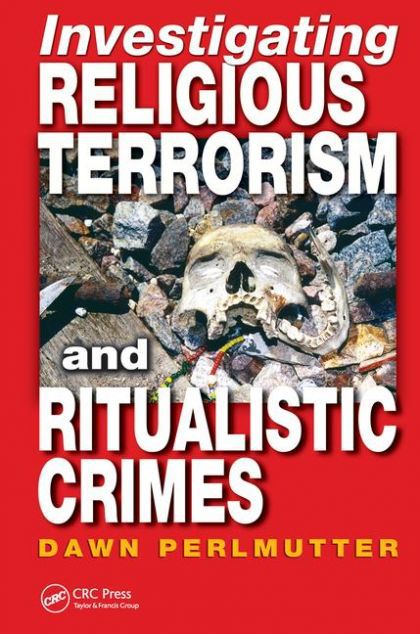
The legalities of particular religious practices depend on many factors, such as the type of occult or religious activity, the current laws, and the intention of the individual practitioner. Written by the director of the Institute for the Research of Organized and Ritual Violence, Investigating Religious Terrorism and Ritualistic Crimes is the first complete resource to assist in crime scene identification, criminal investigation, and prosecution of religious terrorism and occult crime. It analyzes occult and religious terrorist practices from each group’s theological perspective to help you understand traditional and contemporary occult groups and domestic and international terrorist religions, demarcate legal religious practice from criminal activity, and acquire techniques specific to occult and terrorist religion crime scene investigation.
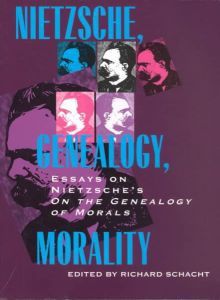
Written at the height of the philosopher’s intellectual powers, Friedrich Nietzsche’s On the Genealogy of Morals has become one of the key texts of recent Western philosophy. Its essayistic style affords a unique opportunity to observe many of Nietzsche’s persisting concerns coming together in an illuminating constellation. A profound influence on psychoanalysis, antihistoricism, and poststructuralism and an abiding challenge to ethical theory, Nietzsche’s book addresses many of the major philosophical problems and possibilities of modernity.In this unique collection focusing on the Genealogy, twenty-five notable philosophers offer diverse discussions of the book’s central themes and concepts. They explore such notions as ressentiment, asceticism, “slave” and “master” moralities, and what Nietzsche calls “genealogy” and its relation to other forms of inquiry in his work. The book presents a cross section of contemporary Nietzsche scholarship and philosophical investigation that is certain to interest philosophers, intellectual and cultural historians, and anyone concerned with one of the master thinkers of the modern age. Written at the height of the philosopher’s intellectual powers, Friedrich Nietzsche’s On the Genealogy of Morals has become one of the key texts of recent Western philosophy. Its essayistic style affords a unique opportunity to observe many of Nietzsche’s persisting concerns coming together in an illuminating constellation. A profound influence on psychoanalysis, antihistoricism, and poststructuralism and an abiding challenge to ethical theory, Nietzsche’s book addresses many of the major philosophical problems and possibilities of modernity.In this unique collection focusing on the Genealogy, twenty-five notable philosophers offer diverse discussions of the book’s central themes and concepts. They explore such notions as ressentiment, asceticism, “slave” and “master” moralities, and what Nietzsche calls “genealogy” and its relation to other forms of inquiry in his work. The book presents a cross section of contemporary Nietzsche scholarship and philosophical investigation that is certain to interest philosophers, intellectual and cultural historians, and anyone concerned with one of the master thinkers of the modern age.
ما از اخلاق چه انتظاری داریم؟ این سوال شاید تاحدودی برای عموم مردم و یا متخصصان این رشته قابل پاسخ باشد؛ اینکه خوب بودن را به ما بیاموزد و در تنظیم روابط فردی م...

جشن کتاب تهران به ایستگاه سی و یکم رسیده است. حال و احوال نشر کتاب خوب نیست و باید فرهنگدوستان را به خرید و هدیه دادن کتاب ترغیب نمود. خانه اخلاقپژوهان جوان ب...

بنیاد کتابهای اخلاق اسلامی عمدتا پالایش جان از آلودگیها و آراستن آن به زیباییها است. اندیشه محوری این قبیل کتابها آن است که انسان فعلی آنی نیست که باید باشد...

-
0 Comments