Notice: تابع WP_Block_Type_Registry::register به طورنادرست فراخوانی شد. نامهای نوع بلوک نباید حروف بزرگ داشته باشند. لطفاً برای اطلاعات بیشتر، اشکال زدایی در وردپرس را مشاهده کنید. (این پیام در نگارش 5.0.0 افزوده شده است.) in /home/ethicsho/public_html/wp-includes/functions.php on line 5313
Warning: Use of undefined constant TDC_PATH_LEGACY - assumed 'TDC_PATH_LEGACY' (this will throw an Error in a future version of PHP) in /home/ethicsho/public_html/wp-content/plugins/td-composer/td-composer.php on line 109
Warning: Use of undefined constant TDSP_THEME_PATH - assumed 'TDSP_THEME_PATH' (this will throw an Error in a future version of PHP) in /home/ethicsho/public_html/wp-content/plugins/td-composer/td-composer.php on line 113 بایگانیهای 978 0 7486 3869 7 - خانه اخلاق پژوهان جوان Notice: Trying to access array offset on value of type bool in /home/ethicsho/public_html/wp-content/plugins/wp-ulike/inc/general-functions.php on line 807
Can we regard ourselves as having free will? What is the place of values in a world of facts? What grounds the authority of moral injunctions, and why should we care about them? Unless we provide satisfactory answers to these questions, ethics has no credible status and is likely to be subsumed by psychology, history, or rational decision theory. According to Ermanno Bencivenga, this outcome is both common and regrettable. Bencivenga points to Immanuel Kant for the solution. Kant’s philosophy is a sustained, bold, and successful effort aiming at offering us the answers we need. Ethics Vindicated is a clear and thorough account of this effort that builds on Bencivenga’s previous interpretation of transcendental philosophy (as articulated in his Kant’s Copernican Revolution) and draws on the entire Kantian corpus.
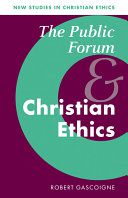
This book addresses the question of the communication of Christian ethics in the public forum of liberal, pluralist societies. Drawing on debates in philosophy, theology and sociological theory, it relates the problem of communication to fundamental questions about the nature of liberal societies and the identity of Christian faith and the Christian community. With particular emphasis on Kantian and neo-Kantian ethics, it explores the link between autonomy and community in liberal societies. The theology of communio, expressed in revealed Christian traditions, can reconcile autonomy and community. Any Christian attempt to communicate this vision must also reflect on Christianity’s own identity, especially the ways in which its own self-consciousness grows in critical interaction with secularity. In this light, Christian ethical communication is both a witness to a distinctive identity, founded in the revelation of the triune God, and a vision of universal human solidarity which can reconcile autonomy and community.
This book contains new essays in honor of Melvin J. Lerner, a pioneer in the psychological study of justice. The contributors to this volume are internationally renowned scholars from psychology, business, and law. They examine the role of justice motivation in a wide variety of contexts, including workplace violence, affirmative action programs, helping or harming innocent victims and how people react to their own fate. Contributors explore fundamental issues such as whether people’s interest in justice is motivated by self-interest or a genuine concern for the welfare of others, when and why people feel a need to punish transgressors, how a concern for justice emerges during the development of societies and individuals, and the relation of justice motivation to moral motivation. How an understanding of justice motivation can contribute to the amelioration of major social problems is also examined.
This book is about the gap between the moral demand on us and our natural capacities to meet it. John Hare starts with Kants statement of the moral demand and his acknowledgement of this gap. Hare then analyses Kants use of the resources of the Christian tradition to make sense of this gap,especially the notions of revelation, providence, and Gods grace. Kant reflects the traditional way of making sense of this gap, which is to invoke Gods assistance in bridging it. Hare goes on to examine various contemporary philosophers who do not use these resources. He considers three mainstrategies: exaggerating our natural capacities, diminishing the moral demand, and finding some naturalistic substitute for Gods assistance. He argues that these strategies do not work, and that we are therefore left with the gap and with the problem that it is unreasonable to demand of ourselves astandard which we cannot reach. In the final section of the book, Hare looks in more detail at the Christian doctrines of atonement, justification, and sanctification. He discusses Kierkegaards account of the relation between the ethical life and the Christian life, and ends by considering humanforgiveness, and the ways in which Gods forgiveness is both like and unlike our forgiveness of each other. The book is intended for those interested in both ethical theory and Christian theology.
ما از اخلاق چه انتظاری داریم؟ این سوال شاید تاحدودی برای عموم مردم و یا متخصصان این رشته قابل پاسخ باشد؛ اینکه خوب بودن را به ما بیاموزد و در تنظیم روابط فردی م...

جشن کتاب تهران به ایستگاه سی و یکم رسیده است. حال و احوال نشر کتاب خوب نیست و باید فرهنگدوستان را به خرید و هدیه دادن کتاب ترغیب نمود. خانه اخلاقپژوهان جوان ب...

بنیاد کتابهای اخلاق اسلامی عمدتا پالایش جان از آلودگیها و آراستن آن به زیباییها است. اندیشه محوری این قبیل کتابها آن است که انسان فعلی آنی نیست که باید باشد...

-
0 Comments