Notice: تابع WP_Block_Type_Registry::register به طورنادرست فراخوانی شد. نامهای نوع بلوک نباید حروف بزرگ داشته باشند. لطفاً برای اطلاعات بیشتر، اشکال زدایی در وردپرس را مشاهده کنید. (این پیام در نگارش 5.0.0 افزوده شده است.) in /home/ethicsho/public_html/wp-includes/functions.php on line 5313
Warning: Use of undefined constant TDC_PATH_LEGACY - assumed 'TDC_PATH_LEGACY' (this will throw an Error in a future version of PHP) in /home/ethicsho/public_html/wp-content/plugins/td-composer/td-composer.php on line 109
Warning: Use of undefined constant TDSP_THEME_PATH - assumed 'TDSP_THEME_PATH' (this will throw an Error in a future version of PHP) in /home/ethicsho/public_html/wp-content/plugins/td-composer/td-composer.php on line 113 بایگانیهای 978-0-472-11745-1 - خانه اخلاق پژوهان جوان Notice: Trying to access array offset on value of type bool in /home/ethicsho/public_html/wp-content/plugins/wp-ulike/inc/general-functions.php on line 807
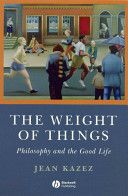
“In this book, Jean Kazez asks the perennial philosophical questions about what we should place at the center of our lives. Incorporating the views of both past and present philosophers, as well as examples from history, literature, media, and the news, this concise introduction to ethics and philosophy offers an opportunity for personal reflection. Contemplating the importance of happiness, morality, self expression, desire, religion, and family, The Weight of Things invites the reader to explore the difficult questions in our daily lives.”–BOOK JACKET.
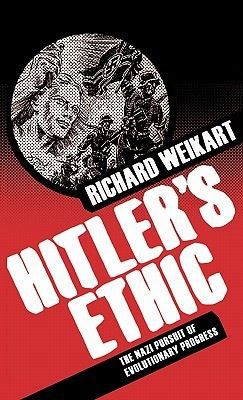
In this book, Weikart helps unlock the mystery of Hitler’s evil by vividly demonstrating the surprising conclusion that Hitler’s immorality flowed from a coherent ethic. Hitler was inspired by evolutionary ethics to pursue the utopian project of biologically improving the human race. This ethic underlay or influenced almost every major feature of Nazi policy: eugenics (i.e., measures to improve human heredity, including compulsory sterilization), euthanasia, racism, population expansion, offensive warfare, and racial extermination.
Is it ever acceptable to lie? This question plays a surprisingly important role in the story of Europe’s transition from medieval to modern society. According to many historians, Europe became modern when Europeans began to lie–that is, when they began to argue that it is sometimes acceptable to lie. This popular account offers a clear trajectory of historical progression from a medieval world of faith, in which every lie is sinful, to a more worldly early modern society in which lying becomes a permissible strategy for self-defense and self-advancement. Unfortunately, this story is wrong. For medieval and early modern Christians, the problem of the lie was the problem of human existence itself. To ask “Is it ever acceptable to lie?” was to ask how we, as sinners, should live in a fallen world. As it turns out, the answer to that question depended on who did the asking. The Devil Wins uncovers the complicated history of lying from the early days of the Catholic Church to the Enlightenment, revealing the diversity of attitudes about lying by considering the question from the perspectives of five representative voices–the Devil, God, theologians, courtiers, and women. Examining works by Augustine, Bonaventure, Martin Luther, Madeleine de Scudâery, Jean-Jacques Rousseau, and a host of others, Dallas G. Denery II shows how the lie, long thought to be the source of worldly corruption, eventually became the very basis of social cohesion and peace. –from back cover.
This book explores recent developments in ethics of virtue. While acknowledging the Aristotelian roots of modern virtue ethics – with its emphasis on the moral importance of character – this collection recognizes that more recent accounts of virtue have been shaped by many other influences, such as Aquinas, Hume, Nietzsche, Hegel and Marx, Confucius and Lao-tzu. The authors also examine the bearing of virtue ethics on other disciplines such as psychology, sociology and theology, as well as attending to some wider public, professional and educational implications of the ethics of virtue. This pioneering book will be invaluable to researchers and students concerned with the many contemporary varieties and applications of virtue ethics. .
ما از اخلاق چه انتظاری داریم؟ این سوال شاید تاحدودی برای عموم مردم و یا متخصصان این رشته قابل پاسخ باشد؛ اینکه خوب بودن را به ما بیاموزد و در تنظیم روابط فردی م...

جشن کتاب تهران به ایستگاه سی و یکم رسیده است. حال و احوال نشر کتاب خوب نیست و باید فرهنگدوستان را به خرید و هدیه دادن کتاب ترغیب نمود. خانه اخلاقپژوهان جوان ب...

بنیاد کتابهای اخلاق اسلامی عمدتا پالایش جان از آلودگیها و آراستن آن به زیباییها است. اندیشه محوری این قبیل کتابها آن است که انسان فعلی آنی نیست که باید باشد...

-
0 Comments