Notice: تابع WP_Block_Type_Registry::register به طورنادرست فراخوانی شد. نامهای نوع بلوک نباید حروف بزرگ داشته باشند. لطفاً برای اطلاعات بیشتر، اشکال زدایی در وردپرس را مشاهده کنید. (این پیام در نگارش 5.0.0 افزوده شده است.) in /home/ethicsho/public_html/wp-includes/functions.php on line 5313
Warning: Use of undefined constant TDC_PATH_LEGACY - assumed 'TDC_PATH_LEGACY' (this will throw an Error in a future version of PHP) in /home/ethicsho/public_html/wp-content/plugins/td-composer/td-composer.php on line 109
Warning: Use of undefined constant TDSP_THEME_PATH - assumed 'TDSP_THEME_PATH' (this will throw an Error in a future version of PHP) in /home/ethicsho/public_html/wp-content/plugins/td-composer/td-composer.php on line 113 بایگانیهای 978-0-415-99911-3 - خانه اخلاق پژوهان جوان Notice: Trying to access array offset on value of type bool in /home/ethicsho/public_html/wp-content/plugins/wp-ulike/inc/general-functions.php on line 807
In Aquinas, Ethics, and Philosophy of Religion, Thomas Hibbs recovers the notion of practice to develop a more descriptive account of human action and knowing, grounded in the venerable vocabulary of virtue and vice. Drawing on Aquinas, who believed that all good works originate from virtue, Hibbs postulates how epistemology, ethics, metaphysics, and theology combine into a set of contemporary philosophical practices that remain open to metaphysics. Hibbs brings Aquinas into conversation with analytic and Continental philosophy and suggests how a more nuanced appreciation of his thought enriches contemporary debates. This book offers readers a new appreciation of Aquinas and articulates a metaphysics integrally related to ethical practice.
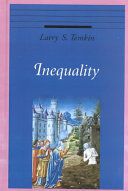
Equality has long been among the most potent of human ideals and it continues to play a prominent role in political argument. Views about equality inform much of the debate about wide-ranging issues such as racism, sexism, obligations to the poor or handicapped, relations between developed and developing countries, and the justification of competing political, economic, and ideological systems. Temkin begins his illuminating examination with a simple question: when is one situation worse than another regarding inequality? In exploring this question, a new approach to understanding inequality emerges. Temkin goes against the common view that inequality is simple and holistic and argues instead that it is complex, individualistic, and essentially comparative. He presents a new way of thinking about equality and inequality that challenges the assumptions of philosophers, welfare economists, and others, and has significant and far-reaching implications on a practical as well as a theoretical level.
John Dewey, widely known as “America’s philosopher,” provided important insights into education and political philosophy, but surprisingly never set down a complete moral or ethical philosophy. Gregory Fernando Pappas presents the first systematic and comprehensive treatment of Dewey’s ethics. By providing a pluralistic account of moral life that is both unified and coherent, Pappas considers ethics to be key to an understanding of Dewey’s other philosophical insights, especially his views on democracy. Pappas unfolds Dewey’s ethical vision by looking carefully at the virtues and values of ideal character and community. Showing that Dewey’s ethics are compatible with the rest of his philosophy, Pappas corrects the reputation of American pragmatism as a philosophy committed to skepticism and relativism. Readers will find a robust and boldly detailed view of Dewey’s ethics in this groundbreaking book.
Philosophy of Psychology is an introduction to philosophical problems that arise in the scientific study of cognition and behavior. José Luis Bermúdez introduces the philosophy of psychology as an interdisciplinary exploration of the nature and mechanisms of cognition. He charts out four influential “pictures of the mind” and uses them to explore central topics in the philosophical foundations of psychology, covering all the core concepts and themes found in undergraduate courses in philosophy and psychology, including: * Models of psychological explanation * The nature of commonsense psychology * Arguments for the autonomy of psychology * Fuctionalist approaches to cognition * Computational models of the mind * Neural network modeling * Rationality and mental causation * Perception, action and cognition * The language of thought and the architecture of cognition Philosophy of Psychology: AContemporary Introductionis a very clear and well-structured textbook from one of the leaders in the field.
ما از اخلاق چه انتظاری داریم؟ این سوال شاید تاحدودی برای عموم مردم و یا متخصصان این رشته قابل پاسخ باشد؛ اینکه خوب بودن را به ما بیاموزد و در تنظیم روابط فردی م...

جشن کتاب تهران به ایستگاه سی و یکم رسیده است. حال و احوال نشر کتاب خوب نیست و باید فرهنگدوستان را به خرید و هدیه دادن کتاب ترغیب نمود. خانه اخلاقپژوهان جوان ب...

بنیاد کتابهای اخلاق اسلامی عمدتا پالایش جان از آلودگیها و آراستن آن به زیباییها است. اندیشه محوری این قبیل کتابها آن است که انسان فعلی آنی نیست که باید باشد...

-
0 Comments