Notice: تابع WP_Block_Type_Registry::register به طورنادرست فراخوانی شد. نامهای نوع بلوک نباید حروف بزرگ داشته باشند. لطفاً برای اطلاعات بیشتر، اشکال زدایی در وردپرس را مشاهده کنید. (این پیام در نگارش 5.0.0 افزوده شده است.) in /home/ethicsho/public_html/wp-includes/functions.php on line 5313
Warning: Use of undefined constant TDC_PATH_LEGACY - assumed 'TDC_PATH_LEGACY' (this will throw an Error in a future version of PHP) in /home/ethicsho/public_html/wp-content/plugins/td-composer/td-composer.php on line 109
Warning: Use of undefined constant TDSP_THEME_PATH - assumed 'TDSP_THEME_PATH' (this will throw an Error in a future version of PHP) in /home/ethicsho/public_html/wp-content/plugins/td-composer/td-composer.php on line 113 بایگانیهای 978-0-19-984110-3 - خانه اخلاق پژوهان جوان Notice: Trying to access array offset on value of type bool in /home/ethicsho/public_html/wp-content/plugins/wp-ulike/inc/general-functions.php on line 807
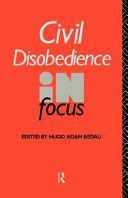
Although the issue of civil disobedience has been discussed as early as 399 B.C., this topic continues to be at the center of much recent debate in the wake of events such as Tiananmen Square and the anti-apartheid movement in South Africa.Civil Disobedience inFocusassembles all the basic materials, both classic and contemporary, needed for the philosophical assessment of this controversial subject. The first part of this work explores the three most influential classic arguments: Plato in theCrito, Thoreau in the 1840s, and Martin Luther King, Jr. in the 1960s. The second part of this book shifts to a contemporary philosophical discussion setting forth the most important reflections by a number of today’s leading thinkers. Included is John Rawls’s definition and justification of civil disobedience in liberal democracy which has provoked much dicussion. The other essays, written by contemporary British and American thinkers, bring into sharprelief the issues — conceptual, normative, and political — raised in the classic arguments. A stimulating edition,Civil Disobedience inFocuswill be invaluable to students of ethics, social/political philosophy, and philosophy of law, as well as to activists.
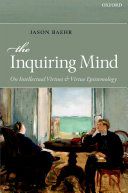
This book is the first systematic treatment of ‘responsibilist’ or character-based virtue epistemology, an approach to epistemology that focuses on intellectual character virtues like open-mindedness, fair-mindedness, inquisitiveness, and intellectual courage, rigor, and carefulness. Baehr distinguishes four main varieties of character-based virtue epistemology and develops a comprehensive assessment of each. For students and professional philosophers looking for an introduction to this important and exciting new field, Baehr provides a brief history of virtue epistemology, an overview of contemporary research in the field, and an introduction to the intellectual virtues that distinguishes them from intellectual talents, temperaments, faculties, and skills. For specialists in epistemology, the book offers the most in depth examination to date of the role that the concept of intellectual virtue should play in a philosophical account of knowledge. Baehr also argues for expanding the borders of epistemology proper to include a more immediate concern with intellectual virtues and their role in a good intellectual life. For virtue theorists and moral psychologists, Baehr defends a ‘personal worth’ account of the nature and structure of an intellectual virtue, situating this account vis-à-vis several related accounts of moral and intellectual virtue in the literature. The book also contains chapter-length analyses of two individual character virtues (open-mindedness and intellectual courage) and an appendix on the relation between intellectual virtues and moral virtues. Overall, the book is a comprehensive and groundbreaking treatment of an important topic in philosophy.
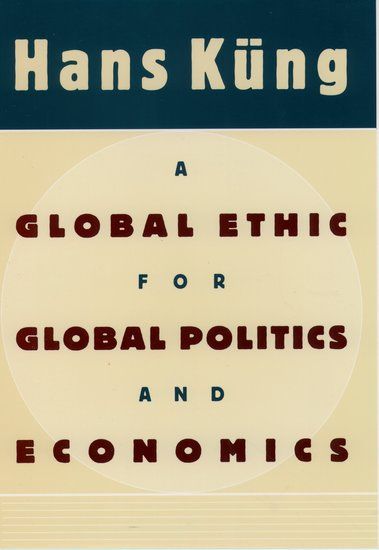
As the twentieth century draws to a close and the rush to globalization gathers momentum, political and economic considerations are crowding out vital ethical questions about the shape of our future. Now, Hans Kung, one of the world’s preeminent Christian theologians, explores these issues in a visionary and cautionary look at the coming global society. How can the new world order of the twenty first century avoid the horrors of the twentieth? Will nations form a real community or continue to aggressively pursue their own interests? Will the Machiavellian approaches of the past prevail over idealism and a more humanitarian politics? What role can religion play in a world increasingly dominated by transnational corporations? Kung tackles these and many other questions with the insight and moral authority that comes from a lifetime’s devotion to the search for justice and human dignity. Arguing against both an amoral realpolitik and an immoral resurgence of laissez faire economics, Kung defines a comprehensive ethic founded on the bedrock of mutual respect and humane treatment of all beings that would encompass the ecological, legal, technological, and social patterns that are reshaping civilization. If we are going to have a global economy, a global technology, a global media, Kung argues, we must also have a global ethic to which all nations, and peoples of the most varied backgrounds and beliefs, can commit themselves. “The world,” he says, “is not going to be held together by the Internet.” For anyone concerned about the world we are creating, A Global Ethic for Global Politics and Economics offers equal measures of informed analysis, compassionate foresight, and wise counsel.
Since its first publication in 1945? Lord Russell’s A History of Western Philosophy has been universally acclaimed as the outstanding one-volume work on the subject — unparalleled in its comprehensiveness, its clarity, its erudition, its grace and wit. In seventy-six chapters he traces philosophy from the rise of Greek civilization to the emergence of logical analysis in the twentieth century. Among the philosophers considered are: Pythagoras, Heraclitus, Parmenides, Empedocles, Anaxagoras, the Atomists, Protagoras, Socrates, Plato, Aristotle, the Cynics, the Sceptics, the Epicureans, the Stoics, Plotinus, Ambrose, Jerome, Augustine, Benedict, Gregory the Great, John the Scot, Aquinas, Duns Scotus, William of Occam, Machiavelli, Erasmus, More, Bacon, Hobbes, Descartes, Spinoza, Leibniz, Locke, Berkeley, Hume, Rousseau, Kant, Hegel, Schopenhauer, Nietzsche, the Utilitarians, Marx, Bergson, James, Dewey, and lastly the philosophers with whom Lord Russell himself is most closely associated — Cantor, Frege, and Whitehead, co-author with Russell of the monumental Principia Mathematica.
ما از اخلاق چه انتظاری داریم؟ این سوال شاید تاحدودی برای عموم مردم و یا متخصصان این رشته قابل پاسخ باشد؛ اینکه خوب بودن را به ما بیاموزد و در تنظیم روابط فردی م...

جشن کتاب تهران به ایستگاه سی و یکم رسیده است. حال و احوال نشر کتاب خوب نیست و باید فرهنگدوستان را به خرید و هدیه دادن کتاب ترغیب نمود. خانه اخلاقپژوهان جوان ب...

بنیاد کتابهای اخلاق اسلامی عمدتا پالایش جان از آلودگیها و آراستن آن به زیباییها است. اندیشه محوری این قبیل کتابها آن است که انسان فعلی آنی نیست که باید باشد...

-
0 Comments