Notice: تابع WP_Block_Type_Registry::register به طورنادرست فراخوانی شد. نامهای نوع بلوک نباید حروف بزرگ داشته باشند. لطفاً برای اطلاعات بیشتر، اشکال زدایی در وردپرس را مشاهده کنید. (این پیام در نگارش 5.0.0 افزوده شده است.) in /home/ethicsho/public_html/wp-includes/functions.php on line 5313
Warning: Use of undefined constant TDC_PATH_LEGACY - assumed 'TDC_PATH_LEGACY' (this will throw an Error in a future version of PHP) in /home/ethicsho/public_html/wp-content/plugins/td-composer/td-composer.php on line 109
Warning: Use of undefined constant TDSP_THEME_PATH - assumed 'TDSP_THEME_PATH' (this will throw an Error in a future version of PHP) in /home/ethicsho/public_html/wp-content/plugins/td-composer/td-composer.php on line 113 بایگانیهای 978–0–19–965251–8 - خانه اخلاق پژوهان جوان Notice: Trying to access array offset on value of type bool in /home/ethicsho/public_html/wp-content/plugins/wp-ulike/inc/general-functions.php on line 807
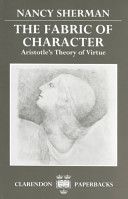
Most traditional accounts of Aristotle’s theory of ethical education neglect its cognitive aspects. This book asserts that, in Aristotle’s view, excellence of character comprises both the sentiments and practical reason. Sherman focuses particularly on four aspects of practical reason as they relate to character: moral perception, choicemaking, collaboration, and the development of those capacities in moral education. Throughout the book, she is sensitive to contemporary moral debates, and indicates the extent to which Aristotle’s account of practical reason provides an alternative to theories of impartial reason.
The predominant view of moral virtue can be traced back to Aristotle. He believed that moral virtue must involve intellectual excellence. To have moral virtue one must have practical wisdom – the ability to deliberate well and to see what is morally relevant in a given context. Julia Driver challenges this classical theory of virtue, arguing that it fails to take into account virtues which do seem to involve ignorance or epistemic defect. Some ‘virtues of ignorance’ are counterexamples to accounts of virtue which hold that moral virtue must involve practical wisdom. Modesty, for example, is generally considered to be a virtue even though the modest person may be making an inaccurate assessment of his or her accomplishments. Driver argues that we should abandon the highly intellectualist view of virtue and instead adopt a consequentialist perspective which holds that virtue is simply a character trait which systematically produces good consequences.
With formal ethics education programmes being a rarity in most countries’ armed forces, there is a growing importance for servicemen to undergo additional military ethics training. But how do we ensure that soldiers learn the right lessons from it? Furthermore, how can we achieve a uniformity of approach? The current lack of uniformity about what constitutes ethical behaviour and how troops should be educated in it is potentially a cause for serious alarm.This book advances knowledge and understanding of the issues associated with this subject by bringing together experts from around the world to analyze the content, mode of instruction, theoretical underpinnings, and the effect of cultural and national differences within current ethics programmes. It also explores whether such programmes are best run by military officers, chaplains or academic philosophers, and reflects whether it is feasible to develop common principles and approaches for the armed forces of all Western countries.This is an invaluable volume for military academies and staff colleges to enhance understanding of a matter which requires much further thought and which is becoming a vital force in influencing outcomes on the battlefields of the twenty-first century. The book will primarily be of interest to military officers and others directly involved in ethics education in the military, as well as to philosophers and students of military affairs.
Alongside the recent cultural turn in the humanities, there has been a noticeable return to ethical considerations. With regard to literature as well as other media, this has rekindled awareness of a tension, antagonism, or even disparity between ethics and aesthetics. This volume of articles takes a more systematic and cross-disciplinary approach to the widely mooted ethical turn in literature and other media than has been pursued so far. It brings together a wide range of critical perspectives from literary studies, media and cultural memory studies, and philosophy, tracing the complex and sometimes conflicting relationship between ethics and aesthetics in theoretical contexts and individual case studies as diverse as colonial architecture, nineteenth-century literary histories, and postmodern writing and art.
ما از اخلاق چه انتظاری داریم؟ این سوال شاید تاحدودی برای عموم مردم و یا متخصصان این رشته قابل پاسخ باشد؛ اینکه خوب بودن را به ما بیاموزد و در تنظیم روابط فردی م...

جشن کتاب تهران به ایستگاه سی و یکم رسیده است. حال و احوال نشر کتاب خوب نیست و باید فرهنگدوستان را به خرید و هدیه دادن کتاب ترغیب نمود. خانه اخلاقپژوهان جوان ب...

بنیاد کتابهای اخلاق اسلامی عمدتا پالایش جان از آلودگیها و آراستن آن به زیباییها است. اندیشه محوری این قبیل کتابها آن است که انسان فعلی آنی نیست که باید باشد...

-
0 Comments