Notice: تابع WP_Block_Type_Registry::register به طورنادرست فراخوانی شد. نامهای نوع بلوک نباید حروف بزرگ داشته باشند. لطفاً برای اطلاعات بیشتر، اشکال زدایی در وردپرس را مشاهده کنید. (این پیام در نگارش 5.0.0 افزوده شده است.) in /home/ethicsho/public_html/wp-includes/functions.php on line 5313
Warning: Use of undefined constant TDC_PATH_LEGACY - assumed 'TDC_PATH_LEGACY' (this will throw an Error in a future version of PHP) in /home/ethicsho/public_html/wp-content/plugins/td-composer/td-composer.php on line 109
Warning: Use of undefined constant TDSP_THEME_PATH - assumed 'TDSP_THEME_PATH' (this will throw an Error in a future version of PHP) in /home/ethicsho/public_html/wp-content/plugins/td-composer/td-composer.php on line 113 بایگانیهای 978–0–19–928593–8 - خانه اخلاق پژوهان جوان Notice: Trying to access array offset on value of type bool in /home/ethicsho/public_html/wp-content/plugins/wp-ulike/inc/general-functions.php on line 807
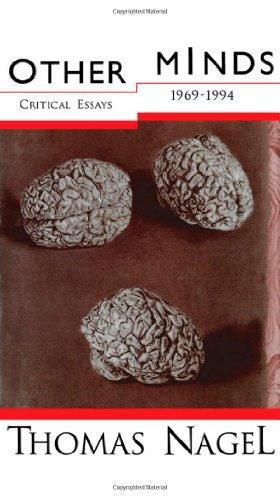
Over the past twenty-five years, Thomas Nagel has played a major role in the philosophico-biological debate on subjectivity and consciousness. This extensive collection of published essays and reviews offers Nagel’s opinionated views on the philosophy of mind, epistemology, and political philosophy, as well as on fellow philosophers like Freud, Wittgenstein, Rawls, Dennet, Chomsky, Searle, Nozick, Dworkin, and MacIntyre.
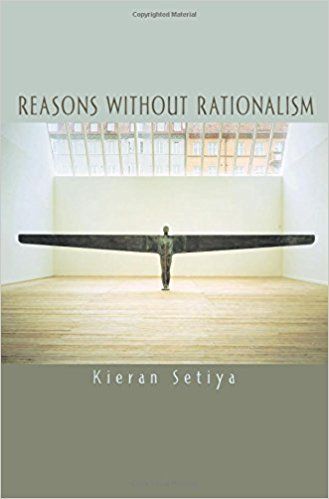
Modern philosophy has been vexed by the question “Why should I be moral?” and by doubts about the rational authority of moral virtue. In Reasons without Rationalism, Kieran Setiya shows that these doubts rest on a mistake. The “should” of practical reason cannot be understood apart from the virtues of character, including such moral virtues as justice and benevolence, and the considerations to which the virtues make one sensitive thereby count as reasons to act. Proposing a new framework for debates about practical reason, Setiya argues that the only alternative to this “virtue theory” is a form of ethical rationalism in which reasons derive from the nature of intentional action. Despite its recent popularity, however, ethical rationalism is false. It wrongly assumes that we act “under the guise of the good,” or it relies on dubious views about intention and motivation. It follows from the failure of rationalism that the virtue theory is true: we cannot be fully good without the perfection of practical reason, or have that perfection without being good. Addressing such topics as the psychology of virtue and the explanation of action, Reasons without Rationalism is essential reading for philosophers interested in ethics, rationality, or the philosophy of mind.
Confronted daily with decisions on how to present their stories, what to write and what not to write, journalists and the media are frequently accused of sensationalizing, of choosing only to report the bad news, and of misquoting those they interview. In Morals and the Media, Nick Russell addresses many of the concerns the public has about the media. He focuses on the fundamental moral questions and ethical dilemmas faced by journalists and discusses how the media both reflect and influence society. Displaying a broad understanding of the issues, he examines how values have been developed and applied, suggesting value systems which can be used to judge special situations. The book covers all the major print and electronic media and addresses a wide range of ethical issues with candour and insight gained from the author’s long career as a practising journalist. He points out how Canadian media ethics differ from those in the United States and includes many examples drawn from his impressive knowledge of the Canadian journalistic scene. The ‘Tough Calls’ at the end of each chapter invite readers to test their own ethics in scenarios drawn from real news stories. Morals and the Media is the first book to tackle journalistic decision-making in Canada. It will be essential reading in journalism courses but also an important resource for journalists, as it offers criteria for analyzing complex situations and reaching justifiable decisions. It will also be of interest to the consumers of journalism – the readers, listeners, and watchers who wonder why the media do what they do.
“This book explores the Buddhist view of death and its implications for contemporary bioethics. Writing primarily from within the Tibetan tradition, author Karma Lekshe Tsomo discusses Buddhist notions of human consciousness and personal identity and how these figure in the Buddhist view of death. Beliefs about death and enlightenment and states between life and death are also discussed. Tsomo goes on to examine such hot-button topics as cloning, abortion, assisted suicide, euthanasia, organ donation, genetic engineering, and stem-cell research within a Buddhist context, introducing new ways of thinking about these highly controversial issues.”–BOOK JACKET.
ما از اخلاق چه انتظاری داریم؟ این سوال شاید تاحدودی برای عموم مردم و یا متخصصان این رشته قابل پاسخ باشد؛ اینکه خوب بودن را به ما بیاموزد و در تنظیم روابط فردی م...

جشن کتاب تهران به ایستگاه سی و یکم رسیده است. حال و احوال نشر کتاب خوب نیست و باید فرهنگدوستان را به خرید و هدیه دادن کتاب ترغیب نمود. خانه اخلاقپژوهان جوان ب...

بنیاد کتابهای اخلاق اسلامی عمدتا پالایش جان از آلودگیها و آراستن آن به زیباییها است. اندیشه محوری این قبیل کتابها آن است که انسان فعلی آنی نیست که باید باشد...

-
0 Comments