Notice: تابع WP_Block_Type_Registry::register به طورنادرست فراخوانی شد. نامهای نوع بلوک نباید حروف بزرگ داشته باشند. لطفاً برای اطلاعات بیشتر، اشکال زدایی در وردپرس را مشاهده کنید. (این پیام در نگارش 5.0.0 افزوده شده است.) in /home/ethicsho/public_html/wp-includes/functions.php on line 5313
Warning: Use of undefined constant TDC_PATH_LEGACY - assumed 'TDC_PATH_LEGACY' (this will throw an Error in a future version of PHP) in /home/ethicsho/public_html/wp-content/plugins/td-composer/td-composer.php on line 109
Warning: Use of undefined constant TDSP_THEME_PATH - assumed 'TDSP_THEME_PATH' (this will throw an Error in a future version of PHP) in /home/ethicsho/public_html/wp-content/plugins/td-composer/td-composer.php on line 113 بایگانیهای 9027706778 - خانه اخلاق پژوهان جوان Notice: Trying to access array offset on value of type bool in /home/ethicsho/public_html/wp-content/plugins/wp-ulike/inc/general-functions.php on line 807
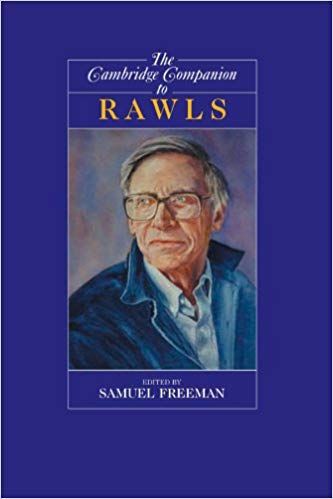
Each volume of this series of companions to major philosophers contains specially commissioned essays by an international team of scholars and will serve as a reference work for students and nonspecialists. John Rawls is the most significant and influential philosopher and moral philosopher of the twentieth century. His work has profoundly shaped contemporary discussions of social, political and economic justice in philosophy, law, political science, economics and other social disciplines. In this exciting collection of new essays, many of the world’s leading political and moral theorists discuss the full range of Rawls’s contribution to the concepts of political and economic justice, democracy, liberalism, constitutionalism, and international justice. There are also assessments of Rawls’s controversial relationships with feminism, utilitarianism and communitarianism. New readers will find this the most accessible guide to Rawls currently available. Advanced students and specialists will find a conspectus of recent developments in the interpretation of Rawls.
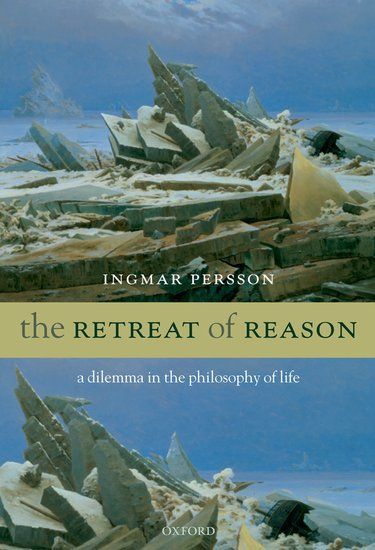
One of the main original aims of philosophy was to give us guidance about how to live our lives. The ancient Greeks typically assumed that a life led in accordance with reason, a rational life, would also be the happiest or most fulfilling. Ingmar Persson’s book resumes this project, which has been largely neglected in contemporary philosophy. But his conclusions are very different; by exploring the irrationality of our attitudes to time, our identity, and our responsibility,Persson shows that the aim of living rationally conflicts not only with the aim of leading the most fulfilling life, but also with the moral aim of promoting the maximization and just distribution of fulfilment for all. Persson also argues that neither the aim of living rationally nor any of the fulfilmentaims can be rejected as less rational than any other. We thus face a dilemma of either having to enter a retreat of reason, insulated from everyday attitudes, or making reason retreat from its aspiration to be the sole controller of our attitudes.The Retreat of Reason explores three areas in which there is a conflict between the rational life and a life dedicated to maximization of fulfilment. Persson contends that living rationally requires us to give up, first, our temporal biases; secondly, our bias towards ourselves; and, thirdly, our responsibility to the extent that it involves the notion of desert and desert-entailing notions. But giving up these attitudes is so overwhelmingly hard that the effort to do so not only makesour own lives less fulfilling, but also obstructs our efficient pursuit of the moral aim of promoting a maximum of justly distributed fulfilment.Ingmar Persson brings back to philosophy the ambition of offering a broad vision of the human condition. The Retreat of Reason challenges and disturbs some of our most fundamental ideas about ourselves.
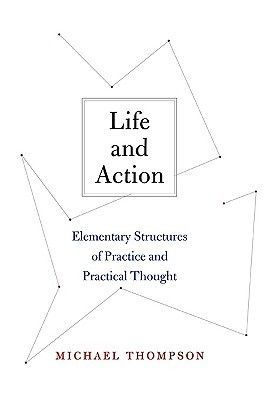
Any sound practical philosophy must be clear on practical concepts—concepts, in particular, of life, action, and practice. This clarity is Michael Thompson’s aim in his ambitious work. In Thompson’s view, failure to comprehend the structures of thought and judgment expressed in these concepts has disfigured modern moral philosophy, rendering it incapable of addressing the larger questions that should be its focus.In three investigations, Thompson considers life, action, and practice successively, attempting to exhibit these interrelated concepts as pure categories of thought, and to show how a proper exposition of them must be Aristotelian in character. He contends that the pure character of these categories, and the Aristotelian forms of reflection necessary to grasp them, are systematically obscured by modern theoretical philosophy, which thus blocks the way to the renewal of practical philosophy. His work recovers the possibility, within the tradition of analytic philosophy, of hazarding powerful generalities, and of focusing on the larger issues—like “life”—that have the power to revive philosophy.As an attempt to relocate crucial concepts from moral philosophy and the theory of action into what might be called the metaphysics of life, this original work promises to reconfigure a whole sector of philosophy. It is a work that any student of contemporary philosophy must grapple with.
Book Summary of Aristotle And Moral RealismThis volume of essays brings together scholars of ancient philosophy and some of today’s most distinguished moral philosophers to discuss Aristotle’s ethics and the problems of moral realism. One of the central and perennial philosophical problems is the question of whether our ethical assertions and beliefs can be justifiably claimed to rest on some objective foundation. As an upholder of the objectivity of ethics and as one of the most important ethical thinkers in the history of philosophy, Aristotle’s writings on these questions are of the greatest interest. Indeed, much of recent moral philosophy has looked directly to Aristotle for inspiration on the problem of moral objectivity. For example, “virtue theorists” were influenced by Aristotle in their proposal that what determines the right thing to do in a particular case is what the virtuous man would do. Similarly, “sensibility theorists” have found support for their view in Aristotle’s remarks about the importance of the conditioning of one’s desires for the development of virtue and knowledge about the human good. One of the central issues addressed by the contributors is whether it is wrong to believe that the justification of a moral claim requires an “external” validation which goes beyond reference to human practices of moral condemnation and approval. Or does moral objectivity require ethical discourse to have an origin and explanatory power similar in important respects to that of an empirical science? The contributors range over many other issues and areas of Aristotle’s philosophy, including his account of tragedy and his theory of justice. It will be welcomed by all philosophers and classicists with an interest in moral philosophy and Greek ethics..
ما از اخلاق چه انتظاری داریم؟ این سوال شاید تاحدودی برای عموم مردم و یا متخصصان این رشته قابل پاسخ باشد؛ اینکه خوب بودن را به ما بیاموزد و در تنظیم روابط فردی م...

جشن کتاب تهران به ایستگاه سی و یکم رسیده است. حال و احوال نشر کتاب خوب نیست و باید فرهنگدوستان را به خرید و هدیه دادن کتاب ترغیب نمود. خانه اخلاقپژوهان جوان ب...

بنیاد کتابهای اخلاق اسلامی عمدتا پالایش جان از آلودگیها و آراستن آن به زیباییها است. اندیشه محوری این قبیل کتابها آن است که انسان فعلی آنی نیست که باید باشد...

-
0 Comments