Notice: تابع WP_Block_Type_Registry::register به طورنادرست فراخوانی شد. نامهای نوع بلوک نباید حروف بزرگ داشته باشند. لطفاً برای اطلاعات بیشتر، اشکال زدایی در وردپرس را مشاهده کنید. (این پیام در نگارش 5.0.0 افزوده شده است.) in /home/ethicsho/public_html/wp-includes/functions.php on line 5313
Warning: Use of undefined constant TDC_PATH_LEGACY - assumed 'TDC_PATH_LEGACY' (this will throw an Error in a future version of PHP) in /home/ethicsho/public_html/wp-content/plugins/td-composer/td-composer.php on line 109
Warning: Use of undefined constant TDSP_THEME_PATH - assumed 'TDSP_THEME_PATH' (this will throw an Error in a future version of PHP) in /home/ethicsho/public_html/wp-content/plugins/td-composer/td-composer.php on line 113 بایگانیهای 1565643593 - خانه اخلاق پژوهان جوان Notice: Trying to access array offset on value of type bool in /home/ethicsho/public_html/wp-content/plugins/wp-ulike/inc/general-functions.php on line 807
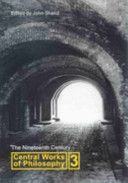
Central Works of Philosophy is a major multi-volume collection of essays on the core texts of the Western philosophical tradition. From Plato’s Republic to the present day, the five volumes range over 2,500 years of philosophical writing covering the best, most representative, and most influential work of some of our greatest philosophers. Each essay has been specially commissioned and provides an overview of the work, clear and authoritative exposition of its central ideas, and an assessment of the work’s importance. Together these books provide an unrivaled companion for studying and reading philosophy, one that introduces the reader to the masterpieces of the western philosophical canon. Much of nineteenth-century philosophy may be viewed as either an affirmation or rejection of Kant. This volume therefore begins with Kant’s magnum opus, the Critique of Pure Reason. Michelle Grier provides a masterly distillation of this monumental work. Curtis Bowman explores the central text of the first of the great post-Kantian idealists, Fichte who extended Kantian philosophy in a new direction.
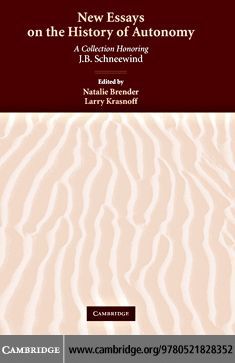
Although Kantian autonomy is often considered independent of time and place, J.B. Schneewind’s landmark study, The Invention of Autonomy, has shown that much can be learned by analyzing Kant’s moral philosophy in the context of the history of modern moral philosophy. Distinguished contributors accordingly relate Kant’s work to the historical context of his predecessors (as well as the empirical context of human agency) in this valuable resource for professionals and advanced students.
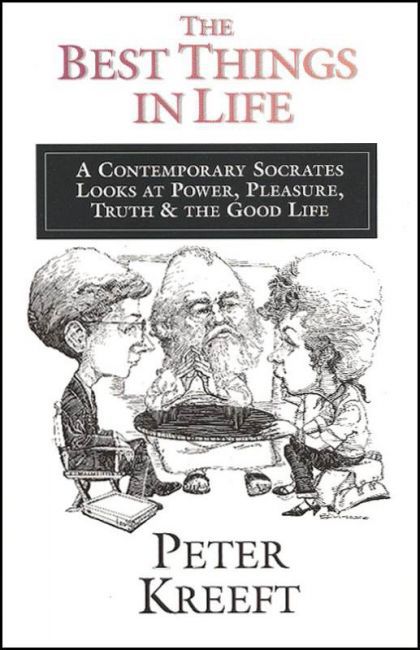
What are the best things in life? Questions like that may boggle your mind. But they don’t boggle Socrates. The indomitable old Greek brings his unending questions to Desperate State University. With him come the same mind-opening and spirit-stretching challenge that disrupted ancient Athens. What is the purpose of education? Why do we make love?What good is money? Can computers think like people? Is there a difference between Capitalism and Communism? What is the greatest good? Is belief in God like belief in Santa Claus?
In twelve short, Socratic dialogues Peter Kreeft explodes contemporary values like success, power and pleasure. And he bursts the modern bubbles of agnosticism and subjectivism. He leaves you richer, wiser and more able to discern what the best things in life actually are.
This volume contains C. D. Broad’s Cambridge lectures on Ethics. Broad gave a course of lectures on the subject, intended primarily for Part I of the Moral Sciences Tripos, every academic year from 1933 – 34 up to and in cluding 1952 – 53 (except that he did not lecture on Ethics in 1935 – 36). The course however was frequently revised, and the present version is es sentially that which he gave in 1952 – 53. Broad always wrote out his lectures fully beforehand, and the manuscript on Ethics, although full of revisions, is in a reasonably good state. But his handwriting is small and close and in places difficult to decipher. I therefore fear that some words may have been misread. There was an additional complication. In the summer of 1953 Broad revised and enlarged two sections of the course, namely the section on “Moore’s theory” and that on “Naturalistic theories” (both sections occur in Chapter 4). The revised version of the section on Moore is undoubtedly superior to the earlier version, and I have therefore included it. But in my opinion this is not true of the new version of the section on naturalistic theories: although more comprehensive than the earlier version, it is not only repetitive in itself, but also repeats, sometimes almost verbatim, passages which occur elsewhere in the lectures. In brief, the new version is not fully integrated with the rest of the course.
ما از اخلاق چه انتظاری داریم؟ این سوال شاید تاحدودی برای عموم مردم و یا متخصصان این رشته قابل پاسخ باشد؛ اینکه خوب بودن را به ما بیاموزد و در تنظیم روابط فردی م...

جشن کتاب تهران به ایستگاه سی و یکم رسیده است. حال و احوال نشر کتاب خوب نیست و باید فرهنگدوستان را به خرید و هدیه دادن کتاب ترغیب نمود. خانه اخلاقپژوهان جوان ب...

بنیاد کتابهای اخلاق اسلامی عمدتا پالایش جان از آلودگیها و آراستن آن به زیباییها است. اندیشه محوری این قبیل کتابها آن است که انسان فعلی آنی نیست که باید باشد...

-
0 Comments