Notice: تابع WP_Block_Type_Registry::register به طورنادرست فراخوانی شد. نامهای نوع بلوک نباید حروف بزرگ داشته باشند. لطفاً برای اطلاعات بیشتر، اشکال زدایی در وردپرس را مشاهده کنید. (این پیام در نگارش 5.0.0 افزوده شده است.) in /home/ethicsho/public_html/wp-includes/functions.php on line 5313
Warning: Use of undefined constant TDC_PATH_LEGACY - assumed 'TDC_PATH_LEGACY' (this will throw an Error in a future version of PHP) in /home/ethicsho/public_html/wp-content/plugins/td-composer/td-composer.php on line 109
Warning: Use of undefined constant TDSP_THEME_PATH - assumed 'TDSP_THEME_PATH' (this will throw an Error in a future version of PHP) in /home/ethicsho/public_html/wp-content/plugins/td-composer/td-composer.php on line 113 بایگانیهای 0874742129 - خانه اخلاق پژوهان جوان Notice: Trying to access array offset on value of type bool in /home/ethicsho/public_html/wp-content/plugins/wp-ulike/inc/general-functions.php on line 807
What is the relation between time and change? Does time depend on the mind? Is the present always the same or is it always different? Aristotle tackles these questions in the Physics, and Time for Aristotle is the first book in English devoted to this discussion. Aristotle claims that time is not a kind of change, but that it is something dependent on change; he defines it as a kind of “number of change.” Ursula Coope argues that what this means is that time is a kind of order (not, as is commonly supposed, a kind of measure). It is universal order within which all changes are related to each other. This interpretation enables Coope to explain two puzzling claims that Aristotle makes: that the now is like a moving thing, and that time depends for its existence on the mind. Brilliantly lucid in its explanation of this challenging section of the Physics, Time for Aristotle shows his discussion to be of enduring philosophical interest.
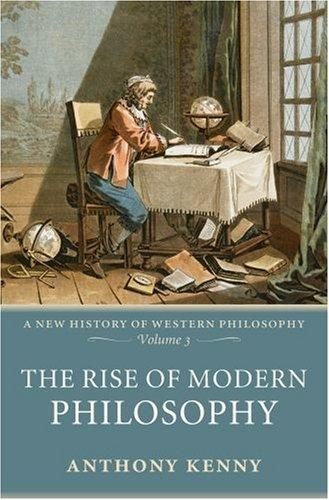
Sir Anthony Kenny’s engaging new multi-volume history of Western philosophy now advances into the modern era. The Rise of Modern Philosophy captures the fascinating story of the emergence, from the early sixteenth to the early nineteenth century, of the great ideas and intellectual systems that shaped modern thought. Kenny introduces us to some of the world’s most original and influential thinkers and helps us gain an understanding of their famous works. The great minds we meet include Rene Descartes, traditionally seen as the founder of modern philosophy; the great British philosophers Hobbes, Locke, and Hume; continental thinkers such as Spinoza, Liebniz, and Hegel; and the towering figure of Immanuel Kant, who perhaps more than any other made philosophy what it is today. Kenny first tells the story of modern philosophy chronologically: his lively, accessible narrative brings the philosophers to life and fills in the historical and intellectual background to their work. It is ideal as the first thing to read for someone new to this wonderfully creative period. Kenny then backtracks to look closely at each of the main areas of philosophical exploration in this period: knowledge and understanding; the nature of the physical universe; metaphysics (the most fundamental questions there are about existence); mind and soul; the nature and content of morality; political philosophy; and God. The book also features many intriguing and beautiful illustrations which evoke the human and social side of philosophy. Anyone who is interested in the evolution of modern thought will find this a book a treasure.
Scholarship on Plato’s dialogues persistently divides its focus between the dramatic or literary and the philosophical or argumentative dimensions of the texts. But this hermeneutic division of labor is naive, for Plato’s arguments are embedded in dramatic dialogues and developed through complex, largely informal exchanges between literary characters. Consequently, it is questionable how readers can even attribute arguments and theses to the author himself. The answer to this question lies in transcending the scholarly divide and integrating the literary and philosophical dimensions of the texts. This is the task of Trials of Reason. The study focuses on a set of fourteen so-called early dialogues, beginning with a methodological framework that explains how to integrate the argumentation and the drama in these texts. Unlike most canonical philosophical works, the early dialogues do not merely express the results of the practice of philosophy. Rather, they dramatize philosophy as a kind of motivation, the desire for knowledge of goodness. They dramatize philosophy as a discursive practice, motivated by this desire and ideally governed by reason. And they dramatize the trials to which desire and reason are subject, that is, the difficulties of realizing philosophy as a form of motivation, a practice, and an epistemic achievement. In short, Trials of Reason argues that Plato’s early dialogues are as much works of meta-philosophy as philosophy itself.
Do moral questions have objective answers? In this great debate, Gilbert Harman explains and argues for relativism, emotivism, and moral scepticism. In his view, moral disagreements are like disagreements about what to pay for a house; there are no correct answers ahead of time, except in relation to one or another moral framework. Independently, Judith Jarvis Thomson examines what she takes to be the case against moral objectivity, and rejects it; she argues that it is possible to find out the correct answers to some moral questions. In her view, some moral disagreements are like disagreements about whether the house has a ghost. Harman and Thomson then reply to each other. This important, lively accessible exchange will be invaluable to all students of moral theory and meta-ethics.
ما از اخلاق چه انتظاری داریم؟ این سوال شاید تاحدودی برای عموم مردم و یا متخصصان این رشته قابل پاسخ باشد؛ اینکه خوب بودن را به ما بیاموزد و در تنظیم روابط فردی م...

جشن کتاب تهران به ایستگاه سی و یکم رسیده است. حال و احوال نشر کتاب خوب نیست و باید فرهنگدوستان را به خرید و هدیه دادن کتاب ترغیب نمود. خانه اخلاقپژوهان جوان ب...

بنیاد کتابهای اخلاق اسلامی عمدتا پالایش جان از آلودگیها و آراستن آن به زیباییها است. اندیشه محوری این قبیل کتابها آن است که انسان فعلی آنی نیست که باید باشد...

-
0 Comments