Notice: تابع WP_Block_Type_Registry::register به طورنادرست فراخوانی شد. نامهای نوع بلوک نباید حروف بزرگ داشته باشند. لطفاً برای اطلاعات بیشتر، اشکال زدایی در وردپرس را مشاهده کنید. (این پیام در نگارش 5.0.0 افزوده شده است.) in /home/ethicsho/public_html/wp-includes/functions.php on line 5313
Warning: Use of undefined constant TDC_PATH_LEGACY - assumed 'TDC_PATH_LEGACY' (this will throw an Error in a future version of PHP) in /home/ethicsho/public_html/wp-content/plugins/td-composer/td-composer.php on line 109
Warning: Use of undefined constant TDSP_THEME_PATH - assumed 'TDSP_THEME_PATH' (this will throw an Error in a future version of PHP) in /home/ethicsho/public_html/wp-content/plugins/td-composer/td-composer.php on line 113 بایگانیهای 076684255 x - خانه اخلاق پژوهان جوان Notice: Trying to access array offset on value of type bool in /home/ethicsho/public_html/wp-content/plugins/wp-ulike/inc/general-functions.php on line 807
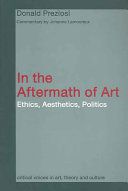
By juxtaposing issues and problems, Donald Preziosi’s latest collection of essays, In the Aftermath of Art, opens up multiple interpretive possibilities by bringing to the surface hidden resonances in the implications of each text. In re-reading his own writings, Preziosi opens up alternatives to contemporary discourses on art history and visual culture. A critical commentary by critic, historian, and theorist Johanne Lamoureux complements the author’s own introduction, mirroring the multiple interpretations within the essays themselves.
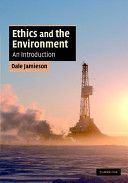
What is the environment, and how does it figure in an ethical life? This book is an introduction to the philosophical issues involved in this important question, focussing primarily on ethics but also encompassing questions in aesthetics and political philosophy. Topics discussed include the environment as an ethical question, human morality, meta-ethics, normative ethics, humans and other animals, the value of nature, and nature’s future. The discussion is accessible and richly illustrated with examples. The book will be valuable for students taking courses in environmental philosophy, and also for a wider audience in courses in ethics, practical ethics, and environmental studies. It will also appeal to general readers who want a reliable and sophisticated introduction to the field.
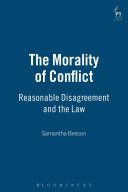
This book explores the relationship between the law and pervasive and persistent reasonable disagreement about justice. It reveals the central moral function and creative force of reasonable disagreement in and about the law and shows why and how lawyers and legal philosophers should take reasonable conflict more seriously. Even though the law should be regarded as the primary mode of settlement of our moral conflicts, it can, and should, also be the object and the forum of further moral conflicts. There is more to the rule of law than convergence and determinacy and it is important therefore to question the importance of agreement in law and politics. By addressing in detail issues pertaining to the nature and sources of disagreement, its extent and significance, as well as the procedural, institutional and substantive responses to disagreement in the law and their legitimacy, this book suggests the value of a comprehensive approach to thinking about conflict, which until recently has been analysed in a compartmentalized way. It aims to provide a fully-fledged political morality of conflict by drawing on the analysis of topical jurisprudential questions in the new light of disagreement. Developing such a global theory of disagreement in the law should be read in the context of the broader effort of reconstructing a complete account of democratic law-making in pluralistic societies. The book will be of value not only to legal philosophers and constitutional theorists, but also to political and democratic theorists, as well as to all those interested in public decision-making in conditions of conflict.
What are the acceptable limits of scientific investigation and genetic engineering, the rights and wrongs of animal rights, euthanasia and civil disobedience? This book confronts these dilemmas, tracing arguments of moral thinkers, including Socrates, Plato, Aristotle, and brings us up to date with postmodern critics.
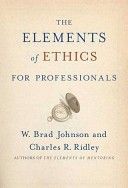
Patterned after Strunk and White’s classic The Elements of Style, this handy guide pulls the existing research on the delicate balance of professional ethics into one concise source. Johnson and Ridley explore seventy-five of the most important and pithy truths for supervisors in all fields, including questions of integrity, loyalty, justice, respect, and delivering one’s best in the business environment. Succinct and comprehensive, with examples and takeaway advice, this is a must-have for any professional or business leader striving to create an ethical workplace.
ما از اخلاق چه انتظاری داریم؟ این سوال شاید تاحدودی برای عموم مردم و یا متخصصان این رشته قابل پاسخ باشد؛ اینکه خوب بودن را به ما بیاموزد و در تنظیم روابط فردی م...

جشن کتاب تهران به ایستگاه سی و یکم رسیده است. حال و احوال نشر کتاب خوب نیست و باید فرهنگدوستان را به خرید و هدیه دادن کتاب ترغیب نمود. خانه اخلاقپژوهان جوان ب...

بنیاد کتابهای اخلاق اسلامی عمدتا پالایش جان از آلودگیها و آراستن آن به زیباییها است. اندیشه محوری این قبیل کتابها آن است که انسان فعلی آنی نیست که باید باشد...

-
0 Comments