Notice: تابع WP_Block_Type_Registry::register به طورنادرست فراخوانی شد. نامهای نوع بلوک نباید حروف بزرگ داشته باشند. لطفاً برای اطلاعات بیشتر، اشکال زدایی در وردپرس را مشاهده کنید. (این پیام در نگارش 5.0.0 افزوده شده است.) in /home/ethicsho/public_html/wp-includes/functions.php on line 5313
Warning: Use of undefined constant TDC_PATH_LEGACY - assumed 'TDC_PATH_LEGACY' (this will throw an Error in a future version of PHP) in /home/ethicsho/public_html/wp-content/plugins/td-composer/td-composer.php on line 109
Warning: Use of undefined constant TDSP_THEME_PATH - assumed 'TDSP_THEME_PATH' (this will throw an Error in a future version of PHP) in /home/ethicsho/public_html/wp-content/plugins/td-composer/td-composer.php on line 113 بایگانیهای 0471960470 - خانه اخلاق پژوهان جوان Notice: Trying to access array offset on value of type bool in /home/ethicsho/public_html/wp-content/plugins/wp-ulike/inc/general-functions.php on line 807
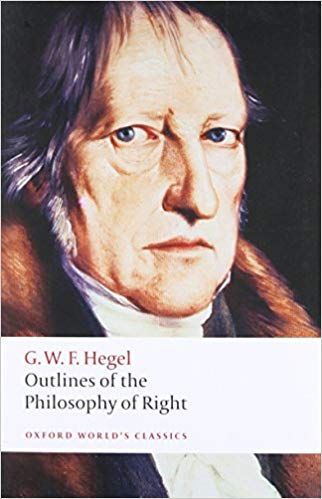
Hegel’s Outlines of the Philosophy of Right is one of the greatest works of moral, social, and political philosophy. It contains significant ideas on justice, moral responsibility, family life, economic activity, and the political structure of the state–all matters of profound interest to us today. Hegel shows that genuine human freedom does not consist in doing whatever we please, but involves living with others in accordance with publicly recognized rights and laws. Hegel demonstrates that institutions such as the family and the state provide the context in which individuals can flourish and enjoy full freedom. He also demonstrates that misunderstanding the true nature of freedom can lead to crime, evil, and poverty. His penetrating analysis of the causes of poverty in modern civil society was to be a great influence on Karl Marx. Hegel’s study remains one of the most subtle and perceptive accounts of freedom that we possess, and this newly revised translation makes it more accessible than ever. This edition incorporates Hegel’s lecture notes within the text and provides a glossary of key terms, up-to-date bibliography, and invaluable notes.Stephen Houlgate is Professor of Philosophy, University of Warwick and is the author of Hegel, Nietzsche and the Criticism of Metaphysics; An Introduction to Hegel: Freedom, Truth and History; and The Opening of Hegel’s Logic: From Being to Infinity.
Like nature itself, modern economic life is driven by relentless competition and unbridled selfishness. Or is it? Drawing on converging evidence from neuroscience, social science, biology, law, and philosophy,Moral Marketsmakes the case that modern market exchange works only because most people, most of the time, act virtuously. Competition and greed are certainly part of economics, butMoral Marketsshows how the rules of market exchange have evolved to promote moral behavior and how exchange itself may make us more virtuous. Examining the biological basis of economic morality, tracing the connections between morality and markets, and exploring the profound implications of both,Moral Marketsprovides a surprising and fundamentally new view of economics–one that also reconnects the field to Adam Smith’s position that morality has a biological basis.Moral Markets, the result of an extensive collaboration between leading social and natural scientists, includes contributions by neuroeconomist Paul Zak; economists Robert H. Frank, Herbert Gintis, Vernon Smith (winner of the 2002 Nobel Prize in economics), and Bart Wilson; law professors Oliver Goodenough, Erin O’Hara, and Lynn Stout; philosophers William Casebeer and Robert Solomon; primatologists Sarah Brosnan and Frans de Waal; biologists Carl Bergstrom, Ben Kerr, and Peter Richerson; anthropologists Robert Boyd and Michael Lachmann; political scientists Elinor Ostrom and David Schwab; management professor Rakesh Khurana; computational science and informatics doctoral candidate Erik Kimbrough; and business writer Charles Handy.
Mark Platts’ influential first book “Ways of Meaning” argued within the context of the philosophy of language that a realist’ account of moral thought was possible. “Moral Realities” defends the same possibility from the perspective of the philosophy of psychology. “Moral Realities” engages the classical moral philosophies of Hume, Mandeville and Nietzsche, and tackles the powerful arguments of the contemporary moral relativists. Platts uses an existing critique of philosophical notions of desire and value to present a descriptive metaphysics of morals–clarifying both what morality is and what it is not. He also employs a classification of desire that articulates a general theory of value and valuing which is distinguished by a cognitive approach given to certain kinds of moral valuing. The possibility of applying this approach to moral valuings is defended against the persuasive criticisms of both the Humean subjectivist and the contemporary moral relativist. This is a challenging book which illuminates many of the major issues of contemporary moral philosophy including: the practical nature of moral thought, free will and choice, morality and religious belief, and the pragmatics of moral discourse.
“A Letter Concerning Toleration is an English translation of a Latin work, the Epistola de Tolerantia , that John Locke wrote towards the end of the year 1685, while living – often in hiding – in the Dutch Republic. The Epistola was not however published until 1689, after Locke’s return to England, and the English translation followed very shortly after. It soon met with a critical reply, in a pamphlet written by the Oxford chaplain Jonas Proast, which was to launch a polemical exchange in the course of which Locke wrote three further defences of his argument for toleration. Unlike the Epistola/Letter (hereafter: Letter ), which is intense and compactly expressed, these defences are lengthy and often repetitive. But they comprise Locke’s most fully elaborated statement of his case; they are valuable, too, because the pressure of controversy led him to clarify the priorities among his arguments”–
ما از اخلاق چه انتظاری داریم؟ این سوال شاید تاحدودی برای عموم مردم و یا متخصصان این رشته قابل پاسخ باشد؛ اینکه خوب بودن را به ما بیاموزد و در تنظیم روابط فردی م...

جشن کتاب تهران به ایستگاه سی و یکم رسیده است. حال و احوال نشر کتاب خوب نیست و باید فرهنگدوستان را به خرید و هدیه دادن کتاب ترغیب نمود. خانه اخلاقپژوهان جوان ب...

بنیاد کتابهای اخلاق اسلامی عمدتا پالایش جان از آلودگیها و آراستن آن به زیباییها است. اندیشه محوری این قبیل کتابها آن است که انسان فعلی آنی نیست که باید باشد...

-
0 Comments