Notice: تابع WP_Block_Type_Registry::register به طورنادرست فراخوانی شد. نامهای نوع بلوک نباید حروف بزرگ داشته باشند. لطفاً برای اطلاعات بیشتر، اشکال زدایی در وردپرس را مشاهده کنید. (این پیام در نگارش 5.0.0 افزوده شده است.) in /home/ethicsho/public_html/wp-includes/functions.php on line 5313
Warning: Use of undefined constant TDC_PATH_LEGACY - assumed 'TDC_PATH_LEGACY' (this will throw an Error in a future version of PHP) in /home/ethicsho/public_html/wp-content/plugins/td-composer/td-composer.php on line 109
Warning: Use of undefined constant TDSP_THEME_PATH - assumed 'TDSP_THEME_PATH' (this will throw an Error in a future version of PHP) in /home/ethicsho/public_html/wp-content/plugins/td-composer/td-composer.php on line 113 بایگانیهای 041527589 x - خانه اخلاق پژوهان جوان Notice: Trying to access array offset on value of type bool in /home/ethicsho/public_html/wp-content/plugins/wp-ulike/inc/general-functions.php on line 807
The Edge of Life: Human Dignity and Contemporary Bioethics treats a number of distinct moral questions and ?nds their answer in the dignity of the person, both as an agent and as a patient (in the sense of the recipient of action). Characteristically one’s view of the human being ultimately shapes one’s outlook on these matters. This book addresses questions that divide a culture of life from a culture of death as well as a number of questions debated within the Catholic tradition itself. The Edge of Life offers a critique of the new bio-ethic, represented by such notable authors as Peter Singer; it also attempts to shore up some of the dif?culties leveled by critics against the traditional ethic as well as to answer some questions disputed by those within the tradition. This book does not treat the basic principles of morality but rather many of their applications and suppositions. (For an account of contemporary debates within the Catholic tradition on these matters, see Kaczor 2002). Rather, The Edge of Life seeks to address a number of disputed contemporary questions touching upon human dignity at what has been called “the margins of life. ” The ?rst section of the book treats the dignity of the human person as recipient of action and as agent. Chapter two examines various accounts of when a human being becomes a person.
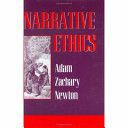
The ethics of literature, formalists have insisted, resides in the moral quality of a character, a story, perhaps the relation between author and reader. But in the wake of deconstruction and various forms of criticism focusing on difference, the ethical question has been freshly negotiated by literary studies, and to this approach Adam Newton brings a startling new thrust. His book makes a compelling case for understanding narrative as ethics. Assuming an intrinsic and necessary connection between the two, Newton explores the ethical consequences of telling stories and fictionalizing character, and the reciprocal claims binding teller, listener, witness, and reader in the process. He treats these relations as defining properties of prose fiction, of particular import in nineteenth- and twentieth-century texts.Newton’s fresh and nuanced readings cover a wide range of authors and periods, from Charles Dickens to Kazuo Ishiguro and Julian Barnes, from Herman Melville to Richard Wright, from Joseph Conrad and Henry James to Sherwood Anderson and Stephen Crane. An original work of theory as well as a deft critical performance, Narrative Ethics also stakes a claim for itself as moral inquiry. To that end, Newton braids together the ethical-philosophical projects of Emmanuel Levinas, Stanley Cavell, and Mikhail Bakhtin as a kind of chorus for his textual analyses–an elegant bridge between philosophy’s ear and literary criticism’s voice. His work will generate enormous interest among scholars and students of English and American literature, as well as specialists in narrative and literary theory, hermeneutics, and contemporary philosophy.
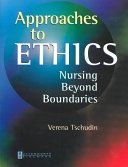
A companion volume to Nursing Ethics, the basic text on ethics for the nursing profession. This book takes a wider approach to ethics, looking at several different dimensions and discussing these themes in a manner suitable for either reflective practice or advanced study. Together, the pair form a comprehensive guide to ethics in nursing practice.
This scarce antiquarian book is included in our special Legacy Reprint Series. In the interest of creating a more extensive selection of rare historical book reprints, we have chosen to reproduce this title even though it may possibly have occasional imperfections such as missing and blurred pages, missing text, poor pictures, markings, dark backgrounds and other reproduction issues beyond our control. Because this work is culturally important, we have made it available as a part of our commitment to protecting, preserving and promoting the world’s literature.
ما از اخلاق چه انتظاری داریم؟ این سوال شاید تاحدودی برای عموم مردم و یا متخصصان این رشته قابل پاسخ باشد؛ اینکه خوب بودن را به ما بیاموزد و در تنظیم روابط فردی م...

جشن کتاب تهران به ایستگاه سی و یکم رسیده است. حال و احوال نشر کتاب خوب نیست و باید فرهنگدوستان را به خرید و هدیه دادن کتاب ترغیب نمود. خانه اخلاقپژوهان جوان ب...

بنیاد کتابهای اخلاق اسلامی عمدتا پالایش جان از آلودگیها و آراستن آن به زیباییها است. اندیشه محوری این قبیل کتابها آن است که انسان فعلی آنی نیست که باید باشد...

-
0 Comments