Notice: تابع WP_Block_Type_Registry::register به طورنادرست فراخوانی شد. نامهای نوع بلوک نباید حروف بزرگ داشته باشند. لطفاً برای اطلاعات بیشتر، اشکال زدایی در وردپرس را مشاهده کنید. (این پیام در نگارش 5.0.0 افزوده شده است.) in /home/ethicsho/public_html/wp-includes/functions.php on line 5313
Warning: Use of undefined constant TDC_PATH_LEGACY - assumed 'TDC_PATH_LEGACY' (this will throw an Error in a future version of PHP) in /home/ethicsho/public_html/wp-content/plugins/td-composer/td-composer.php on line 109
Warning: Use of undefined constant TDSP_THEME_PATH - assumed 'TDSP_THEME_PATH' (this will throw an Error in a future version of PHP) in /home/ethicsho/public_html/wp-content/plugins/td-composer/td-composer.php on line 113 بایگانیهای 0-521-55471-3 - خانه اخلاق پژوهان جوان Notice: Trying to access array offset on value of type bool in /home/ethicsho/public_html/wp-content/plugins/wp-ulike/inc/general-functions.php on line 807
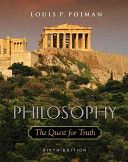
Praised for its accessibility and comprehensiveness, Philosophy: The Quest for Truth provides an excellent selection of classical and contemporary readings on nineteen key problems in philosophy. Louis P. Pojman has carefully organized the essays in each section so that they present pro/con dialogues that allow students to compare and contrast the philosophers’ positions. Topics covered include the nature of philosophy, the existence of God, immortality, knowledge, the mind-body question, personal identity, free will and determinism, ethics, political philosophy, and the meaning of life. The sixth edition offers selections from Plato, Rene Descartes, John Locke, David Hume, William James, Bertrand Russell, John Hick, John Hospers, and James Rachels–as well as essays by Aristotle, Thomas Aquinas, Blaise Pascal, Thomas Hobbes, George Berkeley, Immanuel Kant, Gilbert Ryle, Albert Camus, Jean-Paul Sartre, Alvin Plantinga, and many others. In Philosophy: The Quest for Truth, Sixth Edition, Pojman offers substantial introductions to each of the nineteen philosophical problems. In addition, each of the seventy-six readings is accompanied by an individual introduction with a biographical sketch of the philosopher, study questions, and reflective questions that challenge students to analyze and critique the material. Short bibliographies following each major section and a detailed glossary further enhance the text’s pedagogical value. Invaluable for introductory courses in philosophy, this highly acclaimed text inspires and guides students’ quest for wisdom. New to the Sixth Edition:: * Six selections: William Lane Craig: The Kalam Cosmological Argument and the Anthropic Principle William Rowe: An Analysis of the Ontological Argument Daniel Dennett: Postmodernism and Truth William James: The Dilemma of Determinism Harry Frankfurt: Freedom of the Will and the Concept of a Person John Rawls: The Contemporary Liberal Answer * More exercises in the excursus on logic
To be responsible for their acts, agents must both perform those acts voluntarily and in some sense know what they are doing. Of these requirements, the voluntariness condition has been much discussed, but the epistemic condition has received far less attention. In Who Knew? George Sher seeks to rectify that imbalance. The book is divided in two halves, the first of which criticizes a popular but inadequate way of understanding the epistemic condition, while the second seeks to develop a more adequate alternative. It is often assumed that agents are responsible only for what they are aware of doing or bringing about–that their responsibility extends only as far as the searchlight of their consciousness. The book criticizes this “searchlight view” on two main grounds: first, that it is inconsistent with our attributions of responsibility to a broad range of agents who should but do not realize that they are acting wrongly or foolishly, and, second, that the view is not independently defensible. The book’s positive view construes the crucial relation between an agent and his failure to recognize the wrongness or foolishness of what he is doing in causal terms: the agent is responsible when, and because, his failure to respond to his reasons for believing that he is acting wrongly or foolishly has its origins in the same constitutive psychology that generally does render him reason-responsive.
Intellectual property (IP) is a crucial contributor to economic growth and competitiveness within the EU. This book offers a compact and accessible account of EU intellectual property law and policy, covering copyright, patents, designs, trademarks and the enforcement of rights. The author also addresses aspects of the free movement of goods and services, competition law, customs measures and anti-counterfeiting efforts. Setting EU intellectual property law in its wider international context, this work reveals the framework within which the national IP laws of member states operate. The book seeks to highlight the most important policy issues and arguments of relevance to the EU, both within the Union, and in its relations with the rest of the world. With its the detailed references, cross-referencing and suggestions for further readings, EU Intellectual Property Law and Policy is essential reading for postgraduate students and academic lawyers in IP and EU law. Practitioners seeking a broad account of the area will also appreciate this important contribution.
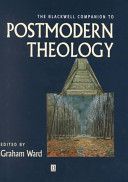
This Companion provides a definitive collection of essays on postmodern theology, drawing on the work of those individuals who have made a distinctive contribution to the field, and whose work will be significant for the theologies written in the new millennium. The definitive collection of essays on postmodern theology, drawing on the work of those individuals who have made a distinctive contribution to the field. Each essay is introduced with a short account of the writer’s previous work, enabling the reader to view it in context. Discusses the following desciplines: Aesthetics, Ethics, Gender, Hermeneutics, Phenomenology, Heideggerians, and Derrideans. Edited by Graham Ward, one of the most outstanding and original theologians working in the field today.
ما از اخلاق چه انتظاری داریم؟ این سوال شاید تاحدودی برای عموم مردم و یا متخصصان این رشته قابل پاسخ باشد؛ اینکه خوب بودن را به ما بیاموزد و در تنظیم روابط فردی م...

جشن کتاب تهران به ایستگاه سی و یکم رسیده است. حال و احوال نشر کتاب خوب نیست و باید فرهنگدوستان را به خرید و هدیه دادن کتاب ترغیب نمود. خانه اخلاقپژوهان جوان ب...

بنیاد کتابهای اخلاق اسلامی عمدتا پالایش جان از آلودگیها و آراستن آن به زیباییها است. اندیشه محوری این قبیل کتابها آن است که انسان فعلی آنی نیست که باید باشد...

-
0 Comments