Notice: تابع WP_Block_Type_Registry::register به طورنادرست فراخوانی شد. نامهای نوع بلوک نباید حروف بزرگ داشته باشند. لطفاً برای اطلاعات بیشتر، اشکال زدایی در وردپرس را مشاهده کنید. (این پیام در نگارش 5.0.0 افزوده شده است.) in /home/ethicsho/public_html/wp-includes/functions.php on line 5313
Warning: Use of undefined constant TDC_PATH_LEGACY - assumed 'TDC_PATH_LEGACY' (this will throw an Error in a future version of PHP) in /home/ethicsho/public_html/wp-content/plugins/td-composer/td-composer.php on line 109
Warning: Use of undefined constant TDSP_THEME_PATH - assumed 'TDSP_THEME_PATH' (this will throw an Error in a future version of PHP) in /home/ethicsho/public_html/wp-content/plugins/td-composer/td-composer.php on line 113 بایگانیهای 0-520-23599-1 - خانه اخلاق پژوهان جوان Notice: Trying to access array offset on value of type bool in /home/ethicsho/public_html/wp-content/plugins/wp-ulike/inc/general-functions.php on line 807
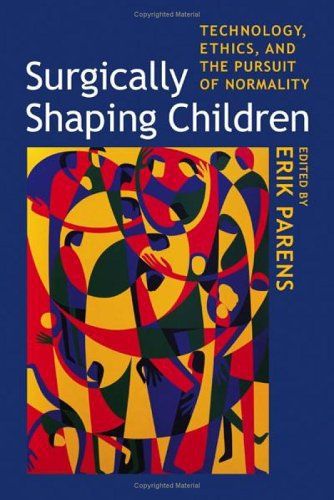
At a time when medical technologies make it ever easier to enhance our minds and bodies, a debate has arisen about whether such efforts promote a process of “normalization,” which makes it ever harder to tolerate the natural anatomical differences among us. The debate becomes especially complicated when it addresses the surgical alteration, or “shaping,” of children. This volume explores the ethical and social issues raised by the recent proliferation of surgeries designed to make children born with physical differences look more normal.Using three cases — surgeries to eliminate craniofacial abnormalities such as cleft lip and palate, surgeries to correct ambiguous genitalia, and surgeries to lengthen the limbs of children born with dwarfism — the contributors consider the tensions parents experience when making such life-altering decisions on behalf of or with their children.The essays in this volume offer in-depth examinations of the significance and limits of surgical alteration through personal narratives, theoretical reflections, and concrete suggestions about how to improve the decision-making process. Written from the perspectives of affected children and their parents, health care providers, and leading scholars in philosophy, sociology, history, law, and medicine, this collection provides an integrated and comprehensive foundation from which to consider a complex and controversial issue. It takes the reader on a journey from reflections on the particulars of current medical practices to reflections on one of the deepest and most complex of human desires: the desire for normality.ContributorsPriscilla Alderson, Adrienne Asch, Cassandra Aspinall, Alice Domurat Dreger, James C. Edwards, Todd C. Edwards, Ellen K. Feder, Arthur W. Frank, Lisa Abelow Hedley, Eva Fedder Kittay, Hilde Lindemann, Jeffery L. Marsh, Paul Steven Miller, Sherri G. Morris, Wendy E. Mouradian, Donald L. Patrick, Nichola Rumsey, Emily Sullivan Sanford, Tari D. Topolski
This stimulating and wide-ranging book mounts a profound enquiry into some of the most pressing questions of our age, by examining the relationship between biological science and Christianity. The history of biological discovery is explored from the point of view of a leading philosopher and ethicist. What effect should modern biological theory and practice have on Christian understanding of ethics? How much of that theory and practice should Christians endorse? To what extent can “nature” set our standards? Professor Clark takes a reasoned look at biological theory since Darwin and argues that an orthodox Christian philosophy is better able to accommodate the truth of such theory than is the sort of progressive, meliorist interpretation of Christian doctrine that is usually offered as the properly “modern” option.
Bioethics was “born in the USA” and the values American bioethics embrace are based on American law, including liberty and justice. This book crosses the borders between bioethics and law, but moves beyond the domestic law/bioethics struggles for dominance by exploring attempts to articulate universal principles based on international human rights. The isolationism of bioethics in the US is not tenable in the wake of scientific triumphs like decoding the human genome, and civilizational tragedies like international terrorism. Annas argues that by crossing boundaries which have artificially separated bioethics and health law from the international human rights movement, American bioethics can be reborn as a global force for good, instead of serving mainly the purposes of U.S. academics. This thesis is explored in a variety of international contexts such as terrorism and genetic engineering, and in U.S. domestic disputes such as patient rights and market medicine. The citizens of the world have created two universal codes: science has sequenced the human genome and the United Nations has produced the Universal Declaration of Human Rights. The challenge for American bioethics is to combine these two great codes in imaginative and constructive ways to make the world a better, and healthier, place to live.
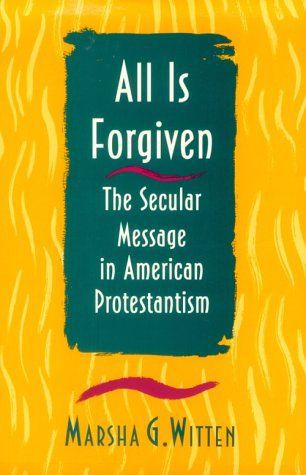
Witten offers an in-depth analysis of preaching on an important New Testament text: the Parable of the Prodigal Son. She finds that the transcendent and awesome God of Luther and Calvin–whose image informed early Protestant visions of the relationship between humans and the divine–has been greatly softened in demeanor in American Protestant churches, with only some resistance from “conservative” traditions.
ما از اخلاق چه انتظاری داریم؟ این سوال شاید تاحدودی برای عموم مردم و یا متخصصان این رشته قابل پاسخ باشد؛ اینکه خوب بودن را به ما بیاموزد و در تنظیم روابط فردی م...

جشن کتاب تهران به ایستگاه سی و یکم رسیده است. حال و احوال نشر کتاب خوب نیست و باید فرهنگدوستان را به خرید و هدیه دادن کتاب ترغیب نمود. خانه اخلاقپژوهان جوان ب...

بنیاد کتابهای اخلاق اسلامی عمدتا پالایش جان از آلودگیها و آراستن آن به زیباییها است. اندیشه محوری این قبیل کتابها آن است که انسان فعلی آنی نیست که باید باشد...

-
0 Comments