Notice: تابع WP_Block_Type_Registry::register به طورنادرست فراخوانی شد. نامهای نوع بلوک نباید حروف بزرگ داشته باشند. لطفاً برای اطلاعات بیشتر، اشکال زدایی در وردپرس را مشاهده کنید. (این پیام در نگارش 5.0.0 افزوده شده است.) in /home/ethicsho/public_html/wp-includes/functions.php on line 5313
Warning: Use of undefined constant TDC_PATH_LEGACY - assumed 'TDC_PATH_LEGACY' (this will throw an Error in a future version of PHP) in /home/ethicsho/public_html/wp-content/plugins/td-composer/td-composer.php on line 109
Warning: Use of undefined constant TDSP_THEME_PATH - assumed 'TDSP_THEME_PATH' (this will throw an Error in a future version of PHP) in /home/ethicsho/public_html/wp-content/plugins/td-composer/td-composer.php on line 113 بایگانیهای 0-415-24775-6 - خانه اخلاق پژوهان جوان Notice: Trying to access array offset on value of type bool in /home/ethicsho/public_html/wp-content/plugins/wp-ulike/inc/general-functions.php on line 807
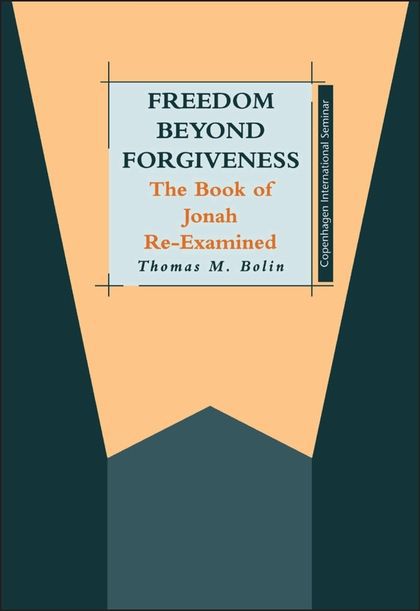
Bolin analyses biblical and extra-biblical traditions and motifs in the book of Jonah, and argues that the book’s portrayal of the relationship between God and humanity, much like those of Job and Ecclesiastes, emphasizes an absolute divine sovereignty beyond human notions of mercy, justice, or forgiveness. God is understood as free to forgive, yet he still punishes, and is unfettered by the constraints imposed by attributes of benevolence. The only proper human response to God is fear at his power and acknowledgment of him as the source of welfare and woe.
One of the most important developments in modern moral philosophy is the resurgence of interest in the virtues. In this new book, Daniel Russell explores two important hopes for such an approach to moral thought: that starting from the virtues should cast light on what makes an action right, and that notions like character, virtue, and vice should yield a plausible picture of human psychology. Russell argues that the key to each of these hopes is an understanding of the cognitive and deliberative skills involved in the virtues. If right action is defined in terms of acting generously or kindly, then these virtues must involve skills for determining what the kind or generous thing to do would be on a given occasion. Likewise, Russell argues that understanding virtuous action as the intelligent pursuit of virtuous goals yields a promising picture of the psychology of virtue. This book develops an Aristotelian account of the virtue of practical intelligence or “phronesis”–an excellence of deliberating and making choices–which Russell argues is a necessary part of every virtue. This emphasis on the roots of the virtues in the practical intellect contrasts with ambivalence about the practical intellect in much recent work on the virtues–a trend Russell argues is ultimately perilous for virtue theory. This book also takes a penetrating look at issues like the unity of the virtues, responsibility for character, and that elusive figure, ‘the virtuous person’. Written in a clear and careful manner, Practical Intelligence and the Virtues will appeal to philosophers and students alike in moral philosophy and moral psychology.
This Companion provides a definitive collection of essays on postmodern theology, drawing on the work of those individuals who have made a distinctive contribution to the field, and whose work will be significant for the theologies written in the new millennium. The definitive collection of essays on postmodern theology, drawing on the work of those individuals who have made a distinctive contribution to the field. Each essay is introduced with a short account of the writer’s previous work, enabling the reader to view it in context. Discusses the following desciplines: Aesthetics, Ethics, Gender, Hermeneutics, Phenomenology, Heideggerians, and Derrideans. Edited by Graham Ward, one of the most outstanding and original theologians working in the field today.
Bernard Williams is remembered as one of the most brilliant and original philosophers of the past fifty years. Widely respected as a moral philosopher, Williams began to write about politics in a sustained way in the early 1980s. There followed a stream of articles, lectures, and other major contributions to issues of public concern–all complemented by his many works on ethics, which have important implications for political theory.This new collection of essays, most of them previously unpublished, addresses many of the core subjects of political philosophy: justice, liberty, and equality; the nature and meaning of liberalism; toleration; power and the fear of power; democracy; and the nature of political philosophy itself. A central theme throughout is that political philosophers need to engage more directly with the realities of political life, not simply with the theories of other philosophers. Williams makes this argument in part through a searching examination of where political thinking should originate, to whom it might be addressed, and what it should deliver.Williams had intended to weave these essays into a connected narrative on political philosophy with reflections on his own experience of postwar politics. Sadly he did not live to complete it, but this book brings together many of its components. Geoffrey Hawthorn has arranged the material to resemble as closely as possible Williams’s original design and vision. He has provided both an introduction to Williams’s political philosophy and a bibliography of his formal and informal writings on politics.Those who know the work of Bernard Williams will find here the familiar hallmarks of his writing–originality, clarity, erudition, and wit. Those who are unfamiliar with, or unconvinced by, a philosophical approach to politics, will find this an engaging introduction. Both will encounter a thoroughly original voice in modern political theory and a searching approach to the shape and direction of liberal political thought in the past thirty-five years.
The debate between impartialists and their critics has dominated both moral and political philosophy for over a decade. Characteristically, impartialists argue that any sensible form of impartialism can accommodate the partial concerns we have for others. By contrast, partialists deny that this is so. They see the division as one which runs exceedingly deep and argue that, at the limit, impartialist thinking requires that we marginalise those concerns and commitments that make our lives meaningful. This book attempts to show both that the dispute between impartialists and their critics runs very deep, and that it can nonetheless be resolved. The resolution begins by asking how impartialist political philosophy can defend the priority of justice when it conflicts with people’s commitments to their conceptions of the good. It is argued that priority can only defended if political impartialism has a moral foundation, and that moral foundation must not be a foundation in the ideal of equality (as is often thought), but a foundation in the partial concerns we have for others. In short, impartialist moral philosophy must take our partial concerns as central if it is to gain allegiance. However, if it does take our partial concerns as central, then it can generate a defence of political impartialism which shows why justice must take priority, but which also acknowledges that pluralism about the good is permanent.
ما از اخلاق چه انتظاری داریم؟ این سوال شاید تاحدودی برای عموم مردم و یا متخصصان این رشته قابل پاسخ باشد؛ اینکه خوب بودن را به ما بیاموزد و در تنظیم روابط فردی م...

جشن کتاب تهران به ایستگاه سی و یکم رسیده است. حال و احوال نشر کتاب خوب نیست و باید فرهنگدوستان را به خرید و هدیه دادن کتاب ترغیب نمود. خانه اخلاقپژوهان جوان ب...

بنیاد کتابهای اخلاق اسلامی عمدتا پالایش جان از آلودگیها و آراستن آن به زیباییها است. اندیشه محوری این قبیل کتابها آن است که انسان فعلی آنی نیست که باید باشد...

-
0 Comments