Notice: تابع WP_Block_Type_Registry::register به طورنادرست فراخوانی شد. نامهای نوع بلوک نباید حروف بزرگ داشته باشند. لطفاً برای اطلاعات بیشتر، اشکال زدایی در وردپرس را مشاهده کنید. (این پیام در نگارش 5.0.0 افزوده شده است.) in /home/ethicsho/public_html/wp-includes/functions.php on line 5313
Warning: Use of undefined constant TDC_PATH_LEGACY - assumed 'TDC_PATH_LEGACY' (this will throw an Error in a future version of PHP) in /home/ethicsho/public_html/wp-content/plugins/td-composer/td-composer.php on line 109
Warning: Use of undefined constant TDSP_THEME_PATH - assumed 'TDSP_THEME_PATH' (this will throw an Error in a future version of PHP) in /home/ethicsho/public_html/wp-content/plugins/td-composer/td-composer.php on line 113 بایگانیهای 0-415-17052-4 - خانه اخلاق پژوهان جوان Notice: Trying to access array offset on value of type bool in /home/ethicsho/public_html/wp-content/plugins/wp-ulike/inc/general-functions.php on line 807
J. B. Schneewind presents a selection of his published essays on ethics, the history of ethics and moral psychology, together with a new piece offering an intellectual autobiography. The volume ranges across the seventeenth, eighteenth, and nineteenth centuries: it includes Schneewind’s early anti-foundationalist “Moral Knowledge and Moral Principles,” the classic “The Misfortunes of Virtue,” and other early essays on Kant’s relation to pre-Kantian moral philosophy; also a long piece on “The Active Powers,” and Schneewind’s own interpretation of Kant’s moral philosophy. These writings provide excellent introductions to Schneewind’s two long books, and supplement them in important ways.
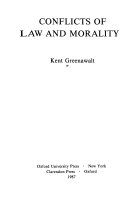
Powerful emotion and pursuit of self-interest have many times led people to break the law with the belief that they are doing so with sound moral reasons. This study is a comprehensive philosophical and legal analysis of the gray area in which the foundations of law and morality clash. This objective book views these oblique circumstances from two perspectives: that of the person who faces a possible conflict between the claims of morality and law and must choose whether or not to obey the penal code; and that of the people who make and uphold laws and must decide whether to treat someone with a moral claim to disobey differently from ordinary lawbreakers. In examining the extent of the obligations owed by citizens to their government, Greenawalt concentrates on the possible existence of a single source of obligation that reaches all citizens and all laws. He also discusses techniques of amelioration of punishment for conscientious lawbreakers, asking how far legal systems should go to accomodate individuals who break the law for reason of conscience. Drawing from numerous examples of conflicts between law and morality, Greenawalt illustrates in detail the positions and predicaments of potential lawbreakers and lawmakers alike.
The concept of global justice makes visible how we citizens of affluent countries are potentially implicated in the horrors so many must endure in the so-called less developed countries.Distinct conceptions of global justice differ in their specific criteria of global justice. However, they agree that the touchstone is how well our global institutional order is doing, compared to its feasible alternatives, in regard to the fundamental human interests that matter from a moral point of view.We are responsible for global regimes such as the global trading system and the rules governing military interventions. These institutional arrangements affect human beings worldwide, for instance by shaping the options and incentives of governments and corporations. Alternative paths of globalization would have differed in how much violence, oppression, and extreme poverty they engender. And global institutional reforms could greatly enhance human rights fullfillment in the future.The importance of this global justice approach reaches well beyond philosophy. It helps ordinary citizens evaluate their options and their responsibility for global institutional factors, and it challenges social scientists to address the causes of poverty and hunger that act across borders.The present volume addresses four main topics regarding global justice: The normative grounds for claims regarding the global institutional order, the substantive normative principles for a legitimate global order, the roles of legal human rights standards, and some institutional arrangements that may make the present world order less unjust.All royalties from this book have been assigned to Oxfam.
Larry Alexander offers a skeptical appraisal of the claim that freedom of expression is a human right. He examines the various contexts in which a right to freedom of expression might be asserted and concludes that it cannot be supported in any of these contexts. Alexander argues that the legal protection affording freedom of expression is definitely of value, although the form such protection takes will vary with historical and cultural circumstances–and, ultimately, is not a matter of human rights.
ما از اخلاق چه انتظاری داریم؟ این سوال شاید تاحدودی برای عموم مردم و یا متخصصان این رشته قابل پاسخ باشد؛ اینکه خوب بودن را به ما بیاموزد و در تنظیم روابط فردی م...

جشن کتاب تهران به ایستگاه سی و یکم رسیده است. حال و احوال نشر کتاب خوب نیست و باید فرهنگدوستان را به خرید و هدیه دادن کتاب ترغیب نمود. خانه اخلاقپژوهان جوان ب...

بنیاد کتابهای اخلاق اسلامی عمدتا پالایش جان از آلودگیها و آراستن آن به زیباییها است. اندیشه محوری این قبیل کتابها آن است که انسان فعلی آنی نیست که باید باشد...

-
0 Comments