Notice: تابع WP_Block_Type_Registry::register به طورنادرست فراخوانی شد. نامهای نوع بلوک نباید حروف بزرگ داشته باشند. لطفاً برای اطلاعات بیشتر، اشکال زدایی در وردپرس را مشاهده کنید. (این پیام در نگارش 5.0.0 افزوده شده است.) in /home/ethicsho/public_html/wp-includes/functions.php on line 5313
Warning: Use of undefined constant TDC_PATH_LEGACY - assumed 'TDC_PATH_LEGACY' (this will throw an Error in a future version of PHP) in /home/ethicsho/public_html/wp-content/plugins/td-composer/td-composer.php on line 109
Warning: Use of undefined constant TDSP_THEME_PATH - assumed 'TDSP_THEME_PATH' (this will throw an Error in a future version of PHP) in /home/ethicsho/public_html/wp-content/plugins/td-composer/td-composer.php on line 113 بایگانیهای 0–333–96507–8 - خانه اخلاق پژوهان جوان Notice: Trying to access array offset on value of type bool in /home/ethicsho/public_html/wp-content/plugins/wp-ulike/inc/general-functions.php on line 807
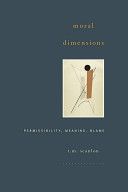
In a clear and elegant style, T. M. Scanlon reframes current philosophical debates as he explores the moral permissibility of an action. Permissibility may seem to depend on the agent’s reasons for performing an action. For example, there seems to be an important moral difference between tactical bombing and a campaign by terrorists—even if the same number of non-combatants are killed—and this difference may seem to lie in the agents’ respective aims. However, Scanlon argues that the apparent dependence of permissibility on the agent’s reasons in such cases is merely a failure to distinguish between two kinds of moral assessment: assessment of the permissibility of an action and assessment of the way an agent decided what to do. Distinguishing between these two forms of assessment leads Scanlon to an important distinction between the permissibility of an action and its meaning: the significance for others of the agent’s willingness to act in this way. An action’s meaning depends on the agent’s reasons for performing it in a way that its permissibility does not. Blame, he argues, is a response to the meaning of an action rather than its permissibility. This analysis leads to a novel account of the conditions of moral responsibility and to important conclusions about the ethics of blame.
Moral Animals offers a brand new approach to moral theory. Drawing on anthropology, sociology, and evolutionary theory, as well as philosophy of language and philosophy of science, Catherine Wilson shows how to understand and reconcile our moral aspirations for a just world with the constraints human nature places on us. This ambitious book will spark fresh debates within philosophy and across the social sciences.
Containing material from hundreds of highly distinguished contributors representing the world’s top universities and institutions, the second edition has a truly global perspective. It contains more than 2,100 entries — including more than 450 new articles. Among the many topics covered are African, Islamic, Jewish, Russian, Chinese, and Buddhist philosophies; bioethics and biomedical ethics; art and aesthetics; epistemology; metaphysics; peace and war; social and political philosophy; the Holocaust; feminist thought; and much more. Additionally, the second edition also features 1,000 biographical entries on major figures in philosophical thought throughout history.
Enlightenment philosophers are often credited with formulating many theories about humankind and society, and in our post-modern age, we still live with some of the very same compelling, contentious and often unresolved questions about ourselves and the world we live in. Author Aubrey Neal suggests that one of these issues that lingers with us today is scepticism, and in ‘How Skeptics do Ethics’, he unravels the thread of this philosophy from its origins in enlightenment thinking down to our present age. He contends that linguistics and language have not brought modern philosophy any closer to understanding the role and nature of ethics in our current science-based society. Going further, Neal suggests the contemporary reader meets traditional terms for ethical theory, plausible belief and moral action in a different world from the one in which they were coined. Instead, these considerations for modern thinkers require a coherent language practice suitable for the social context in which we live, and thus raise the question of the meaning of old philosophical debates and their value for our society today. Referencing such luminary thinkers as Hume, Kant, and Hegel, Neal seeks to re-ignite age old questions and awaken the reader to a sense that our contemporary modes of reference and understanding should be seen from a substantially different point of view. Challenging, bracing, and entirely unflinching, ‘How Skeptics do Ethics’ is a wake-up call for anyone who thinks seriously about our society, ourselves, and the world in which we live.
ما از اخلاق چه انتظاری داریم؟ این سوال شاید تاحدودی برای عموم مردم و یا متخصصان این رشته قابل پاسخ باشد؛ اینکه خوب بودن را به ما بیاموزد و در تنظیم روابط فردی م...

جشن کتاب تهران به ایستگاه سی و یکم رسیده است. حال و احوال نشر کتاب خوب نیست و باید فرهنگدوستان را به خرید و هدیه دادن کتاب ترغیب نمود. خانه اخلاقپژوهان جوان ب...

بنیاد کتابهای اخلاق اسلامی عمدتا پالایش جان از آلودگیها و آراستن آن به زیباییها است. اندیشه محوری این قبیل کتابها آن است که انسان فعلی آنی نیست که باید باشد...

-
0 Comments