Notice: تابع WP_Block_Type_Registry::register به طورنادرست فراخوانی شد. نامهای نوع بلوک نباید حروف بزرگ داشته باشند. لطفاً برای اطلاعات بیشتر، اشکال زدایی در وردپرس را مشاهده کنید. (این پیام در نگارش 5.0.0 افزوده شده است.) in /home/ethicsho/public_html/wp-includes/functions.php on line 5313
Warning: Use of undefined constant TDC_PATH_LEGACY - assumed 'TDC_PATH_LEGACY' (this will throw an Error in a future version of PHP) in /home/ethicsho/public_html/wp-content/plugins/td-composer/td-composer.php on line 109
Warning: Use of undefined constant TDSP_THEME_PATH - assumed 'TDSP_THEME_PATH' (this will throw an Error in a future version of PHP) in /home/ethicsho/public_html/wp-content/plugins/td-composer/td-composer.php on line 113 بایگانیهای 0-230-52756-6 - خانه اخلاق پژوهان جوان Notice: Trying to access array offset on value of type bool in /home/ethicsho/public_html/wp-content/plugins/wp-ulike/inc/general-functions.php on line 807
In Natural Ethical Facts William Casebeer argues that we can articulate a fully naturalized ethical theory using concepts from evolutionary biology and cognitive science, and that we can study moral cognition just as we study other forms of cognition. His goal is to show that we have “softly fixed” human natures, that these natures are evolved, and that our lives go well or badly depending on how we satisfy the functional demands of these natures. Natural Ethical Facts is a comprehensive examination of what a plausible moral science would look like.Casebeer begins by discussing the nature of ethics and the possible relationship between science and ethics. He then addresses David Hume’s naturalistic fallacy and G. E. Moore’s open-question argument, drawing on the work of John Dewey and W. V. O. Quine. He then proposes a functional account of ethics, offering corresponding biological and moral descriptions. Discussing in detail the neural correlates of moral cognition, he argues that neural networks can be used to model ethical function. He then discusses the impact his views of moral epistemology and ontology will have on traditional ethical theory and moral education, concluding that there is room for other moral theories as long as they take into consideration the functional aspect of ethics; the pragmatic neo-Aristotelian virtue theory he proposes thus serves as a moral “big tent.” Finally, he addresses objections to ethical naturalism that may arise, and calls for a reconciliation of the sciences and the humanities. “Living well,” Casebeer writes, “depends upon reweaving our ethical theories into the warp and woof of our scientific heritage, attending to the myriad consequences such a project will have for the way we live our lives and the manner in which we structure our collective moral institutions.”
Ethics for Psychologists, 2nd Edition is a comprehensive handbook covering the full range of ethical challenges that confront psychologists in practice and research Written for all psychology practitioners and researchers Addresses new concerns such as ‘whistleblowing’, quantifying ethics, and Internet-related issues Features greatly expanded section of case studies, resolutions, and work exercises Suitable for all English-speaking countries beyond just North America Includes guidance on a variety of national ethics codes, including the European Meta-Code of Ethics and the UN Declaration of Human Rights
Ethics is taught in various ways; in this book exercises and discussion are provided for each of the following areas: – Ethical Practices in Health Care – Law and Ethics – Rights of Patients and Responsibilities of Health-Care Providers – The Rights of Health-Care Professionals – The Duty of Care – Confidentiality – Consent to Treatment – Life and Death – Research Ethics – Ethics in Public Health Practice – Ethical Practice in Everyday Health Care is useful, practical and student friendly. The exercises and discussions will stimulate thought about ethical conduct and help students to develop and translate ethical principles into their daily practice as health-care workers. Dr Walrond offers a ready and concise source of information for medical students on ethical issues. The text is simple, comprehensive and factual, addressing issues encountered in everyday medical practices. Case studies provide practical illustrations of complex ethical issues.
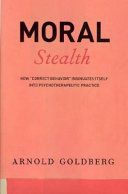
“In Moral Stealth, Goldberg explores and explains that problem of “correct behavior.” He demonstrates that the inflated and official expectations that are part of an analyst’s training – that therapists be universally curious, hopeful, kind, and purposeful, for example – are often of less help than simple empathy amid the ambiguous morality of actual patient interactions. Being a good therapist and being a good person, he argues, are not necessarily the same.” “Drawing on case studies from his own practice and from the experiences of others, as well as on philosophers such as John Dewey, Slavoj Zizek, and Jurgen Habermas, Goldberg breaks new ground and leads the way for therapists to understand the relationship between private morality and clinical practice.”–BOOK JACKET.
ما از اخلاق چه انتظاری داریم؟ این سوال شاید تاحدودی برای عموم مردم و یا متخصصان این رشته قابل پاسخ باشد؛ اینکه خوب بودن را به ما بیاموزد و در تنظیم روابط فردی م...

جشن کتاب تهران به ایستگاه سی و یکم رسیده است. حال و احوال نشر کتاب خوب نیست و باید فرهنگدوستان را به خرید و هدیه دادن کتاب ترغیب نمود. خانه اخلاقپژوهان جوان ب...

بنیاد کتابهای اخلاق اسلامی عمدتا پالایش جان از آلودگیها و آراستن آن به زیباییها است. اندیشه محوری این قبیل کتابها آن است که انسان فعلی آنی نیست که باید باشد...

-
0 Comments