Notice: تابع WP_Block_Type_Registry::register به طورنادرست فراخوانی شد. نامهای نوع بلوک نباید حروف بزرگ داشته باشند. لطفاً برای اطلاعات بیشتر، اشکال زدایی در وردپرس را مشاهده کنید. (این پیام در نگارش 5.0.0 افزوده شده است.) in /home/ethicsho/public_html/wp-includes/functions.php on line 5313
Warning: Use of undefined constant TDC_PATH_LEGACY - assumed 'TDC_PATH_LEGACY' (this will throw an Error in a future version of PHP) in /home/ethicsho/public_html/wp-content/plugins/td-composer/td-composer.php on line 109
Warning: Use of undefined constant TDSP_THEME_PATH - assumed 'TDSP_THEME_PATH' (this will throw an Error in a future version of PHP) in /home/ethicsho/public_html/wp-content/plugins/td-composer/td-composer.php on line 113 بایگانیهای 0-203-89058-2 - خانه اخلاق پژوهان جوان Notice: Trying to access array offset on value of type bool in /home/ethicsho/public_html/wp-content/plugins/wp-ulike/inc/general-functions.php on line 807
‘We know much more about the global politics of intellectual property than we do about national political contests over the ownership of knowledge. Haunss and Shadlen have identified this gap in the literature and have done a fine job of bringing together a set of essays that helps to fill this gap in our understanding of the multi-layered nature of intellectual property politics.’ Peter Drahos, Australian National University ‘This thought-provoking volume provides invaluable new insights and is a major contribution to the debate on the politics of intellectual property rights.’ Duncan Matthews, Queen Mary, University of London, UK This book offers empirical analyses of conflicts over the ownership, control, and use of knowledge and information in developed and developing countries. Sebastian Haunss and Kenneth C. Shadlen, along with a collection of eminent contributors, focus on how business organizations, farmers, social movements, legal communities, state officials, transnational enterprises, and international organizations shape IP policies in areas such as health, information-communication technologies, indigenous knowledge, genetic resources, and many others. The innovative and original chapters examine conflicts over the rules governing various dimensions of IP, including patents, copyrights, traditional knowledge, and biosafety regulations. Written from a political perspective, this book is a must-read for political scientists, sociologists and anthropologists who study IP and conflicts over property. It is also an essential read for stakeholders in institutions, NGOs and industry interested in knowledge governance and IP politics.
Lies are often so subtle, so deftly woven into easily acceptable truths, that we can fail to recognize them. Turning Sisela Bok’s defense of truth in her book Lying on its head, Jeremy Campbell argues that deception should no longer be seen as artificial or deviant, but as a natural part of our world. Beginning with a study of evolutionary biology and the necessity (and ultimate value) of deceit in the animal kingdom, Campbell asks the difficult question of whether falsehood might, in fact, be instinctual. Guiding the reader through classical philosophy to more contemporary thinkers such as Freud and Nietzsche, Campbell links a multitude of disciplines and ideas in lucid and engaging prose. Unsettling some of our most firmly held beliefs about truth and ethics, The Liar’s Tale is a riveting work of intellectual history. “This challenging romp through the underbelly of intellectual history…is fascinating and troublesome.”–New York Times Book Review “[A] beautifully written book….a crisp and remarkably readable discussion.”–John Frohnmayer, The Wilson Quarterly
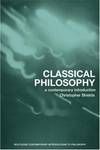
Classical Philosophy is a comprehensive examination of early philosophy from the presocratics through to Aristotle. The aim of the book is to provide an explanation and analysis of the ideas that flourished at this time and considers their relevance both to the historical development of philosophy and to contemporary philosophy today. From these ideas we can see the roots of arguments in metaphysics, epistemology, ethics and political philosophy.The book is arranged in four parts by thinker and covers: The Presocratics Socrates Plato Aristotle Christopher Shields’ style is inviting, refreshing and ideal for anyone coming to the subject for the first time. He provides a balanced account of the central topics and ideas that emerged from the period and includes helpful further reading and chapter overviews.
The scale and variety of acts of religious intolerance evident in so many countries today are of enormous contemporary concern. This timely study attempts a thorough and systematic treatment of both Universal and European practice. The standards applicable to freedom of religion are subjected to a detailed critique, and their development and implementation within the UN is distinguished from that within Strasbourg, in order to discern trends and obstacles to their advancement and to highlight the rationale for any apparent departures between the two systems. This dual focus also demonstrates the acute need for the European Court to heed the warnings from various patterns of violation throughout the world illustrated by the Human Rights Committee and the Special Rapporteur on freedom of religion or belief.
ما از اخلاق چه انتظاری داریم؟ این سوال شاید تاحدودی برای عموم مردم و یا متخصصان این رشته قابل پاسخ باشد؛ اینکه خوب بودن را به ما بیاموزد و در تنظیم روابط فردی م...

جشن کتاب تهران به ایستگاه سی و یکم رسیده است. حال و احوال نشر کتاب خوب نیست و باید فرهنگدوستان را به خرید و هدیه دادن کتاب ترغیب نمود. خانه اخلاقپژوهان جوان ب...

بنیاد کتابهای اخلاق اسلامی عمدتا پالایش جان از آلودگیها و آراستن آن به زیباییها است. اندیشه محوری این قبیل کتابها آن است که انسان فعلی آنی نیست که باید باشد...

-
0 Comments