Notice: تابع WP_Block_Type_Registry::register به طورنادرست فراخوانی شد. نامهای نوع بلوک نباید حروف بزرگ داشته باشند. لطفاً برای اطلاعات بیشتر، اشکال زدایی در وردپرس را مشاهده کنید. (این پیام در نگارش 5.0.0 افزوده شده است.) in /home/ethicsho/public_html/wp-includes/functions.php on line 5313
Warning: Use of undefined constant TDC_PATH_LEGACY - assumed 'TDC_PATH_LEGACY' (this will throw an Error in a future version of PHP) in /home/ethicsho/public_html/wp-content/plugins/td-composer/td-composer.php on line 109
Warning: Use of undefined constant TDSP_THEME_PATH - assumed 'TDSP_THEME_PATH' (this will throw an Error in a future version of PHP) in /home/ethicsho/public_html/wp-content/plugins/td-composer/td-composer.php on line 113 بایگانیهای 0-02-865790-X - خانه اخلاق پژوهان جوان Notice: Trying to access array offset on value of type bool in /home/ethicsho/public_html/wp-content/plugins/wp-ulike/inc/general-functions.php on line 807
Paternalistic intervention, especially in the context of modern medicine and health care, is the topical issue of The Limits of Medical Paternalism. Dr Hayry aims to define and morally assess paternalistic interventions through a defined conceptual background. The method employed for this purpose is that of applied philosophical ethics in the analytic tradition. It is argued that there is a marked distinction between strong and weak paternalism. Strong paternalism is defined as the violation of autonomy of a patient ‘in her own best interest’ when the person is capable of autonomous decision-making in matters that concern primarily only herself. Weak paternalism is the violation of autonomy when a person is temporarily incapable of self-determined decision-making; it is therefore sometimes justifiable. The application of these views is that no overall a priori judgement concerning the rights and wrongs of such medical intervention is possible.
This book is a long-awaited major statement by a pre-eminent analytic philosopher, Alvin Plantinga, on one of our biggest debates — the compatibility of science and religion. The last twenty years has seen a cottage industry of books on this divide, but with little consensus emerging. Plantinga, as a top philosopher but also a proponent of the rationality of religious belief, has a unique contribution to make. His theme in this short book is that the conflict between science and theistic religion is actually superficial, and that at a deeper level they are in concord. Plantinga examines where this conflict is supposed to exist — evolution, evolutionary psychology, analysis of scripture, scientific study of religion — as well as claims by Dan Dennett, Richard Dawkins, and Philip Kitcher that evolution and theistic belief cannot co-exist. Plantinga makes a case that their arguments are not only inconclusive but that the supposed conflicts themselves are superficial, due to the methodological naturalism used by science. On the other hand, science can actually offer support to theistic doctrines, and Plantinga uses the notion of biological and cosmological “fine-tuning” in support of this idea. Plantinga argues that we might think about arguments in science and religion in a new way — as different forms of discourse that try to persuade people to look at questions from a perspective such that they can see that something is true. In this way, there is a deep and massive consonance between theism and the scientific enterprise.
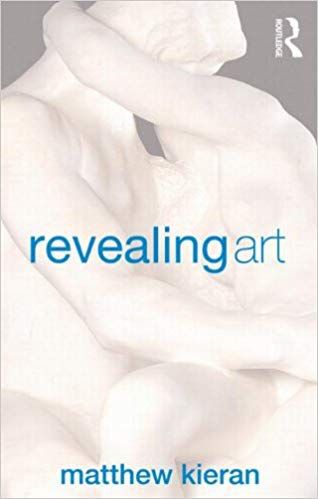
Why does art matter to us, and what makes good art? Why is the role of imagination so important in art? Illustrated with carefully chosen color and black-and-white plates of examples from Michelangelo to Matisse and Poussin to Jackson Pollock,Revealing Artexplores some of the most important questions we can ask about art. Matthew Kieran clearly but forcefully asks how art inspires us and disgusts us and whether artistic judgment is simply a matter of taste, and if art can be immoral or obscene, should it be censored? He brings such abstract issues to life with fascinating discussions of individual paintings, photographs and sculptures, such as Michelangelo’sPieta,Andres Serrano’sPiss Christand Jackson Pollock’sSummertime. He also suggests some answers to problems that any one in an art gallery or museum is likely to ask themselves: what is a beautiful work of art, and can art really reveal something true about our own nature? Revealing Artis ideal foranyone interested in debates about art today, or who has simply stood in front of a painting and felt baffled.
Virtue ethics is perhaps the most important development within late twentieth-century moral philosophy. Rosalind Hursthouse, who has made notable contributions to this development, now presents a full exposition and defence of her neo-Aristotelian version of virtue ethics. She shows how virtueethics can provide guidance for action, illuminate moral dilemmas, and bring out the moral significance of the emotions. Deliberately avoiding a combative stance, she finds less disagreement between Kantian and neo-Aristotelian approaches than is usual, and she offers the first account from a virtueethics perspective of acting ‘from a sense of duty’. She considers the question which character traits are virtues, and explores how answers to this question can be justified by appeal to facts about human nature. Written in a clear, engaging style which makes it accessible to non-specialists, OnVirtue Ethics will appeal to anyone with an interest in moral philosophy.
ما از اخلاق چه انتظاری داریم؟ این سوال شاید تاحدودی برای عموم مردم و یا متخصصان این رشته قابل پاسخ باشد؛ اینکه خوب بودن را به ما بیاموزد و در تنظیم روابط فردی م...

جشن کتاب تهران به ایستگاه سی و یکم رسیده است. حال و احوال نشر کتاب خوب نیست و باید فرهنگدوستان را به خرید و هدیه دادن کتاب ترغیب نمود. خانه اخلاقپژوهان جوان ب...

بنیاد کتابهای اخلاق اسلامی عمدتا پالایش جان از آلودگیها و آراستن آن به زیباییها است. اندیشه محوری این قبیل کتابها آن است که انسان فعلی آنی نیست که باید باشد...

-
0 Comments