Notice: تابع WP_Block_Type_Registry::register به طورنادرست فراخوانی شد. نامهای نوع بلوک نباید حروف بزرگ داشته باشند. لطفاً برای اطلاعات بیشتر، اشکال زدایی در وردپرس را مشاهده کنید. (این پیام در نگارش 5.0.0 افزوده شده است.) in /home/ethicsho/public_html/wp-includes/functions.php on line 5313
Warning: Use of undefined constant TDC_PATH_LEGACY - assumed 'TDC_PATH_LEGACY' (this will throw an Error in a future version of PHP) in /home/ethicsho/public_html/wp-content/plugins/td-composer/td-composer.php on line 109
Warning: Use of undefined constant TDSP_THEME_PATH - assumed 'TDSP_THEME_PATH' (this will throw an Error in a future version of PHP) in /home/ethicsho/public_html/wp-content/plugins/td-composer/td-composer.php on line 113 بایگانیهای 999 - خانه اخلاق پژوهان جوان Notice: Trying to access array offset on value of type bool in /home/ethicsho/public_html/wp-content/plugins/wp-ulike/inc/general-functions.php on line 807
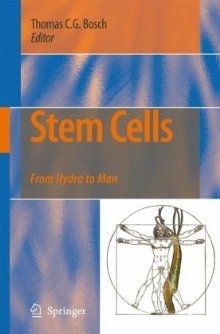
Much of our knowledge of stem cells has been inferred from studies of remarkable few species. The ability to manipulate stem cells in “model” organisms such as the mouse and a few other vertebrate species has driven our understanding of basic biology of stem cells. The power and efficiency of studying model organisms, however, comes at a cost since a few species, obviously, do not reflect natureA´s true diversity. Unfortunately, although all multicellular organisms seem to rely on stem cells, and although this seems to be a question of key importance for understanding the evolution of animal life, little is known about stem cells in early-branching taxa. The book “Stem Cells: From Hydra to Man” illustrates that here is more than human and mouse stem cells to learn from. Reflecting an enormous growth in the knowledge of stem cells in various organisms, the book presents the conceptual language and the nature of questions, as well as a summary of the advances in our understanding of stem cells from a comparative point of view that has resulted from the development of new technology and the development of novel model organisms over the past few decades. As such this book is largely a horizon analysis of a frontier rather than a retrospective. It presents an integrative approach to animal stem cells and covers the major contributions, tools and trends in a newly emerging field: comparative stem cell biology.
This challenging and provocative book argues against much contemporary orthodoxy in philosophy and the social sciences by showing why objectivity in the domain of ethics is really no different from the objectivity of scientific knowledge. In the course of the book Jean Hampton examines moral realism, the general nature of reason and norms, internalism and externalism, instrumental reasoning, and the expected utility model of practical reasoning. The book should prove to be a seminal work in the theory of rationality that will be read by a broad swathe of philosophers and social scientists.
As the first book to explore the confluence of three emerging yet critical fields of study, this work sets an exacting standard. The editors’ aim was to produce the most authoritative guide for ecojustice, place-based education, and indigenous knowledge in education. Aimed at a wide audience that includes, but is not restricted to, science educators and policymakers, Cultural Studies and Environmentalism starts from the premise that schooling is a small part of the larger educational domain in which we live and learn. Informed by this overarching notion, the book opens up ways in which home-grown talents, narratives, and knowledge can be developed, and eco-region awareness and global relationships can be facilitated. Incorporating a diversity of perspectives that include photography, poetry and visual art, the work provides a nuanced lens for evaluating educational problems and community conditions while protecting and conserving the most threatened and vulnerable narratives. Editors and contributors share the view that the impending loss of these narratives should be discussed much more widely than is currently the case, and that both teachers and children can take on some of the responsibility for their preservation. The relevance of ecojustice to this process is clear. Ecojustice philosophy is a way of learning about how we frame, or perceive, the world around us—and why that matters. Although it is not synonymous with social or environmental justice, the priorities of ecojustice span the globe in the same way. It incorporates a deep recognition of the appropriateness and significance of learning from place-based experiences and indigenous knowledge systems rather than depending on some urgent (3)4z(Becological crises(3)4y (Bto advocate for school and societal change. With a multiplicity of diverse voices coming together to explore its key themes, this book is an important starting point for educators in many arenas. It brings into better focus a vital role for the Earth’s ecosystems in the context of ecosociocultural theory and participatory democracy alike. (3)4z(BEncompassing theoretical, empirical, and experiential standpoints concerning place-based knowledge systems, this unique book argues for a transformation of (science) education’s intellectual tradition of thinking that emphasizes individual cognition. In its place, the book offers a wisdom tradition of thinking, living, and being that emphasizes community survival in harmony within itself and with Mother Earth.(3)4y (BGlen Aikenhead.
Taking a refreshingly hands-on approach to introductory ethics, A 21st Century Ethical Toolbox provides students with a set of tools to help them understand and make a constructive difference in real-life moral controversies. Thoroughly optimistic, it invites students to approach ethical issues with a reconstructive intent, making room for more and better options than the traditional “pro” and “con” positions that have grown up around tough problems like abortion and animal rights. Ideal for introductory and applied ethics courses, this unique text does not treat ethics as a purely academic, historical, or theoretical subject, but as a wide-ranging and ongoing set of challenges that calls for multiple and interwoven kinds of intelligence. It covers the skills that are most vital to making real progress in ethics, including paying careful attention to the values at stake on all sides of an issue; looking for creative opportunities within difficult problems; critical-thinking skills such as defining key terms and making sure to judge similar cases alike; and learning how to engage in constructive dialogue. Instructors can readily use the experiential and applied activities inspired by this “toolbox” of practical skills to design an interactive and collaborative ethics course. Students can carry these essential skills directly from this book into such projects as campaigning for environmental awareness and staffing local homeless shelters. In addition to his own discussion, Weston includes gripping and provocative short selections from essayists, activists, and philosophers, and also cites his own students. Extensive “Exercises and Notes” sections end each chapter, and a detailed appendix offers instructors advice on how to use the Toolbox in the classroom.
ما از اخلاق چه انتظاری داریم؟ این سوال شاید تاحدودی برای عموم مردم و یا متخصصان این رشته قابل پاسخ باشد؛ اینکه خوب بودن را به ما بیاموزد و در تنظیم روابط فردی م...

جشن کتاب تهران به ایستگاه سی و یکم رسیده است. حال و احوال نشر کتاب خوب نیست و باید فرهنگدوستان را به خرید و هدیه دادن کتاب ترغیب نمود. خانه اخلاقپژوهان جوان ب...

بنیاد کتابهای اخلاق اسلامی عمدتا پالایش جان از آلودگیها و آراستن آن به زیباییها است. اندیشه محوری این قبیل کتابها آن است که انسان فعلی آنی نیست که باید باشد...

-
0 Comments