Notice: تابع WP_Block_Type_Registry::register به طورنادرست فراخوانی شد. نامهای نوع بلوک نباید حروف بزرگ داشته باشند. لطفاً برای اطلاعات بیشتر، اشکال زدایی در وردپرس را مشاهده کنید. (این پیام در نگارش 5.0.0 افزوده شده است.) in /home/ethicsho/public_html/wp-includes/functions.php on line 5313
Warning: Use of undefined constant TDC_PATH_LEGACY - assumed 'TDC_PATH_LEGACY' (this will throw an Error in a future version of PHP) in /home/ethicsho/public_html/wp-content/plugins/td-composer/td-composer.php on line 109
Warning: Use of undefined constant TDSP_THEME_PATH - assumed 'TDSP_THEME_PATH' (this will throw an Error in a future version of PHP) in /home/ethicsho/public_html/wp-content/plugins/td-composer/td-composer.php on line 113 بایگانیهای 925 - خانه اخلاق پژوهان جوان Notice: Trying to access array offset on value of type bool in /home/ethicsho/public_html/wp-content/plugins/wp-ulike/inc/general-functions.php on line 807
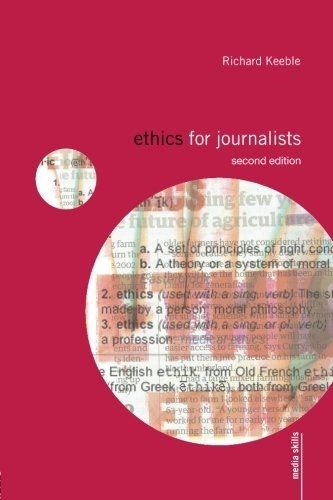
Ethics for Journalists tackles many of the issues which journalists face in their everyday lives – from the media’s supposed obsession with sex, sleaze and sensationalism, to issues of regulation and censorship. Its accessible style and question and answer approach highlights the relevance of ethical issues for everyone involved in journalism, both trainees and professionals, whether working in print, broadcast or new media.Ethics for Journalists provides a comprehensive overview of ethical dilemmas and features interviews with a number of journalists. Presenting a range of imaginative strategies for improving media standards and supported by a thorough bibliography and a wide ranging list of websites.
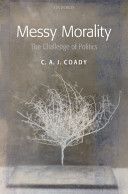
Tony Coady explores the challenges that morality poses to politics. He confronts the complex intellectual tradition known as realism, which seems to deny any relevance of morality to politics, especially international politics. He argues that, although realism has many serious faults, it has lessons to teach us: in particular, it cautions us against the dangers of moralism in thinking about politics and particularly foreign affairs. Morality must not be confused with moralism: Coady characterizes various forms of moralism and sketches their distorting influence on a realistic political morality. He seeks to restore the concept of ideals to an important place in philosophical discussion, and to give it a particular pertinence in the discussion of politics. He deals with the fashionable idea of “dirty hands,” according to which good politics will necessarily involve some degree of moral taint or corruption. Finally, he examines the controversial issue of the role of lying and deception in politics. Along the way Coady offers illuminating discussion of historical and current political controversies. This lucid book will provoke and stimulate anyone interested in the interface of morality and politics.
Jason Stanley presents a startling and provocative claim about knowledge: that whether or not someone knows a proposition at a given time is in part determined by his or her practical interests, i.e. by how much is at stake for that person at that time. So whether a true belief is knowledge is not merely a matter of supporting beliefs or reliability; in the case of knowledge, practical rationality and theoretical rationality are intertwined. Stanley defends this thesis against alternative accounts of the phenomena that motivate it, such as the claim that knowledge attributions are linguistically context-sensitive (contextualism about knowledge attributions), and the claim that the truth of a knowledge claim is somehow relative to the person making the claim (relativism about knowledge). In the course of his argument Stanley introduces readers to a number of strategies for resolving philosophical paradox, making the book essential not just for specialists in epistemology but for all philosophers interested in philosophical methodology. Since a number of his strategies appeal to linguistic evidence, it will be of great interest to linguists as well.
ما از اخلاق چه انتظاری داریم؟ این سوال شاید تاحدودی برای عموم مردم و یا متخصصان این رشته قابل پاسخ باشد؛ اینکه خوب بودن را به ما بیاموزد و در تنظیم روابط فردی م...

جشن کتاب تهران به ایستگاه سی و یکم رسیده است. حال و احوال نشر کتاب خوب نیست و باید فرهنگدوستان را به خرید و هدیه دادن کتاب ترغیب نمود. خانه اخلاقپژوهان جوان ب...

بنیاد کتابهای اخلاق اسلامی عمدتا پالایش جان از آلودگیها و آراستن آن به زیباییها است. اندیشه محوری این قبیل کتابها آن است که انسان فعلی آنی نیست که باید باشد...

-
0 Comments