Notice: تابع WP_Block_Type_Registry::register به طورنادرست فراخوانی شد. نامهای نوع بلوک نباید حروف بزرگ داشته باشند. لطفاً برای اطلاعات بیشتر، اشکال زدایی در وردپرس را مشاهده کنید. (این پیام در نگارش 5.0.0 افزوده شده است.) in /home/ethicsho/public_html/wp-includes/functions.php on line 5313
Warning: Use of undefined constant TDC_PATH_LEGACY - assumed 'TDC_PATH_LEGACY' (this will throw an Error in a future version of PHP) in /home/ethicsho/public_html/wp-content/plugins/td-composer/td-composer.php on line 109
Warning: Use of undefined constant TDSP_THEME_PATH - assumed 'TDSP_THEME_PATH' (this will throw an Error in a future version of PHP) in /home/ethicsho/public_html/wp-content/plugins/td-composer/td-composer.php on line 113 بایگانیهای 862 - خانه اخلاق پژوهان جوان Notice: Trying to access array offset on value of type bool in /home/ethicsho/public_html/wp-content/plugins/wp-ulike/inc/general-functions.php on line 807
The fundamental question of the ethics of belief is “What ought one to believe?” According to the traditional view of evidentialism, the strength of one’s beliefs should be proportionate to the evidence. Conventional ways of defending and challenging evidentialism rely on the idea that what one ought to believe is a matter of what it is rational, prudent, ethical, or personally fulfilling to believe. Common to all these approaches is that they look outside of belief itself to determine what one ought to believe.In this book Jonathan Adler offers a strengthened version of evidentialism, arguing that the ethics of belief should be rooted in the concept of belief—that evidentialism is belief’s own ethics. A key observation is that it is not merely that one ought not, but that one cannot, believe, for example, that the number of stars is even. The “cannot” represents a conceptual barrier, not just an inability. Therefore belief in defiance of one’s evidence (or evidentialism) is impossible. Adler addresses such questions as irrational beliefs, reasonableness, control over beliefs, and whether justifying beliefs requires a foundation. Although he treats the ethics of belief as a central topic in epistemology, his ideas also bear on rationality, argument and pragmatics, philosophy of religion, ethics, and social cognitive psychology.
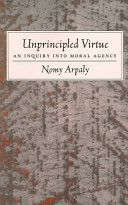
Nomy Arpaly rejects the model of rationality used by most ethicists and action theorists. Both observation and psychology indicate that people act rationally without deliberation, and act irrationally with deliberation. By questioning the notion that our own minds are comprehensible to us–and therefore questioning much of the current work of action theorists and ethicists–Arpaly attempts to develop a more realistic conception of moral agency.
In The UN Secretary-General and Moral Authority, contributors provide case studies of all seven former secretaries-general, establishing a much-needed comparative survey of each office-holder’s personal religious and moral values. From Trygve Lie’s forbearance during the UN’s turbulent formative years to the Nobel committee’s awarding Kofi Annan and the United Nations the prize for peace in 2001, the case studies all follow the same format, first detailing the environmental and experiential factors that forged these men’s ethical frameworks, then analyzing how their “inner code” engaged with the duties of office and the global events particular to their terms. Balanced and unbiased in its approach, this study provides valuable insight into how religious and moral leadership functions in the realm of international relations, and how the promotion of ethical values works to diffuse international tensions and improve the quality of human life around the world.
At a time when medical technologies make it ever easier to enhance our minds and bodies, a debate has arisen about whether such efforts promote a process of “normalization,” which makes it ever harder to tolerate the natural anatomical differences among us. The debate becomes especially complicated when it addresses the surgical alteration, or “shaping,” of children. This volume explores the ethical and social issues raised by the recent proliferation of surgeries designed to make children born with physical differences look more normal.Using three cases — surgeries to eliminate craniofacial abnormalities such as cleft lip and palate, surgeries to correct ambiguous genitalia, and surgeries to lengthen the limbs of children born with dwarfism — the contributors consider the tensions parents experience when making such life-altering decisions on behalf of or with their children.The essays in this volume offer in-depth examinations of the significance and limits of surgical alteration through personal narratives, theoretical reflections, and concrete suggestions about how to improve the decision-making process. Written from the perspectives of affected children and their parents, health care providers, and leading scholars in philosophy, sociology, history, law, and medicine, this collection provides an integrated and comprehensive foundation from which to consider a complex and controversial issue. It takes the reader on a journey from reflections on the particulars of current medical practices to reflections on one of the deepest and most complex of human desires: the desire for normality.ContributorsPriscilla Alderson, Adrienne Asch, Cassandra Aspinall, Alice Domurat Dreger, James C. Edwards, Todd C. Edwards, Ellen K. Feder, Arthur W. Frank, Lisa Abelow Hedley, Eva Fedder Kittay, Hilde Lindemann, Jeffery L. Marsh, Paul Steven Miller, Sherri G. Morris, Wendy E. Mouradian, Donald L. Patrick, Nichola Rumsey, Emily Sullivan Sanford, Tari D. Topolski
ما از اخلاق چه انتظاری داریم؟ این سوال شاید تاحدودی برای عموم مردم و یا متخصصان این رشته قابل پاسخ باشد؛ اینکه خوب بودن را به ما بیاموزد و در تنظیم روابط فردی م...

جشن کتاب تهران به ایستگاه سی و یکم رسیده است. حال و احوال نشر کتاب خوب نیست و باید فرهنگدوستان را به خرید و هدیه دادن کتاب ترغیب نمود. خانه اخلاقپژوهان جوان ب...

بنیاد کتابهای اخلاق اسلامی عمدتا پالایش جان از آلودگیها و آراستن آن به زیباییها است. اندیشه محوری این قبیل کتابها آن است که انسان فعلی آنی نیست که باید باشد...

-
0 Comments