Notice: تابع WP_Block_Type_Registry::register به طورنادرست فراخوانی شد. نامهای نوع بلوک نباید حروف بزرگ داشته باشند. لطفاً برای اطلاعات بیشتر، اشکال زدایی در وردپرس را مشاهده کنید. (این پیام در نگارش 5.0.0 افزوده شده است.) in /home/ethicsho/public_html/wp-includes/functions.php on line 5313
Warning: Use of undefined constant TDC_PATH_LEGACY - assumed 'TDC_PATH_LEGACY' (this will throw an Error in a future version of PHP) in /home/ethicsho/public_html/wp-content/plugins/td-composer/td-composer.php on line 109
Warning: Use of undefined constant TDSP_THEME_PATH - assumed 'TDSP_THEME_PATH' (this will throw an Error in a future version of PHP) in /home/ethicsho/public_html/wp-content/plugins/td-composer/td-composer.php on line 113 بایگانیهای 841 - خانه اخلاق پژوهان جوان Notice: Trying to access array offset on value of type bool in /home/ethicsho/public_html/wp-content/plugins/wp-ulike/inc/general-functions.php on line 807
This accessible introduction to religious ethics focuses on the major forms of moral reasoning encompassing the three ‘Abrahamic’ religions: Judaism, Christianity, and Islam. Draws on a range of moral issues, such as examples arising from friendship, marriage, homosexuality, lying, forgiveness and its limits, the death penalty, the environment, warfare, and the meaning of work, career, and vocation Looks at both ethical reasoning and importantly, “how” that reasoning reveals insights into a religious tradition Investigates the resources available to address common problems confronting Abrahamic faiths, and how each faith explains and defends its moral viewpoints Offering concrete topics for interfaith discussions, this is a timely and insightful introduction to a fast-growing field of interest
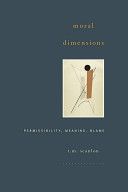
In a clear and elegant style, T. M. Scanlon reframes current philosophical debates as he explores the moral permissibility of an action. Permissibility may seem to depend on the agent’s reasons for performing an action. For example, there seems to be an important moral difference between tactical bombing and a campaign by terrorists—even if the same number of non-combatants are killed—and this difference may seem to lie in the agents’ respective aims. However, Scanlon argues that the apparent dependence of permissibility on the agent’s reasons in such cases is merely a failure to distinguish between two kinds of moral assessment: assessment of the permissibility of an action and assessment of the way an agent decided what to do. Distinguishing between these two forms of assessment leads Scanlon to an important distinction between the permissibility of an action and its meaning: the significance for others of the agent’s willingness to act in this way. An action’s meaning depends on the agent’s reasons for performing it in a way that its permissibility does not. Blame, he argues, is a response to the meaning of an action rather than its permissibility. This analysis leads to a novel account of the conditions of moral responsibility and to important conclusions about the ethics of blame.
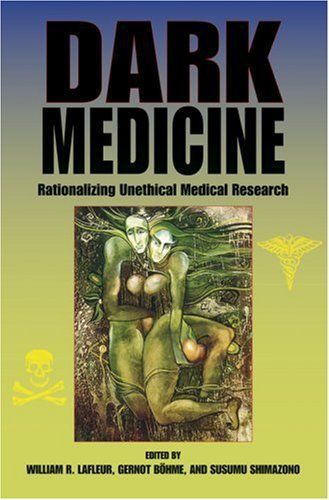
The trial of the “German doctors” exposed atrocities of Nazi medical science and led to the Nuremberg Code governing human experimentation. In Japan, Unit 731 carried out hideous experiments on captured Chinese and downed American pilots. In the United States, stories linger of biological experimentation during the Korean War. This collection of essays looks at the dark medical research conducted during and after World War II. Contributors describe this research, how it was brought to light, and the rationalizations of those who perpetrated and benefited from it.
The concept of global justice makes visible how we citizens of affluent countries are potentially implicated in the horrors so many must endure in the so-called less developed countries.Distinct conceptions of global justice differ in their specific criteria of global justice. However, they agree that the touchstone is how well our global institutional order is doing, compared to its feasible alternatives, in regard to the fundamental human interests that matter from a moral point of view.We are responsible for global regimes such as the global trading system and the rules governing military interventions. These institutional arrangements affect human beings worldwide, for instance by shaping the options and incentives of governments and corporations. Alternative paths of globalization would have differed in how much violence, oppression, and extreme poverty they engender. And global institutional reforms could greatly enhance human rights fullfillment in the future.The importance of this global justice approach reaches well beyond philosophy. It helps ordinary citizens evaluate their options and their responsibility for global institutional factors, and it challenges social scientists to address the causes of poverty and hunger that act across borders.The present volume addresses four main topics regarding global justice: The normative grounds for claims regarding the global institutional order, the substantive normative principles for a legitimate global order, the roles of legal human rights standards, and some institutional arrangements that may make the present world order less unjust.All royalties from this book have been assigned to Oxfam.
ما از اخلاق چه انتظاری داریم؟ این سوال شاید تاحدودی برای عموم مردم و یا متخصصان این رشته قابل پاسخ باشد؛ اینکه خوب بودن را به ما بیاموزد و در تنظیم روابط فردی م...

جشن کتاب تهران به ایستگاه سی و یکم رسیده است. حال و احوال نشر کتاب خوب نیست و باید فرهنگدوستان را به خرید و هدیه دادن کتاب ترغیب نمود. خانه اخلاقپژوهان جوان ب...

بنیاد کتابهای اخلاق اسلامی عمدتا پالایش جان از آلودگیها و آراستن آن به زیباییها است. اندیشه محوری این قبیل کتابها آن است که انسان فعلی آنی نیست که باید باشد...

-
0 Comments