Notice: تابع WP_Block_Type_Registry::register به طورنادرست فراخوانی شد. نامهای نوع بلوک نباید حروف بزرگ داشته باشند. لطفاً برای اطلاعات بیشتر، اشکال زدایی در وردپرس را مشاهده کنید. (این پیام در نگارش 5.0.0 افزوده شده است.) in /home/ethicsho/public_html/wp-includes/functions.php on line 5313
Warning: Use of undefined constant TDC_PATH_LEGACY - assumed 'TDC_PATH_LEGACY' (this will throw an Error in a future version of PHP) in /home/ethicsho/public_html/wp-content/plugins/td-composer/td-composer.php on line 109
Warning: Use of undefined constant TDSP_THEME_PATH - assumed 'TDSP_THEME_PATH' (this will throw an Error in a future version of PHP) in /home/ethicsho/public_html/wp-content/plugins/td-composer/td-composer.php on line 113 بایگانیهای 819 - خانه اخلاق پژوهان جوان Notice: Trying to access array offset on value of type bool in /home/ethicsho/public_html/wp-content/plugins/wp-ulike/inc/general-functions.php on line 807
Oxford Studies in Ancient Philosophy is a volume of original articles on all aspects of ancient philosophy. The articles may be of substantial length, and include critical notices of major books. OSAP is now published twice yearly, in both hardback and paperback. ‘The serial Oxford Studies in Ancient Philosophy (OSAP) is fairly regarded as the leading venue for publication in ancient philosophy. It is where one looks to find the state-of-the-art. That the serial, which presents itself more as an anthology than as a journal, has traditionally allowed space for lengthier studies, has tended only to add to its prestige; it is as if OSAP thus declares that, since it allows as much space as the merits of the subject require, it can be more entirely devoted to the best and most serious scholarship.’Michael Pakaluk, Bryn Mawr Classical Review
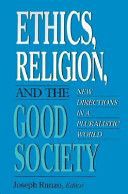
People living in a pluralistic age are aware of diversity among themselves and consider it both natural and enriching for humankind. However, there are many disagreements that create ethical questions on the nature of human good, religion and public morality, and more. Joseph Runzo, with the help of a diverse group of contributors, skillfully deals with these ethical issues.
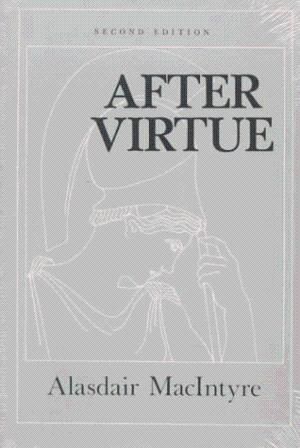
A disquieting suggestion — The nature of moral disagreement today and the claims of emotivism — Emotivism: social content and social context — The predecessor culture and the enlightenment project of justifying morality — Why the enlightenment project of justifying morality had to fail — Some consequences of the failure of the enlightenment project — “Fact”, explanation and expertise — The character of generalizations in social science and their lack of predictive power — Nietzsche or Aristotle? — The virtues in heroic societies — The virtues at Athens — Aristotle’s account of the virtues — Medieval aspects and occasions — The nature of the virtues — The virtues, the unity of a human life and the concept of a tradition — From the virtues to virtue and after virtue — Justice as a virtue: changing conceptions — After virtue: Nietzsche or Aristotle, Trotsky and St. Benedict — Postscript to the second edition.
Emmanuel Levinas was a significant contributor to the field of philosophy, phenomenology and religion. A key interpreter of Husserl, he stressed the importance of attitudes to other people in any philosophical system. For Levinas, to be a subject is to take responsibility for others as well as yourself. He regarded ethics as the foundation for all other philosophy, but later admitted it could also be the foundation for theology. Michael Purcell outlines the basic themes of Levinas’ thought and the ways in which they might be deployed in fundamental and practical theology, and the study of the phenomenon of religion.
ما از اخلاق چه انتظاری داریم؟ این سوال شاید تاحدودی برای عموم مردم و یا متخصصان این رشته قابل پاسخ باشد؛ اینکه خوب بودن را به ما بیاموزد و در تنظیم روابط فردی م...

جشن کتاب تهران به ایستگاه سی و یکم رسیده است. حال و احوال نشر کتاب خوب نیست و باید فرهنگدوستان را به خرید و هدیه دادن کتاب ترغیب نمود. خانه اخلاقپژوهان جوان ب...

بنیاد کتابهای اخلاق اسلامی عمدتا پالایش جان از آلودگیها و آراستن آن به زیباییها است. اندیشه محوری این قبیل کتابها آن است که انسان فعلی آنی نیست که باید باشد...

-
0 Comments