Notice: تابع WP_Block_Type_Registry::register به طورنادرست فراخوانی شد. نامهای نوع بلوک نباید حروف بزرگ داشته باشند. لطفاً برای اطلاعات بیشتر، اشکال زدایی در وردپرس را مشاهده کنید. (این پیام در نگارش 5.0.0 افزوده شده است.) in /home/ethicsho/public_html/wp-includes/functions.php on line 5313
Warning: Use of undefined constant TDC_PATH_LEGACY - assumed 'TDC_PATH_LEGACY' (this will throw an Error in a future version of PHP) in /home/ethicsho/public_html/wp-content/plugins/td-composer/td-composer.php on line 109
Warning: Use of undefined constant TDSP_THEME_PATH - assumed 'TDSP_THEME_PATH' (this will throw an Error in a future version of PHP) in /home/ethicsho/public_html/wp-content/plugins/td-composer/td-composer.php on line 113 بایگانیهای 807 - خانه اخلاق پژوهان جوان Notice: Trying to access array offset on value of type bool in /home/ethicsho/public_html/wp-content/plugins/wp-ulike/inc/general-functions.php on line 807
Bryan W. Van Norden examines early Confucianism as a form of virtue ethics and Mohism, an anti-Confucian movement, as a version of consequentialism. The philosophical methodology is analytic, in that the emphasis is on clear exegesis of the texts and a critical examination of the philosophical arguments proposed by each side. Van Norden shows that Confucianism, while similar to Aristotelianism in being a form of virtue ethics, offers different conceptions of ‘the good life’, the virtues, human nature, and ethical cultivation. Mohism is akin to Western utilitarianism in being a form of consequentialism, but distinctive in its conception of the relevant consequences and in its specific thought-experiments and state-of-nature arguments. Van Norden makes use of the best current research on Chinese history, archaeology, and philology. His text is accessible to philosophers with no previous knowledge of Chinese culture and to Sinologists with no background in philosophy.
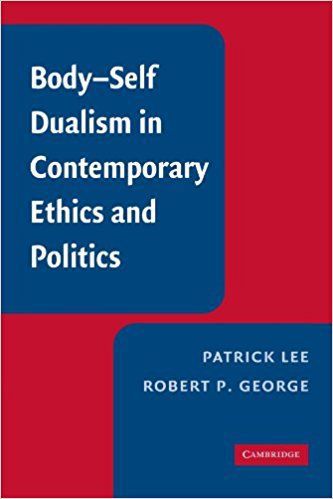
Book Summary of Body-Self Dualism In Contemporary Ethics And PoliticsProfoundly important ethical and political controversies turn on the question of whether biological life is an essential aspect of a human person, or only an extrinsic instrument. Lee and George argue that human beings are physical, animal organisms – albeit essentially rational and free – and examine the implications of this understanding of human beings for some of the most controversial issues in contemporary ethics and politics. The authors argue that human beings are animal organisms and that their personal identity across time consists in the persistence of the animal organisms they are; they also argue that human beings are essentially rational and free and that there is a radical difference between human beings and other animals; criticize hedonism and hedonistic drug-taking; present detailed defenses of the prolife positions on abortion and euthanasia; and defend the traditional moral position on marriage and sexual acts.
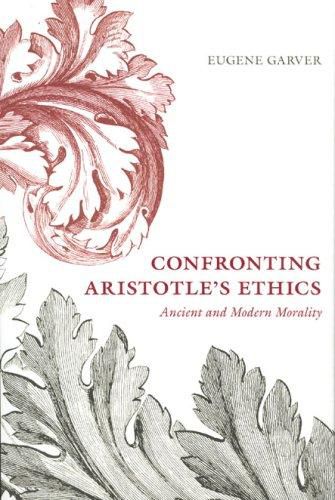
Book Summary of Confronting Aristotle’s Ethics: Ancient And Modern MoralityWhat is the good life? Posing this question today would likely elicit very different answers. Some might say that the good life means doing good?improving one?s community and the lives of others. Others might respond that it means doing well?cultivating one?s own abilities in a meaningful way. But for Aristotle these two distinct ideas?doing good and doing well?were one and the same and could be realized in a single life. In Confronting Aristotle?s Ethics, Eugene Garver examines how we can draw this conclusion from Aristotle’s works, while also studying how this conception of the good life relates to contemporary ideas ofmorality. The key to Aristotle?s views on ethics, argues Garver, lies in the Metaphysics or, more specifically, in his thoughts on activities, actions, and capacities. For Aristotle, Garver shows, it is only possible to be truly active when acting for the common good, and it is only possible to be truly happy when active to the extent of one?s own powers. But does this mean we should aspire to Aristotle?s impossibly demanding vision of the good life? In a word, no. Garver stresses the enormous gap between life in Aristotle?s time and ours. As a result, this book will be a welcome rumination on not only Aristotle, but the relationship between the individual and society in everyday life..
Lisa Tessman’s Burdened Virtues is a deeply original and provocative work that engages questions central to feminist theory and practice, from the perspective of Aristotelian ethics. Focused primarily on selves who endure and resist oppression, she addresses the ways in which devastating conditions confronted by these selves both limit and burden their moral goodness, and affect their possibilities of flourishing. She describes two different forms of “moral trouble” prevalent under oppression. The first is that the oppressed self may be morally damaged, prevented from developing or exercising some of the virtues; the second is that the very conditions of oppression require the oppressed to develop a set of virtues that carry a moral cost to those who practice them–traits that Tessman refers to as “burdened virtues.” These virtues have the unusual feature of being disjoined from their bearer’s own well being. Tessman’s work focuses on issues that have been missed by many feminist moral theories, and her use of the virtue ethics framework brings feminist concerns more closely into contact with mainstream ethical theory. This book will appeal to feminist theorists in philosophy and women’s studies, but also more broadly, ethicists and social theorists.
ما از اخلاق چه انتظاری داریم؟ این سوال شاید تاحدودی برای عموم مردم و یا متخصصان این رشته قابل پاسخ باشد؛ اینکه خوب بودن را به ما بیاموزد و در تنظیم روابط فردی م...

جشن کتاب تهران به ایستگاه سی و یکم رسیده است. حال و احوال نشر کتاب خوب نیست و باید فرهنگدوستان را به خرید و هدیه دادن کتاب ترغیب نمود. خانه اخلاقپژوهان جوان ب...

بنیاد کتابهای اخلاق اسلامی عمدتا پالایش جان از آلودگیها و آراستن آن به زیباییها است. اندیشه محوری این قبیل کتابها آن است که انسان فعلی آنی نیست که باید باشد...

-
0 Comments