Notice: تابع WP_Block_Type_Registry::register به طورنادرست فراخوانی شد. نامهای نوع بلوک نباید حروف بزرگ داشته باشند. لطفاً برای اطلاعات بیشتر، اشکال زدایی در وردپرس را مشاهده کنید. (این پیام در نگارش 5.0.0 افزوده شده است.) in /home/ethicsho/public_html/wp-includes/functions.php on line 5313
Warning: Use of undefined constant TDC_PATH_LEGACY - assumed 'TDC_PATH_LEGACY' (this will throw an Error in a future version of PHP) in /home/ethicsho/public_html/wp-content/plugins/td-composer/td-composer.php on line 109
Warning: Use of undefined constant TDSP_THEME_PATH - assumed 'TDSP_THEME_PATH' (this will throw an Error in a future version of PHP) in /home/ethicsho/public_html/wp-content/plugins/td-composer/td-composer.php on line 113 بایگانیهای 74 - خانه اخلاق پژوهان جوان Notice: Trying to access array offset on value of type bool in /home/ethicsho/public_html/wp-content/plugins/wp-ulike/inc/general-functions.php on line 807
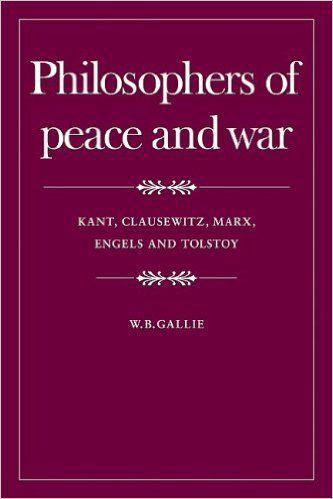
Intellectual eminence apart, what did Kant, Clausewitz, Marx and Engels, and Tolstoy have in common? Professor Gallic argues that they made contributions to ‘international theory’ – to the understanding of the character and causes of war and of the possibility of peace between nations – which were of unrivalled originality in their own times and remain of undiminished importance in ours. But these contributions have been either ignored or much misunderstood ; chiefly because, as with all intellectual efforts in unexplored fields, they were often imperfectly expressed, and were also overshadowed by their author’s more striking achievements. Professor Gallic has sorted out, compared and contrasted, criticised and re-phrased the teachings of his chosen authors on peace and war.
“Dimensions of Moral Theory “examines the key presuppositions and philosophical commitments that support and shape moral theories. Many of the topics discussed belong to “metaethics,” the study of moral concepts, language, and thought rather than a study of moral issues themselves. Other topics are under the heading of “moral psychology” and concern fundamental issues about the nature of moral agents, moral motivation, and the roles of reason, desire, and pleasure in moral action and experience. The book introduces metaethical and moral psychological positions and arguments and shows how they are generated and why they are important. It thereby brings to light some of the most important philosophical problems raised by moral theorizing.This volume formulates these issues of moral epistemology, the metaphysics of moral value, and moral motivation in a clear and rigorous but non-technical manner.
The essays collected in this volume all explore the problem of the relation between moral philosophy and modernity. The book argues against recent attempts to return to the virtue-centered perspective of ancient Greek ethics. As well as exploring the differences between ancient and modern ethics, the author treats such topics as the roles of reason and history in our moral understanding, the inadequacy of philosophical naturalism, and the foundations of modern liberalism. These essays will be of interest both to professional scholars and to general readers concerned with ethics and politics.
The dual-use dilemma arises in the context of research in the biological and other sciences as a consequence of the fact that one and the same piece of scientific research sometimes has the potential to be used for harmful as well as good purposes. Discoveries that may lead to important advances in science and medicine might therefore also facilitate development of biological weapons of mass destruction. Scientists should be aware of the ways in which their well-intentioned research could be misused by others – and they should sometimes avoid research projects when the potential for harmful misuse is great. Policy makers must make tough choices about the extent to which the dual-use nature of research might justify increased oversight, regulation, and perhaps even censorship of science. This book examines the kinds of life-science experiments that give rise to the dual-use dilemma and provides philosophical analysis of the ethical issues and policy options surrounding dual-use research. Though the dual-use dilemma is an ethical issue, the vast majority of literature on the topic thus far has been written by scientists and security experts: this is the first book-length treatment of the topic by professional ethicists. It also challenges, and offers an alternative perspective to, the hugely influential U.S. National Research Council position on the dual-use dilemma.
ما از اخلاق چه انتظاری داریم؟ این سوال شاید تاحدودی برای عموم مردم و یا متخصصان این رشته قابل پاسخ باشد؛ اینکه خوب بودن را به ما بیاموزد و در تنظیم روابط فردی م...

جشن کتاب تهران به ایستگاه سی و یکم رسیده است. حال و احوال نشر کتاب خوب نیست و باید فرهنگدوستان را به خرید و هدیه دادن کتاب ترغیب نمود. خانه اخلاقپژوهان جوان ب...

بنیاد کتابهای اخلاق اسلامی عمدتا پالایش جان از آلودگیها و آراستن آن به زیباییها است. اندیشه محوری این قبیل کتابها آن است که انسان فعلی آنی نیست که باید باشد...

-
0 Comments