Notice: تابع WP_Block_Type_Registry::register به طورنادرست فراخوانی شد. نامهای نوع بلوک نباید حروف بزرگ داشته باشند. لطفاً برای اطلاعات بیشتر، اشکال زدایی در وردپرس را مشاهده کنید. (این پیام در نگارش 5.0.0 افزوده شده است.) in /home/ethicsho/public_html/wp-includes/functions.php on line 5313
Warning: Use of undefined constant TDC_PATH_LEGACY - assumed 'TDC_PATH_LEGACY' (this will throw an Error in a future version of PHP) in /home/ethicsho/public_html/wp-content/plugins/td-composer/td-composer.php on line 109
Warning: Use of undefined constant TDSP_THEME_PATH - assumed 'TDSP_THEME_PATH' (this will throw an Error in a future version of PHP) in /home/ethicsho/public_html/wp-content/plugins/td-composer/td-composer.php on line 113 بایگانیهای 665 - خانه اخلاق پژوهان جوان Notice: Trying to access array offset on value of type bool in /home/ethicsho/public_html/wp-content/plugins/wp-ulike/inc/general-functions.php on line 807
The Edge of Life: Human Dignity and Contemporary Bioethics treats a number of distinct moral questions and ?nds their answer in the dignity of the person, both as an agent and as a patient (in the sense of the recipient of action). Characteristically one’s view of the human being ultimately shapes one’s outlook on these matters. This book addresses questions that divide a culture of life from a culture of death as well as a number of questions debated within the Catholic tradition itself. The Edge of Life offers a critique of the new bio-ethic, represented by such notable authors as Peter Singer; it also attempts to shore up some of the dif?culties leveled by critics against the traditional ethic as well as to answer some questions disputed by those within the tradition. This book does not treat the basic principles of morality but rather many of their applications and suppositions. (For an account of contemporary debates within the Catholic tradition on these matters, see Kaczor 2002). Rather, The Edge of Life seeks to address a number of disputed contemporary questions touching upon human dignity at what has been called “the margins of life. ” The ?rst section of the book treats the dignity of the human person as recipient of action and as agent. Chapter two examines various accounts of when a human being becomes a person.
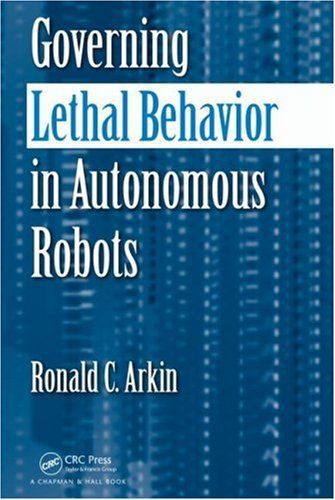
Expounding on the results of the author’s work with the US Army Research Office, DARPA, the Office of Naval Research, and various defense industry contractors, Governing Lethal Behavior in Autonomous Robots explores how to produce an “artificial conscience” in a new class of robots, humane-oids, which are robots that can potentially perform more ethically than humans in the battlefield. The author examines the philosophical basis, motivation, theory, and design recommendations for the implementation of an ethical control and reasoning system in autonomous robot systems, taking into account the Laws of War and Rules of Engagement. The book presents robot architectural design recommendations for Post facto suppression of unethical behavior, Behavioral design that incorporates ethical constraints from the onset, The use of affective functions as an adaptive component in the event of unethical action, and A mechanism that identifies and advises operators regarding their ultimate responsibility for the deployment of autonomous systems. It also examines why soldiers fail in battle regarding ethical decisions; discusses the opinions of the public, researchers, policymakers, and military personnel on the use of lethality by autonomous systems; provides examples that illustrate autonomous systems? ethical use of force; and includes relevant Laws of War. Helping ensure that warfare is conducted justly with the advent of autonomous robots, this book shows that the first steps toward creating robots that not only conform to international law but outperform human soldiers in their ethical capacity are within reach in the future. It supplies the motivation, philosophy, formalisms, representational requirements, architectural design criteria, recommendations, and test scenarios to design and construct an autonomous robotic system capable of ethically using lethal force. Ron Arkin was quoted in a November 2010 New York Times article about robots in the military.
ما از اخلاق چه انتظاری داریم؟ این سوال شاید تاحدودی برای عموم مردم و یا متخصصان این رشته قابل پاسخ باشد؛ اینکه خوب بودن را به ما بیاموزد و در تنظیم روابط فردی م...

جشن کتاب تهران به ایستگاه سی و یکم رسیده است. حال و احوال نشر کتاب خوب نیست و باید فرهنگدوستان را به خرید و هدیه دادن کتاب ترغیب نمود. خانه اخلاقپژوهان جوان ب...

بنیاد کتابهای اخلاق اسلامی عمدتا پالایش جان از آلودگیها و آراستن آن به زیباییها است. اندیشه محوری این قبیل کتابها آن است که انسان فعلی آنی نیست که باید باشد...

-
0 Comments