Notice: تابع WP_Block_Type_Registry::register به طورنادرست فراخوانی شد. نامهای نوع بلوک نباید حروف بزرگ داشته باشند. لطفاً برای اطلاعات بیشتر، اشکال زدایی در وردپرس را مشاهده کنید. (این پیام در نگارش 5.0.0 افزوده شده است.) in /home/ethicsho/public_html/wp-includes/functions.php on line 5313
Warning: Use of undefined constant TDC_PATH_LEGACY - assumed 'TDC_PATH_LEGACY' (this will throw an Error in a future version of PHP) in /home/ethicsho/public_html/wp-content/plugins/td-composer/td-composer.php on line 109
Warning: Use of undefined constant TDSP_THEME_PATH - assumed 'TDSP_THEME_PATH' (this will throw an Error in a future version of PHP) in /home/ethicsho/public_html/wp-content/plugins/td-composer/td-composer.php on line 113 بایگانیهای 643 - خانه اخلاق پژوهان جوان Notice: Trying to access array offset on value of type bool in /home/ethicsho/public_html/wp-content/plugins/wp-ulike/inc/general-functions.php on line 807
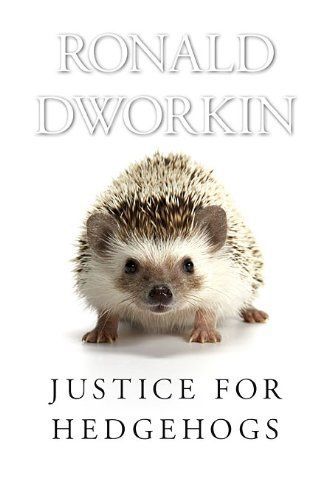
The fox knows many things, the Greeks said, but the hedgehog knows one big thing. In his most comprehensive work the author argues that value in all its forms is one big thing: that what truth is, life means, morality requires, and justice demands are different aspects of the same large question. He develops original theories on a great variety of issues very rarely considered in the same book: moral skepticism, literary, artistic, and historical interpretation, free will, ancient moral theory, being good and living well, liberty, equality, and law among many other topics. What we think about any one of these must stand up, eventually, to any argument we find compelling about the rest. Skepticism in all its forms, philosophical, cynical, or post-modern, threatens that unity. The Galilean revolution once made the theological world of value safe for science. But the new republic gradually became a new empire: the modern philosophers inflated the methods of physics into a totalitarian theory of everything. They invaded and occupied all the honorifics, reality, truth, fact, ground, meaning, knowledge, and being, and dictated the terms on which other bodies of thought might aspire to them, and skepticism has been the inevitable result. The author feels we need a new revolution, and that we must make the world of science safe for value.
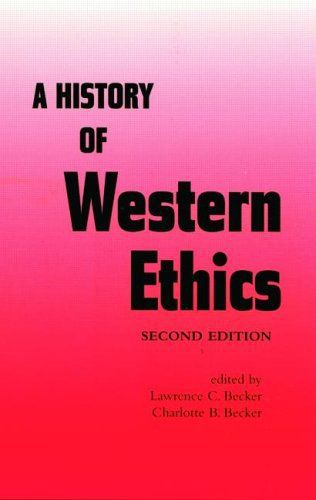
This is a newly revised and updated edition ofA History of Western Ethics,a coherent and accessible overview of the most important figures and influential ideas of the history of ethics in the Western philosophical tradition. Written by eleven distinguished scholars, and including a glossary of key terms, this book is the essential reference for students and general readers alike.
Hilary Putnam has been convinced for some time that the present situation in philosophy calls for revitalization and renewal; in this latest book he shows us what shape he would like that renewal to take. Words and Life offers a sweeping account of the sources of several of the central problems of philosophy, past and present, and of why some of those problems are not going to go away As the first four part tides in the volume-“The Return of Aristotle,” “The Legacy of Logical Positivism,” “The Inheritance of Pragmatism,” and “Essays after Wittgenstein”-suggest, many of the essays are concerned with tracing the recent, and the not so recent, history of these problems.The goal is to bring out what is coercive and arbitrary about some of our present ways of posing the problems and what is of continuing interest in certain past approaches to them. Various supposedly timeless philosophical problems appear, on closer inspection, to change with altered historical circumstances, while there turns out to be much of permanent value in Aristotle’s, Peirce’s, Dewey’s, and Reichenbach’s work on some of the problems that continue to exercise us.A unifying theme of the volume as a whole is that reductionism, scientism, and old-style disenchanted naturalism tend to be obstacles to philosophical progress. The titles of the final three parts of the volume-Truth andReference,” “Mind and Language,” and “The Diversity of the Sciences-indicate that the sweep of the problems considered here comprehends all the fundamental areas of contemporary analytic philosophy Rich in detail, the book is also grand in scope, allowing us to trace the ongoing intellectual evolution of one of the most significant philosophers of the century.
Screenwriting With a Conscience: Ethics for Screenwritersis for screenwriters who care deeply about what they write; who are aware that movie images matter and can influence audiences; and who want to create meaningful screenplays that make powerful statements while entertaining and winning over audiences. A user-friendly guide to ethical screenwriting, this book makes the case that social responsibility is endemic to public art while it emphatically champions First Amendment rights and condemns censorship. In this dynamic and practical volume, author Marilyn Beker provides methods for self-assessment of values, ideas, and ethical stances, and demonstrates the application of these values to the development of plot, character, and dialogue. Screenwriters are introduced to ethical decision making models and shown–through specific film examples–how they can be utilized in plot and character development. In addition, specific techniques and exercises are supplied to help screenwriters determine the difference between “good” and “evil,” to write realistic and compelling characters based on this determination, and to present “messages” and write dialogue powerfully without preaching. This book also puts forth a livable work philosophy for dealing with the ethics of the screenwriting business, and presents a viable personal philosophy for surviving in the screenwriting world. Screenwriting With a Conscience: Ethics for Screenwritersis an indispensible, dynamic guide for the ethics-conscious screenwriter. It is intended for screenwriters at the student and professional level, and is appropriate for beginning to graduate screenwriting courses in film and English programs, and for film courses dealing with Ethics in the Media.
ما از اخلاق چه انتظاری داریم؟ این سوال شاید تاحدودی برای عموم مردم و یا متخصصان این رشته قابل پاسخ باشد؛ اینکه خوب بودن را به ما بیاموزد و در تنظیم روابط فردی م...

جشن کتاب تهران به ایستگاه سی و یکم رسیده است. حال و احوال نشر کتاب خوب نیست و باید فرهنگدوستان را به خرید و هدیه دادن کتاب ترغیب نمود. خانه اخلاقپژوهان جوان ب...

بنیاد کتابهای اخلاق اسلامی عمدتا پالایش جان از آلودگیها و آراستن آن به زیباییها است. اندیشه محوری این قبیل کتابها آن است که انسان فعلی آنی نیست که باید باشد...

-
0 Comments