Notice: تابع WP_Block_Type_Registry::register به طورنادرست فراخوانی شد. نامهای نوع بلوک نباید حروف بزرگ داشته باشند. لطفاً برای اطلاعات بیشتر، اشکال زدایی در وردپرس را مشاهده کنید. (این پیام در نگارش 5.0.0 افزوده شده است.) in /home/ethicsho/public_html/wp-includes/functions.php on line 5313
Warning: Use of undefined constant TDC_PATH_LEGACY - assumed 'TDC_PATH_LEGACY' (this will throw an Error in a future version of PHP) in /home/ethicsho/public_html/wp-content/plugins/td-composer/td-composer.php on line 109
Warning: Use of undefined constant TDSP_THEME_PATH - assumed 'TDSP_THEME_PATH' (this will throw an Error in a future version of PHP) in /home/ethicsho/public_html/wp-content/plugins/td-composer/td-composer.php on line 113 بایگانیهای 638 - خانه اخلاق پژوهان جوان Notice: Trying to access array offset on value of type bool in /home/ethicsho/public_html/wp-content/plugins/wp-ulike/inc/general-functions.php on line 807
“We all live our daily lives surrounded by the products of technology that make what we do simpler, faster, and more efficient. These are benefits we often just take for granted. But at the same time, as these products disburden us of unwanted tasks that consumed much time and effort in earlier eras, many of them also leave us more disengaged from our natural and even human surroundings. It is the task of what Gene Moriarty calls focal engineering to create products that will achieve a balance between disburdenment and engagement.” “One of Moriarty’s examples of a focally engineered structure is the Golden Gate Bridge, which “draws people to it, enlivens and elevates the human spirit, and resonates with the world of its congenial setting. Humans, bridge, and world are in tune.” These values of engagement, enlivenment, and resonance are key to the normative approach Moriarty brings to the profession of engineering, which traditionally has focused mainly on technical measures of evaluation such as efficiency, productivity, objectivity, and precision.”–BOOK JACKET.
How do the hard facts of political responsibility shape and constrain the demands of ethical life? That question lies at the heart of the problem of ‘dirty hands’ in public life. Those who exercise political power often feel they must act in ways that would otherwise be considered immoral: indeed, paradoxically, they sometimes feel that it would be immoral of them not to perform or condone such acts as killing or lying. John Parrish offers a wide-ranging account of how this important philosophical problem emerged and developed, tracing it – and its proposed solutions – from ancient Greece through the Enlightenment. His central argument is that many of our most familiar concepts and institutions – from Augustine’s interiorised ethics, to Hobbes’s sovereign state, to Adam Smith’s ‘invisible hand’, understanding of the modern commercial economy – were designed partly as responses to the ethical problem of dirty hands in public life.
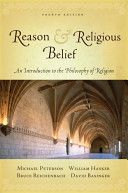
What is the status of belief in God? Must a rational case be made or can such belief be properly basic? Is it possible to reconcile the concept of a good God with evil and suffering? In light of great differences among religions, can only one religion be true? The most comprehensive work of its kind, Reason and Religious Belief, now in its fourth edition, explores these and other perennial questions in the philosophy of religion. Drawing from the best in both classical and contemporary discussions, the authors examine religious experience, faith and reason, the divine attributes, arguments for and against the existence of God, divine action (in various forms of theism), Reformed epistemology, religious language, religious diversity, religion and science, and much more. Retaining the engaging style and thorough coverage of previous editions, the fourth edition adds a critical new chapter on the ontological status of religion and the nature of religious claims. It also features revised treatments of omnipotence, miracles, and providence and updated suggestions for further reading. A sophisticated yet accessible introduction, Reason and Religious Belief, Fourth Edition, is ideally suited for use with the authors’ companion anthology, Philosophy of Religion: Selected Readings, Third Edition (OUP, 2006).
The Blackwell Dictionary of Western Philosophy is a concise reference to the whole history of western philosophy, from ancient Greece to the present day. Spans all the major branches of western philosophical inquiry, all of the key figures Explains the meaning and usage of each philosophical concept in a fresh and engaging style Each entry on philosophical terms concludes with an illustrative quotation from a significant philosopher, to enhance the reader’s understanding Entries on terms and individual philosophers are fully cross-referenced Co-written by the editor of the popular volume The Blackwell Companion to Philosophy (Second Edition, 2002)
ما از اخلاق چه انتظاری داریم؟ این سوال شاید تاحدودی برای عموم مردم و یا متخصصان این رشته قابل پاسخ باشد؛ اینکه خوب بودن را به ما بیاموزد و در تنظیم روابط فردی م...

جشن کتاب تهران به ایستگاه سی و یکم رسیده است. حال و احوال نشر کتاب خوب نیست و باید فرهنگدوستان را به خرید و هدیه دادن کتاب ترغیب نمود. خانه اخلاقپژوهان جوان ب...

بنیاد کتابهای اخلاق اسلامی عمدتا پالایش جان از آلودگیها و آراستن آن به زیباییها است. اندیشه محوری این قبیل کتابها آن است که انسان فعلی آنی نیست که باید باشد...

-
0 Comments