Notice: تابع WP_Block_Type_Registry::register به طورنادرست فراخوانی شد. نامهای نوع بلوک نباید حروف بزرگ داشته باشند. لطفاً برای اطلاعات بیشتر، اشکال زدایی در وردپرس را مشاهده کنید. (این پیام در نگارش 5.0.0 افزوده شده است.) in /home/ethicsho/public_html/wp-includes/functions.php on line 5313
Warning: Use of undefined constant TDC_PATH_LEGACY - assumed 'TDC_PATH_LEGACY' (this will throw an Error in a future version of PHP) in /home/ethicsho/public_html/wp-content/plugins/td-composer/td-composer.php on line 109
Warning: Use of undefined constant TDSP_THEME_PATH - assumed 'TDSP_THEME_PATH' (this will throw an Error in a future version of PHP) in /home/ethicsho/public_html/wp-content/plugins/td-composer/td-composer.php on line 113 بایگانیهای 630 - خانه اخلاق پژوهان جوان Notice: Trying to access array offset on value of type bool in /home/ethicsho/public_html/wp-content/plugins/wp-ulike/inc/general-functions.php on line 807
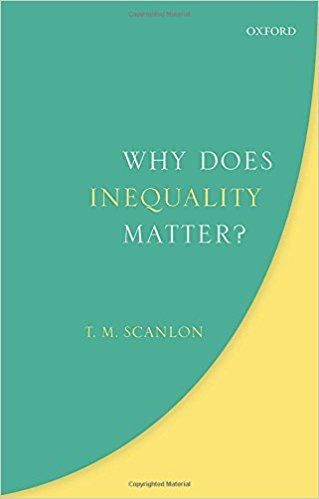
Inequality is widely regarded as morally objectionable: T. M. Scanlon investigates why it matters to us. Demands for greater equality can seem puzzling, because it can be unclear what reason people have for objecting to the difference between what they have and what others have, as opposed simply to wanting to be better off. This book examines six such reasons. Inequality can be objectionable because it arises from a failure of some agent to give equal concern to the interests of different parties to whom it is obligated to provide some good. It can be objectionable because it involves or gives rise to objectionable inequalities in status. It can be objectionable because it gives the rich unacceptable forms of control over the lives of those who have less. It can be objectionable because it interferes with the procedural fairness of economic institutions, or because it deprives some people of substantive opportunity to take part in those institutions. Inequality can be objectionable because it interferes with the fairness of political institutions. Finally, inequality in wealth and income can be objectionable because it is unfair: the institutional mechanisms that produce it cannot be justified in the relevant way. Scanlon’s aims is to provide a moral anatomy of these six reasons, and the ideas of equality that they involve. He also examines objections to the pursuit of equality on the ground that it involves objectionable interference with individual liberty, and argues that ideas of desert do not provide a basis either for justifying significant economic inequality or for objecting to it.
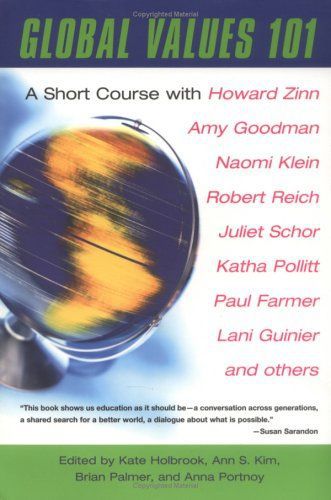
Global Values 101 grew out of one of the most popular courses ever offered at Harvard University, in which some of the most original thinkers of our day sat down with students and explored how ideas have made them—and can make us—more engaged, involved, and compassionate citizens. They addressed the topics of war, religion, the global economy, and social change: Amy Goodman, host of the popular radio program Democracy Now as well as the author of The Exception to the Ruler, speaks about the role of the citizen and the media in a free society; Lani Guinier reveals that students’ SAT scores more accurately describe the kind of car their parents drive than the grades they will earn in college and shows the way to a more equitable college admissions system; Juliet Schor, author of Born to Buy and The Overspent American, discusses the evolution of personal responsibility in a consumer culture; and Robert Reich, author of Locked in the Cabinet, tells us to get involved in politics because, if you want to see change, you have to make change happen.For anyone who has been moved by idealism and wondered how to become an engaged citizen, this collection offers a range of stories on how progressive ideals can inform, inspire, engage, and ultimately change lives.Other contributors include Harvey Cox, Katha Pollitt, Howard Zinn, Diana Eck, and Naomi Klein.
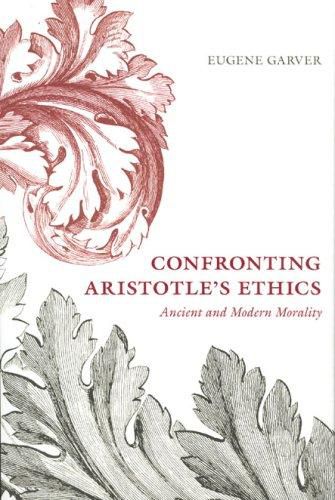
Book Summary of Confronting Aristotle’s Ethics: Ancient And Modern MoralityWhat is the good life? Posing this question today would likely elicit very different answers. Some might say that the good life means doing good?improving one?s community and the lives of others. Others might respond that it means doing well?cultivating one?s own abilities in a meaningful way. But for Aristotle these two distinct ideas?doing good and doing well?were one and the same and could be realized in a single life. In Confronting Aristotle?s Ethics, Eugene Garver examines how we can draw this conclusion from Aristotle’s works, while also studying how this conception of the good life relates to contemporary ideas ofmorality. The key to Aristotle?s views on ethics, argues Garver, lies in the Metaphysics or, more specifically, in his thoughts on activities, actions, and capacities. For Aristotle, Garver shows, it is only possible to be truly active when acting for the common good, and it is only possible to be truly happy when active to the extent of one?s own powers. But does this mean we should aspire to Aristotle?s impossibly demanding vision of the good life? In a word, no. Garver stresses the enormous gap between life in Aristotle?s time and ours. As a result, this book will be a welcome rumination on not only Aristotle, but the relationship between the individual and society in everyday life..
ما از اخلاق چه انتظاری داریم؟ این سوال شاید تاحدودی برای عموم مردم و یا متخصصان این رشته قابل پاسخ باشد؛ اینکه خوب بودن را به ما بیاموزد و در تنظیم روابط فردی م...

جشن کتاب تهران به ایستگاه سی و یکم رسیده است. حال و احوال نشر کتاب خوب نیست و باید فرهنگدوستان را به خرید و هدیه دادن کتاب ترغیب نمود. خانه اخلاقپژوهان جوان ب...

بنیاد کتابهای اخلاق اسلامی عمدتا پالایش جان از آلودگیها و آراستن آن به زیباییها است. اندیشه محوری این قبیل کتابها آن است که انسان فعلی آنی نیست که باید باشد...

-
0 Comments