Notice: تابع WP_Block_Type_Registry::register به طورنادرست فراخوانی شد. نامهای نوع بلوک نباید حروف بزرگ داشته باشند. لطفاً برای اطلاعات بیشتر، اشکال زدایی در وردپرس را مشاهده کنید. (این پیام در نگارش 5.0.0 افزوده شده است.) in /home/ethicsho/public_html/wp-includes/functions.php on line 5313
Warning: Use of undefined constant TDC_PATH_LEGACY - assumed 'TDC_PATH_LEGACY' (this will throw an Error in a future version of PHP) in /home/ethicsho/public_html/wp-content/plugins/td-composer/td-composer.php on line 109
Warning: Use of undefined constant TDSP_THEME_PATH - assumed 'TDSP_THEME_PATH' (this will throw an Error in a future version of PHP) in /home/ethicsho/public_html/wp-content/plugins/td-composer/td-composer.php on line 113 بایگانیهای 619 - خانه اخلاق پژوهان جوان Notice: Trying to access array offset on value of type bool in /home/ethicsho/public_html/wp-content/plugins/wp-ulike/inc/general-functions.php on line 807
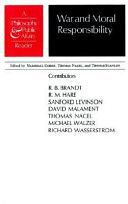
This remarkably rich collection of articles focuses on moral questions about war. The essays, originally published inPhilosophy & Public Affairs, cover a wide range of topics from several points of view by writers from the fields of political science, philosophy, and law. The discussion of war and moral responsibility falls into three general categories: problems of political and military choice, problems about the relation of an individual to the actions of his government, and more abstract ethical questions as well.The first category includes questions about the ethical and legal aspects of war crimes and the laws of war; about the source of moral restrictions on military methods or goals; and about differences in suitability of conduct which may depend on differences in the nature of the opponent. The second category includes questions about the conditions for responsibility of individual soldiers and civilian officials for war crimes, and about the proper attitude of a government toward potential conscripts who reject its military policies. The third category includes disputes between absolutist, deontological, and utilitarian ethical theories, and deals with questions about the existence of insoluble moral dilemmas
This revised edition of IEthics and StatecraftR has been reorganized to better situate chapters that play to one another thematically, on peacemaking, the ethics and statecraft of war, and the statecraft of major international reform, and two new chapters, on Theodore Roosevelt and the Vietnam War, respectively, have been added to this classic work. The contributions remain centrally concerned with moral reasoning about important decisions taken by key statesmen in times of war, peace, and transformation, arguing that national leaders-including realists-have always concerned themselves with normative constraints on power, both their own and that of others. This revised edition of IEthics and StatecraftR has been reorganized to better situate chapters that play to one another thematically, on peacemaking, the ethics and statecraft of war, and the statecraft of major international reform, and two new chapters, on Theodore Roosevelt and the Vietnam War, respectively, have been added to this classic work. The contributions remain centrally concerned with moral reasoning about important decisions taken by key statesmen in times of war, peace, and transformation, arguing that national leaders-including realists-have always concerned themselves with normative constraints on power, both their own and that of others. This book posits that the problems of ethics in international relations are always conditioned by uncertainty, actors’ inexact knowledge of real-world conditions, and morally ambiguous outcomes. Contrary to the course assumptions of much IR theory, individual leaders remain the major conduit by which ethical concerns are deployed or ignored in the foreign policy of states. To ignore moral norms, which already govern international relations, is to ignore a key dimension of the subject; such an oversight will necessarily lead to a shallow analysis and a basic misunderstanding of how and why states behave as they do.
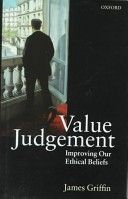
How can we improve our ethical beliefs? How great are our capacities for moral improvement? What constitutes a good life? What role can philosophy play in answering these questions? In this important new book, one of our leading moral philosophers looks at central issues of ethics and emerges with the fullest and most elegant account of his fundamental ethical theory. James Griffin examines influential schools of ethical thought and finds deontology, virtue ethics, and most forms of utilitarianism to be overly ambitious. He argues that ethics cannot be what philosophers in these traditions expect because agents cannot be what the philosophies need them to be. Clear, compelling, and original, this new account of ethics will be of interest to anyone concerned with thinking about values: not only philosophers but legal, political, and economic theorists as well.
ما از اخلاق چه انتظاری داریم؟ این سوال شاید تاحدودی برای عموم مردم و یا متخصصان این رشته قابل پاسخ باشد؛ اینکه خوب بودن را به ما بیاموزد و در تنظیم روابط فردی م...

جشن کتاب تهران به ایستگاه سی و یکم رسیده است. حال و احوال نشر کتاب خوب نیست و باید فرهنگدوستان را به خرید و هدیه دادن کتاب ترغیب نمود. خانه اخلاقپژوهان جوان ب...

بنیاد کتابهای اخلاق اسلامی عمدتا پالایش جان از آلودگیها و آراستن آن به زیباییها است. اندیشه محوری این قبیل کتابها آن است که انسان فعلی آنی نیست که باید باشد...

-
0 Comments