Notice: تابع WP_Block_Type_Registry::register به طورنادرست فراخوانی شد. نامهای نوع بلوک نباید حروف بزرگ داشته باشند. لطفاً برای اطلاعات بیشتر، اشکال زدایی در وردپرس را مشاهده کنید. (این پیام در نگارش 5.0.0 افزوده شده است.) in /home/ethicsho/public_html/wp-includes/functions.php on line 5313
Warning: Use of undefined constant TDC_PATH_LEGACY - assumed 'TDC_PATH_LEGACY' (this will throw an Error in a future version of PHP) in /home/ethicsho/public_html/wp-content/plugins/td-composer/td-composer.php on line 109
Warning: Use of undefined constant TDSP_THEME_PATH - assumed 'TDSP_THEME_PATH' (this will throw an Error in a future version of PHP) in /home/ethicsho/public_html/wp-content/plugins/td-composer/td-composer.php on line 113 بایگانیهای 545 - خانه اخلاق پژوهان جوان Notice: Trying to access array offset on value of type bool in /home/ethicsho/public_html/wp-content/plugins/wp-ulike/inc/general-functions.php on line 807
The philosophy of Friedrich Nietzsche (1844-1900) was almost wholly neglected during his sane life, which came to an abrupt end in 1889. Since then he has been appropriated as an icon by an astonishingly diverse spectrum of people, whose interpretations of his thought range from the highly irrational to the firmly analytical. Thus Spoke Zarathustra introduced the ‘superman’ and The Twilight of the Idols developed the ‘Will to Power’ concept; these term, together with ‘Sklavenmoral’ and ‘Herrenmoral’, became confused with the rise of nationalism in Germany. Idiosyncratic and aphoristic, Nietzsche is always bracing and provocative, and temptingly easy to dip into. Michael Tanner’s readable introduction to the philosopher’s life and work examines the numerous ambiguities inherent in his writings. It also explodes the many misconceptions fostered in the hundred years since Nietzsche wrote, prophetically: ‘Do not, above all, confound me with what I am not!’
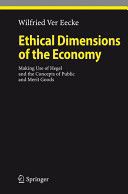
This book reflects philosophically about the socio-political dimension of economics.Part I provides normative reflections on the economy: Section I reflects on the interconnections between the multiple discourses on the economy, section II presents Hegel’s claim that the economic order is an ethical institution and defends his ontological view of the economy against the one of Adam Smith. Section III dialogues with economists about their concepts of public and merit goods. This section defends a Hegelian ontology of the economy through an analysis of technical concepts used by economists. Part II provides applications derived from the normative analysis: Section I presents the views of authors in different academic disciplines pointing to failures in late capitalism, in particular failures of American capitalism and section II asks the question: ” What must one pay attention to in a transition from a command economy to a free market?”Section III draws attention to an overlap of ideas found in Catholic Social Thought and in the publications of some recent Nobel prize winners in economics (Buchanan, Sen, Stiglitz).
What happens when we engage with fictional characters? How do our imaginative engagements bear on our actions in the wider world? Moving between the literary and the philosophical, Sophie Ratcliffe onsiders the ways in which readers feel when they read, and how they understand ideas of feeling. On Sympathy uses dramatic monologues based on The Tempest as its focus, and broaches questions about fictional belief, morality, and the dynamics between readers, writers, and fictional characters. The book challenges conventionally accepted ideas of literary identification and sympathy, and asks why the idea of sympathy has been seen as so important to liberal humanist theories of literary value. Individual chapters on Robert Browning, W. H. Auden, and Samuel Beckett, who all drew on Shakespeare’s late play, offer new readings of some major works, while the book’s epilogue tackles questions of contemporary sympathy. Ranging from the nineteenth century to the present day, this important new study sets out to clarify and challenge current assumptions about reading and sympathetic belief, shedding new light on the idea and ideal of sympathy, the workings of affect and allusion, and the ethics of reading.
How do the hard facts of political responsibility shape and constrain the demands of ethical life? That question lies at the heart of the problem of ‘dirty hands’ in public life. Those who exercise political power often feel they must act in ways that would otherwise be considered immoral: indeed, paradoxically, they sometimes feel that it would be immoral of them not to perform or condone such acts as killing or lying. John Parrish offers a wide-ranging account of how this important philosophical problem emerged and developed, tracing it – and its proposed solutions – from ancient Greece through the Enlightenment. His central argument is that many of our most familiar concepts and institutions – from Augustine’s interiorised ethics, to Hobbes’s sovereign state, to Adam Smith’s ‘invisible hand’, understanding of the modern commercial economy – were designed partly as responses to the ethical problem of dirty hands in public life.
“This important book…is really the first of its kind….There is no doubt that [it] will become a standard work in the literature for some years to come….[and] it will be required reading for anyone working in the fields of ancient ethics and psychology.”–The Philosophical Review
“The best work in English on the moral psychology of the early Stoics….Detailed and scholarly….An important book for serious studients of Stoic ethics and philosophy of action.”–Religious Studies Review
“This is a detailed and masterly account of early Stoic psychology and its relation to Stoic ethics…a major contribution which will be indispensable for serious students.” –The Classical Review
ما از اخلاق چه انتظاری داریم؟ این سوال شاید تاحدودی برای عموم مردم و یا متخصصان این رشته قابل پاسخ باشد؛ اینکه خوب بودن را به ما بیاموزد و در تنظیم روابط فردی م...

جشن کتاب تهران به ایستگاه سی و یکم رسیده است. حال و احوال نشر کتاب خوب نیست و باید فرهنگدوستان را به خرید و هدیه دادن کتاب ترغیب نمود. خانه اخلاقپژوهان جوان ب...

بنیاد کتابهای اخلاق اسلامی عمدتا پالایش جان از آلودگیها و آراستن آن به زیباییها است. اندیشه محوری این قبیل کتابها آن است که انسان فعلی آنی نیست که باید باشد...

-
0 Comments