Notice: تابع WP_Block_Type_Registry::register به طورنادرست فراخوانی شد. نامهای نوع بلوک نباید حروف بزرگ داشته باشند. لطفاً برای اطلاعات بیشتر، اشکال زدایی در وردپرس را مشاهده کنید. (این پیام در نگارش 5.0.0 افزوده شده است.) in /home/ethicsho/public_html/wp-includes/functions.php on line 5313
Warning: Use of undefined constant TDC_PATH_LEGACY - assumed 'TDC_PATH_LEGACY' (this will throw an Error in a future version of PHP) in /home/ethicsho/public_html/wp-content/plugins/td-composer/td-composer.php on line 109
Warning: Use of undefined constant TDSP_THEME_PATH - assumed 'TDSP_THEME_PATH' (this will throw an Error in a future version of PHP) in /home/ethicsho/public_html/wp-content/plugins/td-composer/td-composer.php on line 113 بایگانیهای 510 - خانه اخلاق پژوهان جوان Notice: Trying to access array offset on value of type bool in /home/ethicsho/public_html/wp-content/plugins/wp-ulike/inc/general-functions.php on line 807
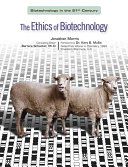
Biotechnology-the use of biological organisms and processes to provide useful products in industry and medicine-is revolutionizing our lives. From the making of cheese and wine to the production of new medicines and crops, the application of biotechnological processes to industry is wide and varied and will continue to expand in the coming decades. But no discussion of biotechnology would be complete without discussion of the ethical issues that surround this growing field. Biotechnology in the 21st Century examines the different global aspects of the biotech industry-healthcare, agriculture, data processing, and ethics-and provides the reader with the knowledge necessary to form his or her own conclusions about this exciting new field of science. Book jacket.
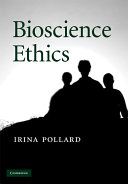
Bioscience ethics facilitates free and accurate information transfer from applied science to applied bioethics. Its major elements are: increased understanding of biological systems, responsible use of technology, and attuning ethnocentric debates to new scientific insights. Pioneered by Irina Pollard in 1994, bioscience ethics has become an internationally recognized discipline, interfacing science and bioethics within professional perspectives such as medical, legal, bio-engineering, and economics. Written for students and professionals alike, the fundamental feature of this book is its breadth, important because bioscience ethics interweaves many diverse subjects in the process of gathering specialist scientific knowledge for bioethical review. It contains chapters which embrace topics affecting human reproduction, end-of-life care and euthanasia, challenge human-dominated ecosystems, and review population growth, economic activity and warfare. A background section describes the evolution of ethical consciousness, explores the future, and proposes that the reworking of ethical boundaries can enhance mature decision-making in harmony with changing technology.
In this book, C. G. Prado addresses the difficult question of when and whether it is rational to end one’s life in order to escape devastating terminal illness. He specifically considers this question in light of the impact of multiculturalism on perceptions and judgments about what is right and wrong, permissible and impermissible. Prado introduces the idea of a “coincidental culture” to clarify the variety of values and commitments that influence decision. He also introduces the idea of a “proxy premise” to deal with reasoning issues that are raised by intractably held beliefs. Primarily intended for medical ethicists, this book will be of interest to anyone concerned about the ability of modern medicine to keep people alive, thereby forcing people to choose between living and dying. In addition, Prado calls upon medical ethicists and practitioners to appreciate the value of a theoretical basis for their work.
New York, Bern, Berlin, Bruxelles, Frankfurt/M., Oxford, Wien. In his three Critiques, Immanuel Kant provides a system of philosophy that encompasses ethics, aesthetics, metaphysics, and epistemology. As Kant’s is a seemingly complete system, one may reasonably infer that it contains an account of the nature of truth. However, Kant’s elliptical remarks on the subject make it difficult to specify the precise nature of his account. This book considers explanations by a number of authors concerning Kant’s account of truth, and proposes an alternative to these views.
ما از اخلاق چه انتظاری داریم؟ این سوال شاید تاحدودی برای عموم مردم و یا متخصصان این رشته قابل پاسخ باشد؛ اینکه خوب بودن را به ما بیاموزد و در تنظیم روابط فردی م...

جشن کتاب تهران به ایستگاه سی و یکم رسیده است. حال و احوال نشر کتاب خوب نیست و باید فرهنگدوستان را به خرید و هدیه دادن کتاب ترغیب نمود. خانه اخلاقپژوهان جوان ب...

بنیاد کتابهای اخلاق اسلامی عمدتا پالایش جان از آلودگیها و آراستن آن به زیباییها است. اندیشه محوری این قبیل کتابها آن است که انسان فعلی آنی نیست که باید باشد...

-
0 Comments