Notice: تابع WP_Block_Type_Registry::register به طورنادرست فراخوانی شد. نامهای نوع بلوک نباید حروف بزرگ داشته باشند. لطفاً برای اطلاعات بیشتر، اشکال زدایی در وردپرس را مشاهده کنید. (این پیام در نگارش 5.0.0 افزوده شده است.) in /home/ethicsho/public_html/wp-includes/functions.php on line 5313
Warning: Use of undefined constant TDC_PATH_LEGACY - assumed 'TDC_PATH_LEGACY' (this will throw an Error in a future version of PHP) in /home/ethicsho/public_html/wp-content/plugins/td-composer/td-composer.php on line 109
Warning: Use of undefined constant TDSP_THEME_PATH - assumed 'TDSP_THEME_PATH' (this will throw an Error in a future version of PHP) in /home/ethicsho/public_html/wp-content/plugins/td-composer/td-composer.php on line 113 بایگانیهای 489 - خانه اخلاق پژوهان جوان Notice: Trying to access array offset on value of type bool in /home/ethicsho/public_html/wp-content/plugins/wp-ulike/inc/general-functions.php on line 807
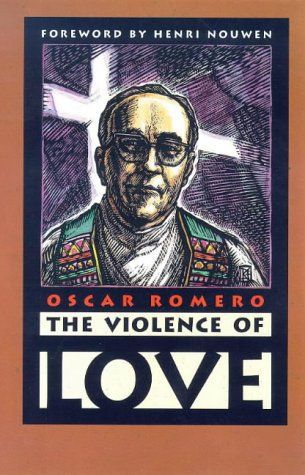
The Violence of Love is a powerful collection of extracts from Romero’s homilies, letters, and articles. Each of these passages gives insight into the mind and heart of the man behind them, more insight, perhaps, than any biographic account of his life. They show a man not afraid to expose his weakness, a man whose tremendous faith and hope call us to repentance and renewal.Originally addressed to the people of El Salvador, Romero’s words speak to all people, passionately decrying injustice and violence, exhorting to peace and forgiveness, and inviting all to help build a new, just society. Chronologically arranged, the selections reflect Romero’s own spiritual transformation and call us to experience a similar revolution of the heart.Romero was martyred for his insistence that following Christ cannot be relegated to the spiritual realm. He did not die in vain; the people of Central America say his spirit lives on in them. As their struggle for justice and dignity intensifies, his words take on a renewed urgency.Short, poetic passages make this collection excellent reading for daily reflection and renewal.
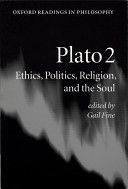
These two volumes, edited by the distinguished Cornell University Plato scholar Gail Fine, contain some 37 articles on various aspects of Plato’s philosophy. Most of the articles have been previously published, although some have been revised for these volumes. None dates from before 1970 and almost all are by scholars from the English-speaking world. These volumes will be widely understood to be doing for Plato scholarship in the last thirty years what the three well-known volumes edited by Gregory Vlastos (two on Plato, one on Socrates) did for Plato scholarship in the period between the end of World War II and 1970. Just as Vlastos attempted to assemble the best of Anglo-American scholarship to provide a snapshot of the contemporary ‘state-of-the-art,’ so Fine’s volumes will no doubt be taken to have done the same. Remarkably, most of the essays in Fine’s volumes cover a range of topics and employ a method strikingly similar to those in Vlastos’ volumes.
The quality of the essays is uniformly very high. A number of them will become or already have become standard starting-points for further discussion of a topic. A re-reading of the essays in the Vlastos volumes after reading these would no doubt be illuminating. Having said this much, it is truly remarkable that in roughly 1000 pages of material there is hardly even a mention of approaches to Plato in the last generation other than that of what can best be termed the Anglo-American analytic tradition.
Written by a leading proponent of the philosophy and ethics of healthcare, this volume, filled with thought-provoking and frequently controversial ideas and arguments provides readers with a contribution to the literature on medical ethics.
Essays on Aristotle’s Rhetoric offers a fresh and comprehensive assessment of a classic work. Aristotle’s influence on the practice and theory of rhetoric, as it affects political and legal argumentation, has been continuous and far-reaching. This anthology presents Aristotle’s Rhetoric in its original context, providing examples of the kind of oratory whose success Aristotle explains and analyzes.The contributors–eminent philosophers, classicists, and critics–assess the role and the techniques of rhetorical persuasion in philosophic discourse and in the public sphere. They connect Aristotle’s Rhetoric to his other work on ethics and politics, as well as to his ideas on logic, psychology, and philosophy of language. The collection as a whole invites us to reassess the place of rhetoric in intellectual and political life. Essays on Aristotle’s Rhetoric offers a fresh and comprehensive assessment of a classic work. Aristotle’s influence on the practice and theory of rhetoric, as it affects political and legal argumentation, has been continuous and far-reaching. This anthology presents Aristotle’s Rhetoric in its original context, providing examples of the kind of oratory whose success Aristotle explains and analyzes.The contributors–eminent philosophers, classicists, and critics–assess the role and the techniques of rhetorical persuasion in philosophic discourse and in the public sphere. They connect Aristotle’s Rhetoric to his other work on ethics and politics, as well as to his ideas on logic, psychology, and philosophy of language. The collection as a whole invites us to reassess the place of rhetoric in intellectual and political life.
ما از اخلاق چه انتظاری داریم؟ این سوال شاید تاحدودی برای عموم مردم و یا متخصصان این رشته قابل پاسخ باشد؛ اینکه خوب بودن را به ما بیاموزد و در تنظیم روابط فردی م...

جشن کتاب تهران به ایستگاه سی و یکم رسیده است. حال و احوال نشر کتاب خوب نیست و باید فرهنگدوستان را به خرید و هدیه دادن کتاب ترغیب نمود. خانه اخلاقپژوهان جوان ب...

بنیاد کتابهای اخلاق اسلامی عمدتا پالایش جان از آلودگیها و آراستن آن به زیباییها است. اندیشه محوری این قبیل کتابها آن است که انسان فعلی آنی نیست که باید باشد...

-
0 Comments