Notice: تابع WP_Block_Type_Registry::register به طورنادرست فراخوانی شد. نامهای نوع بلوک نباید حروف بزرگ داشته باشند. لطفاً برای اطلاعات بیشتر، اشکال زدایی در وردپرس را مشاهده کنید. (این پیام در نگارش 5.0.0 افزوده شده است.) in /home/ethicsho/public_html/wp-includes/functions.php on line 5313
Warning: Use of undefined constant TDC_PATH_LEGACY - assumed 'TDC_PATH_LEGACY' (this will throw an Error in a future version of PHP) in /home/ethicsho/public_html/wp-content/plugins/td-composer/td-composer.php on line 109
Warning: Use of undefined constant TDSP_THEME_PATH - assumed 'TDSP_THEME_PATH' (this will throw an Error in a future version of PHP) in /home/ethicsho/public_html/wp-content/plugins/td-composer/td-composer.php on line 113 بایگانیهای 3568 - خانه اخلاق پژوهان جوان Notice: Trying to access array offset on value of type bool in /home/ethicsho/public_html/wp-content/plugins/wp-ulike/inc/general-functions.php on line 807
This text explores spirituality and its relationship to mental health. It emphasizes the need to look inward and listen to the messages which are channelled through our beings, rather than dismiss these experiences as some form of “disorder”.Part One considers spirituality as a reflection of the process of change. A brief overview of the contemporary history of spiritual inquiry in the field of mental health is provided.Part Two considers spirituality as a reflection of the process of meaning making.Part Three considers spirituality in terms of different forms of journey, including a consideration of the traditional concept of pilgrimage. Part Four considers the potential for healing that lies within even the most terrifying forms of madness. The book then concludes with a suggestion of the power of “waiting” and the rewards obtained by the careful, compassionate practice of life.
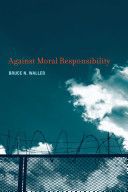
In Against Moral Responsibility, Bruce Waller launches a spirited attack on a system that is profoundly entrenched in our society and its institutions, deeply rooted in our emotions, and vigorously defended by philosophers from ancient times to the present. Waller argues that, despite the creative defenses of it by contemporary thinkers, moral responsibility cannot survive in our naturalistic-scientific system. The scientific understanding of human behavior and the causes that shape human character, he contends, leaves no room for moral responsibility. Waller argues that moral responsibility in all its forms–including criminal justice, distributive justice, and all claims of just deserts–is fundamentally unfair and harmful and that its abolition will be liberating and beneficial. What we really want–natural human free will, moral judgments, meaningful human relationships, creative abilities–would survive and flourish without moral responsibility. In the course of his argument, Waller examines the origins of the basic belief in moral responsibility, proposes a naturalistic understanding of free will, offers a detailed argument against moral responsibility and critiques arguments in favor of it, gives a general account of what a world without moral responsibility would look like, and examines the social and psychological aspects of abolishing moral responsibility. Waller not only mounts a vigorous, and philosophically rigorous, attack on the moral responsibility system, but also celebrates the benefits that would result from its total abolition.
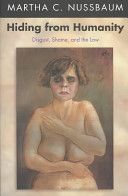
Should laws about sex and pornography be based on social conventions about what is disgusting? Should felons be required to display bumper stickers or wear T-shirts that announce their crimes? This powerful and elegantly written book, by one of America’s most influential philosophers, presents a critique of the role that shame and disgust play in our individual and social lives and, in particular, in the law. Martha Nussbaum argues that we should be wary of these emotions because they are associated in troubling ways with a desire to hide from our humanity, embodying an unrealistic and sometimes pathological wish to be invulnerable. Nussbaum argues that the thought-content of disgust embodies “magical ideas of contamination, and impossible aspirations to purity that are just not in line with human life as we know it.” She argues that disgust should never be the basis for criminalizing an act, or play either the aggravating or the mitigating role in criminal law it currently does. She writes that we should be similarly suspicious of what she calls “primitive shame,” a shame “at the very fact of human imperfection,” and she is harshly critical of the role that such shame plays in certain punishments. Drawing on an extraordinarily rich variety of philosophical, psychological, and historical references–from Aristotle and Freud to Nazi ideas about purity–and on legal examples as diverse as the trials of Oscar Wilde and the Martha Stewart insider trading case, this is a major work of legal and moral philosophy.
ما از اخلاق چه انتظاری داریم؟ این سوال شاید تاحدودی برای عموم مردم و یا متخصصان این رشته قابل پاسخ باشد؛ اینکه خوب بودن را به ما بیاموزد و در تنظیم روابط فردی م...

جشن کتاب تهران به ایستگاه سی و یکم رسیده است. حال و احوال نشر کتاب خوب نیست و باید فرهنگدوستان را به خرید و هدیه دادن کتاب ترغیب نمود. خانه اخلاقپژوهان جوان ب...

بنیاد کتابهای اخلاق اسلامی عمدتا پالایش جان از آلودگیها و آراستن آن به زیباییها است. اندیشه محوری این قبیل کتابها آن است که انسان فعلی آنی نیست که باید باشد...

-
0 Comments