Notice: تابع WP_Block_Type_Registry::register به طورنادرست فراخوانی شد. نامهای نوع بلوک نباید حروف بزرگ داشته باشند. لطفاً برای اطلاعات بیشتر، اشکال زدایی در وردپرس را مشاهده کنید. (این پیام در نگارش 5.0.0 افزوده شده است.) in /home/ethicsho/public_html/wp-includes/functions.php on line 5313
Warning: Use of undefined constant TDC_PATH_LEGACY - assumed 'TDC_PATH_LEGACY' (this will throw an Error in a future version of PHP) in /home/ethicsho/public_html/wp-content/plugins/td-composer/td-composer.php on line 109
Warning: Use of undefined constant TDSP_THEME_PATH - assumed 'TDSP_THEME_PATH' (this will throw an Error in a future version of PHP) in /home/ethicsho/public_html/wp-content/plugins/td-composer/td-composer.php on line 113 بایگانیهای 355 - خانه اخلاق پژوهان جوان Notice: Trying to access array offset on value of type bool in /home/ethicsho/public_html/wp-content/plugins/wp-ulike/inc/general-functions.php on line 807
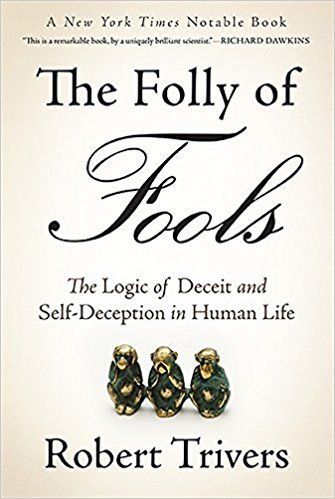
Whether it’s in a cockpit at takeoff or the planning of an offensive war, a romantic relationship or a dispute at the office, there are many opportunities to lie and self-deceive?but deceit and self-deception carry the costs of being alienated from reality and can lead to disaster. So why does deception play such a prominent role in our everyday lives? In short, why do we deceive? In his bold new work, prominent biological theorist Robert Trivers unflinchingly argues that self-deception evolved in the service of deceit?the better to fool others. We do it for biological reasons?in order to help us survive and procreate. From viruses mimicking host behavior to humans misremembering (sometimes intentionally) the details of a quarrel, science has proven that the deceptive one can always outwit the masses. But we undertake this deception at our own peril. Trivers has written an ambitious investigation into the evolutionary logic of lying and the costs of leaving it unchecked.
Is the point of belief and assertion invariably to think or say something true? Is the truth of a belief or assertion absolute, or is it only relative to human interests? Most philosophers think it incoherent to profess to believe something but not think it true, or to say that some of the things we believe are only relatively true. Common sense disagrees. It sees many opinions, such as those about matters of taste, as neither true nor false; it takes it as obvious that some ofthe truth is relative.Mark Richard’s accessible book argues that when it comes to truth, common sense is right, philosophical orthodoxy wrong. The first half of the book examines connections between the performative aspects of talk (what we do when we speak), our emotions and evaluations, and the conditions under which talk and thought qualifies as true or false. It argues that the performative and expressive sometimes trump the semantic, making truth and falsity the wrong dimension of evaluation for belief orassertion. Among the topics taken up are: racial slurs and other epithets; relations between logic and truth; the status of moral and ethical talk; vagueness and the liar paradox. The book’s second half defends the idea that much of everyday thought and talk is only relatively true or false. Truth isinevitably relative, given that we cannot work out in advance how our concepts will apply to the world. Richard explains what it is for truth to be relative, rebuts standard objections to relativism, and argues that relativism is consistent with the idea that one view can be objectively better than another. The book concludes with an account of matters of taste and of how it is possible for divergent views of such matters to be equally valid, even if not true or false.When Truth Gives Out will be of interest not only to philosophers who work on language, ethics, knowledge, or logic, but to any thoughtful person who has wondered what it is, or isn’t, for something to be true.
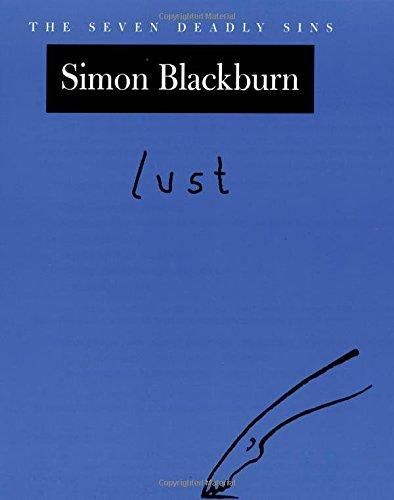
Lust, says Simon Blackburn, is furtive, headlong, always sizing up opportunities. It is a trail of clothing in the hallway, the trashy cousin of love. But be that as it may, the aim of this delightful book is to rescue lust “from the denunciations of old men of the deserts, to deliver it from the pallid and envious confessor and the stocks and pillories of the Puritans, to drag it from the category of sin to that of virtue.” Blackburn, author of such popular philosophy books as Think and Being Good, here offers a sharp-edged probe into the heart of lust, blending together insight from some of the world’s greatest thinkers on sex, human nature, and our common cultural foibles. Blackburn takes a wide ranging, historical approach, discussing lust as viewed by Aristophanes and Plato, lust in the light of the Stoic mistrust of emotion, and the Christian fear of the flesh that catapulted lust to the level of deadly sin. He describes how philosophical pessimists like Schopenhauer and Sartre contributed to our thinking about lust and explores the false starts in understanding lust represented by Freud, Kinsey, and modern “evolutionary psychology.” But most important, Blackburn reminds us that lust is also life-affirming, invigorating, fun. He points to the work of David Hume (Blackburn’s favorite philosopher) who saw lust not only as a sensual delight but also “a joy of the mind.” Written by one of the most eminent living philosophers, attractively illustrated and colorfully packaged, Lust is a book that anyone would lust over.
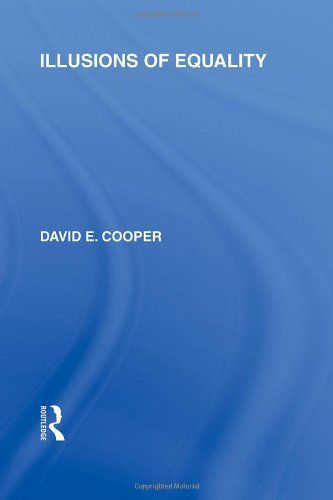
Educational policy and discussion, in Britain and the USA, are increasingly dominated by the confused ideology of egalitarianism. David E. Cooper begins by identifying the principles hidden among the confusions, and argues that these necessarily conflict with the ideal of educational excellence – in which conflict it is this ideal that must be preserved. He goes on to criticize the use of education as a tool for promoting wider social equality, focussing especially on the muddles surrounding ‘equal opportunities’, ‘social mix’ and ‘reverse discrimination’. Further chapters criticize the ‘new egalitarianism’ favoured, on epistemological grounds, by various sociologists of knowledge in recent years and ‘cultural egalitarianism’ according to which standard criteria of educational value merely reflect parochial and economic interests.
ما از اخلاق چه انتظاری داریم؟ این سوال شاید تاحدودی برای عموم مردم و یا متخصصان این رشته قابل پاسخ باشد؛ اینکه خوب بودن را به ما بیاموزد و در تنظیم روابط فردی م...

جشن کتاب تهران به ایستگاه سی و یکم رسیده است. حال و احوال نشر کتاب خوب نیست و باید فرهنگدوستان را به خرید و هدیه دادن کتاب ترغیب نمود. خانه اخلاقپژوهان جوان ب...

بنیاد کتابهای اخلاق اسلامی عمدتا پالایش جان از آلودگیها و آراستن آن به زیباییها است. اندیشه محوری این قبیل کتابها آن است که انسان فعلی آنی نیست که باید باشد...

-
0 Comments