Notice: تابع WP_Block_Type_Registry::register به طورنادرست فراخوانی شد. نامهای نوع بلوک نباید حروف بزرگ داشته باشند. لطفاً برای اطلاعات بیشتر، اشکال زدایی در وردپرس را مشاهده کنید. (این پیام در نگارش 5.0.0 افزوده شده است.) in /home/ethicsho/public_html/wp-includes/functions.php on line 5313
Warning: Use of undefined constant TDC_PATH_LEGACY - assumed 'TDC_PATH_LEGACY' (this will throw an Error in a future version of PHP) in /home/ethicsho/public_html/wp-content/plugins/td-composer/td-composer.php on line 109
Warning: Use of undefined constant TDSP_THEME_PATH - assumed 'TDSP_THEME_PATH' (this will throw an Error in a future version of PHP) in /home/ethicsho/public_html/wp-content/plugins/td-composer/td-composer.php on line 113 بایگانیهای 3546 - خانه اخلاق پژوهان جوان Notice: Trying to access array offset on value of type bool in /home/ethicsho/public_html/wp-content/plugins/wp-ulike/inc/general-functions.php on line 807
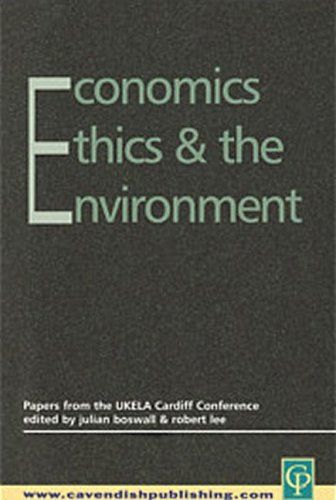
The UK Environmental Law Association (UKELA) holds a conference each year to bring together academics and practitioners,lawyers and environmental experts from other disciplines – within both science and social science. It is a unique event providing a forum for discussion of the most pressing issues of environmental regulation, and provides a unique combination of analysis and practical application. These articles, presented as papers at the Cardiff Conference in 2001, provide an accessible and informative collection addressing the conference theme of economics, ethics and the environment, including such issues as: how we can use traditional economic devices such as taxation, trading and insurance to assist in environmental regulation; how we treat and protect the natural world; how we might cope with the growing problem of waste; and how we should react to safeguard the environment in the face of risks and scientific uncertainties. The collection forms a topical and wide ranging discussion of key issues for legal practitioners, academics and students and will also be of great interest to a wider range of disciplines relating to the environment.
Brings together incredible true stories of ordinary people scarred by violence who refused to let hatred control their lives. Together they create an irrefutabale testimony to the power of forgiveness, one that willl challenge, inspire, and encourage others wherever they are on the road to healing.
The issue of care serves as a critique of the agonising situation of our civilization, but it also serves as an inspiring principle for a new paradigm of living together. In this book, Leonardo Boff, one of the founders of liberation theology, envisions a world in which care has been recognised as fundamental to being human.
It is hard to overestimate the importance of the work of Augustine of Hippo, both in his own period and in the subsequent history of Western philosophy. Until the thirteenth century, when he may have had a competitor in Thomas Aquinas, he was the most important philosopher of the medieval period. Many of his views, including his theory of the just war, his account of time and eternity, his understanding of the will, his attempted resolution of the problem of evil, and his approach to the relation of faith and reason, have continued to be influential up to the present time. In this volume of specially-commissioned essays, sixteen scholars provide a wide-ranging and stimulating contribution to our understanding of Augustine, covering all the major areas of his philosophy and theology.
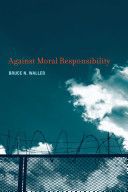
In Against Moral Responsibility, Bruce Waller launches a spirited attack on a system that is profoundly entrenched in our society and its institutions, deeply rooted in our emotions, and vigorously defended by philosophers from ancient times to the present. Waller argues that, despite the creative defenses of it by contemporary thinkers, moral responsibility cannot survive in our naturalistic-scientific system. The scientific understanding of human behavior and the causes that shape human character, he contends, leaves no room for moral responsibility. Waller argues that moral responsibility in all its forms–including criminal justice, distributive justice, and all claims of just deserts–is fundamentally unfair and harmful and that its abolition will be liberating and beneficial. What we really want–natural human free will, moral judgments, meaningful human relationships, creative abilities–would survive and flourish without moral responsibility. In the course of his argument, Waller examines the origins of the basic belief in moral responsibility, proposes a naturalistic understanding of free will, offers a detailed argument against moral responsibility and critiques arguments in favor of it, gives a general account of what a world without moral responsibility would look like, and examines the social and psychological aspects of abolishing moral responsibility. Waller not only mounts a vigorous, and philosophically rigorous, attack on the moral responsibility system, but also celebrates the benefits that would result from its total abolition.
ما از اخلاق چه انتظاری داریم؟ این سوال شاید تاحدودی برای عموم مردم و یا متخصصان این رشته قابل پاسخ باشد؛ اینکه خوب بودن را به ما بیاموزد و در تنظیم روابط فردی م...

جشن کتاب تهران به ایستگاه سی و یکم رسیده است. حال و احوال نشر کتاب خوب نیست و باید فرهنگدوستان را به خرید و هدیه دادن کتاب ترغیب نمود. خانه اخلاقپژوهان جوان ب...

بنیاد کتابهای اخلاق اسلامی عمدتا پالایش جان از آلودگیها و آراستن آن به زیباییها است. اندیشه محوری این قبیل کتابها آن است که انسان فعلی آنی نیست که باید باشد...

-
0 Comments