Notice: تابع WP_Block_Type_Registry::register به طورنادرست فراخوانی شد. نامهای نوع بلوک نباید حروف بزرگ داشته باشند. لطفاً برای اطلاعات بیشتر، اشکال زدایی در وردپرس را مشاهده کنید. (این پیام در نگارش 5.0.0 افزوده شده است.) in /home/ethicsho/public_html/wp-includes/functions.php on line 5313
Warning: Use of undefined constant TDC_PATH_LEGACY - assumed 'TDC_PATH_LEGACY' (this will throw an Error in a future version of PHP) in /home/ethicsho/public_html/wp-content/plugins/td-composer/td-composer.php on line 109
Warning: Use of undefined constant TDSP_THEME_PATH - assumed 'TDSP_THEME_PATH' (this will throw an Error in a future version of PHP) in /home/ethicsho/public_html/wp-content/plugins/td-composer/td-composer.php on line 113 بایگانیهای 3486 - خانه اخلاق پژوهان جوان Notice: Trying to access array offset on value of type bool in /home/ethicsho/public_html/wp-content/plugins/wp-ulike/inc/general-functions.php on line 807
With the help of in-depth essays from some of the world’s leading philosophers, The Blackwell Companion to Natural Theology explores the nature and existence of God through human reason and evidence from the natural world. Provides in-depth and cutting-edge treatment of natural theology’s main arguments Includes contributions from first-rate philosophers well known for their work on the relevant topics Updates relevant arguments in light of the most current, state-of-the-art philosophical and scientific discussions Stands in useful contrast and opposition to the arguments of the ‘new atheists’
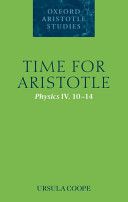
What is the relation between time and change? Does time depend on the mind? Is the present always the same or is it always different? Aristotle tackles these questions in the Physics, and Time for Aristotle is the first book in English devoted to this discussion. Aristotle claims that time is not a kind of change, but that it is something dependent on change; he defines it as a kind of “number of change.” Ursula Coope argues that what this means is that time is a kind of order (not, as is commonly supposed, a kind of measure). It is universal order within which all changes are related to each other. This interpretation enables Coope to explain two puzzling claims that Aristotle makes: that the now is like a moving thing, and that time depends for its existence on the mind. Brilliantly lucid in its explanation of this challenging section of the Physics, Time for Aristotle shows his discussion to be of enduring philosophical interest.
From Plato and Leibniz to externalism and the frame problem, from Husserl to neural Darwinism, from mental causation to the problem of consciousness, this guide outlines the main positions, key figures, important terms, and longstanding debates of the philosophy of mind.
In Natural Ethical Facts William Casebeer argues that we can articulate a fully naturalized ethical theory using concepts from evolutionary biology and cognitive science, and that we can study moral cognition just as we study other forms of cognition. His goal is to show that we have “softly fixed” human natures, that these natures are evolved, and that our lives go well or badly depending on how we satisfy the functional demands of these natures. Natural Ethical Facts is a comprehensive examination of what a plausible moral science would look like.Casebeer begins by discussing the nature of ethics and the possible relationship between science and ethics. He then addresses David Hume’s naturalistic fallacy and G. E. Moore’s open-question argument, drawing on the work of John Dewey and W. V. O. Quine. He then proposes a functional account of ethics, offering corresponding biological and moral descriptions. Discussing in detail the neural correlates of moral cognition, he argues that neural networks can be used to model ethical function. He then discusses the impact his views of moral epistemology and ontology will have on traditional ethical theory and moral education, concluding that there is room for other moral theories as long as they take into consideration the functional aspect of ethics; the pragmatic neo-Aristotelian virtue theory he proposes thus serves as a moral “big tent.” Finally, he addresses objections to ethical naturalism that may arise, and calls for a reconciliation of the sciences and the humanities. “Living well,” Casebeer writes, “depends upon reweaving our ethical theories into the warp and woof of our scientific heritage, attending to the myriad consequences such a project will have for the way we live our lives and the manner in which we structure our collective moral institutions.”
ما از اخلاق چه انتظاری داریم؟ این سوال شاید تاحدودی برای عموم مردم و یا متخصصان این رشته قابل پاسخ باشد؛ اینکه خوب بودن را به ما بیاموزد و در تنظیم روابط فردی م...

جشن کتاب تهران به ایستگاه سی و یکم رسیده است. حال و احوال نشر کتاب خوب نیست و باید فرهنگدوستان را به خرید و هدیه دادن کتاب ترغیب نمود. خانه اخلاقپژوهان جوان ب...

بنیاد کتابهای اخلاق اسلامی عمدتا پالایش جان از آلودگیها و آراستن آن به زیباییها است. اندیشه محوری این قبیل کتابها آن است که انسان فعلی آنی نیست که باید باشد...

-
0 Comments